Lycanthropy as an Allegory
Trigger warning: talk of sexual themes such as sexual assault, rape, AIDS, stigma, and lots of joyful things.
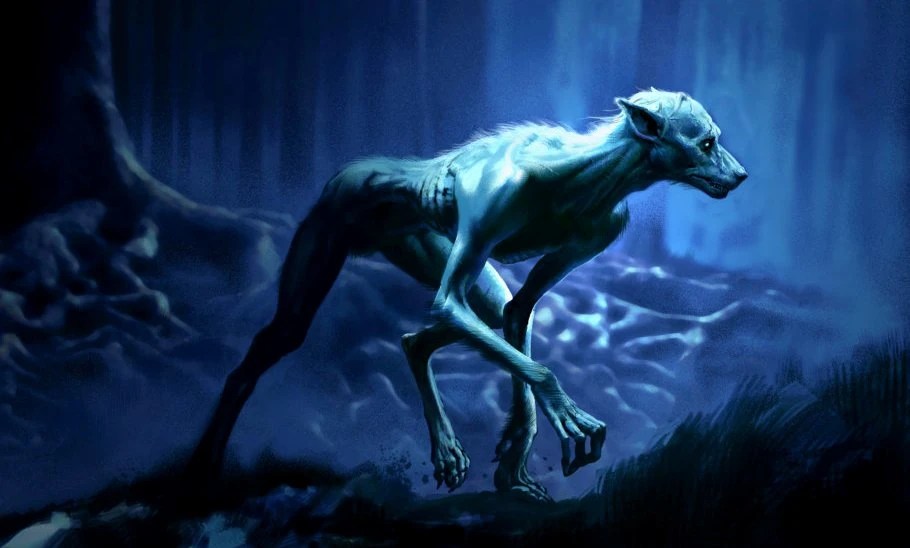
I wanted to discuss a pretty simple topic: lycanthropy (the disease that transforms you into a werewolf every full moon) and what sort of allegories are supposed to revolve around it. Some people in the HP fandom believe that lycanthropy is obviously a metaphor for two things at once: homosexuality, and AIDS. As such, they use this as a reason to notably make Lupin a “queer-coded character” that suffers from being unfairly “outed” and who, really, was “meant to be gay”, that is, absolutely not meant to be paired with a woman.
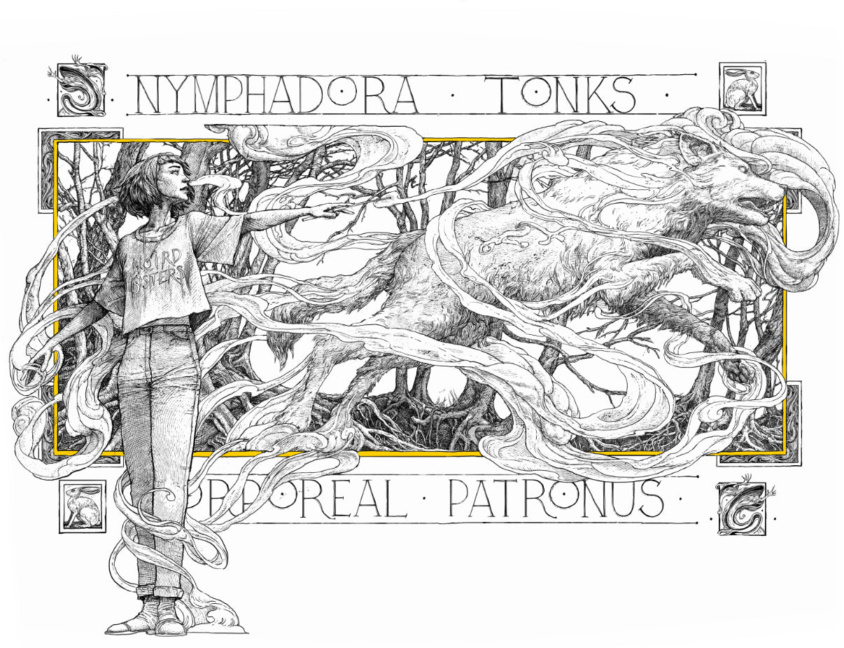
This trope of werewolves being direct representations for gays (and sometimes, seropositives), is very far-fetched, and I wondered, really, upon seeing for the first time such a thing as “werewolves are a metaphor for gays”, what happened inside the heads of those who have established this weird fandom take. Especially since we don’t really need a metaphor for homosexuality when it already exists in Dumbledore; I mean JKR is notorious for her post-canon additions, so she might as well have just said that Remus was gay at any point in the past two decades, if that were the case. Anyway.
So I wanted to ponder about some of the problems this perceived metaphor raises. Expect some funny insanity.
What it would mean if “Lycanthropy is literally magic AIDS and homosexuality”
So the first thing that comes to mind to the fans who take lycanthropy as a metaphor or a literal equivalent of homosexuality and AIDS, regards the assault Lupin suffered as a 4 years-old child under Fenrir Greyback. Greyback having a specific taste for children, this makes the situation very… darkly connoted. By claiming that lycanthropy is “magical AIDS” or makes you queer-coded, as Lupin was infected by Greyback and turned into a werewolf as a child, some fans claim that he has been a victim of sexual assault–or more boldly, pedophilic rape.
“Rape: The penetration, no matter how slight, of the vagina or anus with any body part or object, or oral penetration by a sex organ of another person, without the consent of the victim.”
Of course, it doesn’t specifically answer the requirements of what the law defines as rape, that is, the penetration of a body orifice such as the mouth or the genitals. A werewolf doesn’t need to do that in order to turn someone else into a werewolf. But with the metaphor, of course, we talk about Greyback’s assault as rape- and pedophilia-coded. Lupin certainly must have felt his body and life getting violated, so the allegory here is understandable.
Until we take it further.
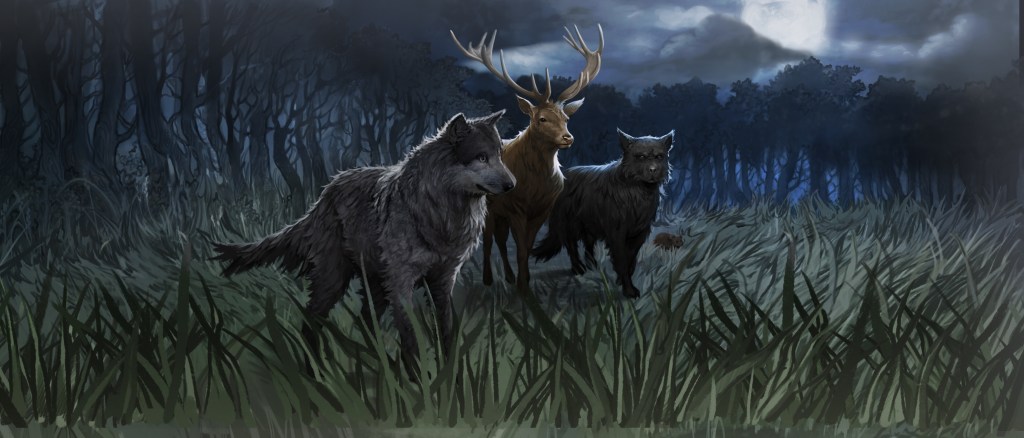
We learn in Prisoner of Azkaban that Lupin’s friends managed to get him out of the Shack at night every month since 5th year, to wander the Hogsmeade village–not only the forest or the Hogwarts grounds.
“Soon we were leaving the Shrieking Shack and roaming the school grounds and the village by night. Sirius and James transformed into such large animals, they were able to keep a werewolf in check. I doubt whether any Hogwarts students ever found out more about the Hogwarts grounds and Hogsmeade than we did…”
The problem comes here:
“What sort of animal —?” Harry began, but Hermione cut him off. “That was still really dangerous! Running around in the dark with a werewolf! What if you’d given the others the slip, and bitten somebody?”
“A thought that still haunts me,” said Lupin heavily. “And there were near misses, many of them. We laughed about them afterwards. We were young, thoughtless — carried away with our own cleverness.”
Lupin argues that just because they were young and “thoughtless” (ie unwilling to uphold their responsibilities and have some empathy for the people they were dangerously involving), they were just being ‘carried away’, in an attempt to negate the responsibility they all hold for what they have just done as 15 years-old boys and older, at the minimum up to age 18. It allows Lupin to feel less guilty for his years-long mistakes. And yet, this is where the metaphor makes it all twisted. If being infected by a werewolf has anything to do with getting AIDS or being sexually assaulted, then by making Lupin roam the village and the Hogwarts grounds at night all this time, having many “near misses” and “laughing about them afterwards”, the Marauders have effectively turned the possibility of ruining someone’s life with incurable “magical AIDS” or rape into a complete joke. They drew fun out of putting people into such horrific danger.
And as much as I understand that teenagers can be “thoughtless”, I believe that when you become an Animagus specifically to run along with a werewolf in a form that doesn’t make you its prey, when you become Head Boy, when you seemingly know a lot about werewolves, when you–at least on the surface–seem to want to protect innocent people, and are supposedly concerned for Lupin as a friend because he is a victim of lycanthropy, you’ve proven you can be held accountable for your wrong decisions. The same goes for Lupin. He, who was the werewolf, the very person who has suffered from assault, infection and lycanthropy for nearly all his life, and who was, at the time they began their roaming, a Hogwarts Prefect.
If anybody had gotten infected, mauled and possibly killed by Lupin because James and Sirius ran out of luck, then through the metaphor of lycanthropy as homosexuality and AIDS, we get a scenario where Lupin becomes someone’s unwilling rapist because his friends thought it funny to make a werewolf wander Hogsmeade and the Hogwarts grounds. The same counts for any person they might have traumatized if almost bitten by Lupin, turning them into a metaphor for a near-rape survivor.
There is a reason Lupin says that it’s a thought which “still haunts me”.
But of course, this metaphor-circus is far from being over. Oh no, it isn’t.
As you have learned in the essays « Pettigrew The Secret Keeper » and « The Shrieking Shack Turnabout », Severus Snape was the victim of attempted murder by… a particular bully.
“Sirius Black showed he was capable of murder at the age of sixteen,” he breathed. “You haven’t forgotten that, Headmaster? You haven’t forgotten that he once tried to kill me?”
Sirius – I’m sure you know where I’m getting at – Sirius intended to use Lupin’s illness, and managed to lure Severus Snape into the Shrieking Shack, so that Lupin, consenting or not, knowingly or not, could attack Snape as a werewolf. This very night, Snape could have been infected, mauled, and/or killed, without expecting it; unless of course we are to understand that even before the events of the Werewolf Incident, Severus very well expected his bullying classmates to be so dangerous they would be willing to murder him for fun. Lupin could have woken up with Snape’s guts all around the shack, realizing that the thing he feared the most has happened: the friends who were supposed to accept him, to keep him and everyone safe from his affliction, to consider him a whole human being and not a Dark Monster, have just used his cursed werewolf form as a tool to let him rip apart another student; with no concern for the horrific assault that would befall Severus, the trauma Lily would endure realizing that her Gryffindor peers have killed her childhood best friend for being too annoying (unless she’s kept from the truth but then that means Lupin would have to endure being complicit in keeping Lily in the dark about the true fate of her best friend), and of course, no regard for the psychological consequences for Lupin, his safety as a werewolf in a lycanthrophobic society, or his ability to remain a student at Hogwarts. He would effectively become the new Greyback thanks to Sirius: a murderer of children, a monster.
For a laugh. And apparently, as revenge against a person who dared hoping for his teachers to expel his unrelenting bullies.
And then, as if it wasn’t creepy enough in itself… if you compare lycanthropy with AIDS or a queer sexual orientation, then we are supposed to understand that by luring Severus to be attacked by werewolf Lupin this night, at sixteen years-old of course, that is, beyond sexual maturity and one year shy of being a full adult in the Wizarding World – Sirius Black intended to use Lupin’s queerness or HIV-contamination to become Snape’s rapist – just like Voldemort likes to set Greyback on those he dislikes, just like Greyback has once attacked Lupin as a young boy. That the Werewolf Incident, not content with being rape-coded on its own, was actually the fictionalized version of an attempt from Sirius to get Severus raped then killed by his disease-afflicted “best friend”, and that both Lupin and Snape are the victims. Severus, who is later forced into silence by the Headmaster and couldn’t ever talk fully about what happened the night his bullies intended to break him, just like so many rape victims have been silenced or it would become too inconvenient.
Of course, Sirius is their abuser.
I mean, okay, the creepy circumstances of the Werewolf Incident are things that we see in animes such as Mahou Shoujou Site, where the lonely protagonist suffers violent bullying, has been the victim of attempted, premeditated, pedophilic, gang rape at the hands of four Marauder-like bullies and their adult male friend.
But truly… This doesn’t make Sirius Black look good at all. Notably when he doesn’t ever apologize, neither to Snape, nor to Lupin, and that he would rather take satisfaction at what he has done, even 19 years later, which counts 7 years before Azkaban and 12 years in Azkaban:
Black made a derisive noise. “It served him right,” he sneered.
Funny how people then love to write wolfstar smut, as though Sirius Black here was being Lupin’s best defender…
By the way, Sirius wishes it was full-moon:
“I’m bored,” said Sirius. “Wish it was full moon.”
“You might,” said Lupin darkly from behind his book.
Werewolf transformations are supposed to be excrutiating, right? He doesn’t care. Lupin can howl in pain all he wants, Sirius wants his fun. There goes your fanon gay couple.
The next thing that becomes terribly twisted through this insane metaphor, is the meaning of what nearly happened the night Pettigrew escaped as Lupin transformed into a werewolf. Having not drunk his Wolfsbane and neglected to remain safe in the Shack despite being repeatedly reminded that he was a werewolf and thus, should take extra precautions, Lupin transforms and then tries to attack 3 children at his charge, a Hogwarts professor and his old friend. He effectively posed a danger to anybody who would happen to wander near werewolf Lupin, which includes future!Harry and !Hermione.
Same situation: Whether intended or not, Lupin has almost infected and killed all that jolly crowd just like werewolf Greyback used to attack his victims by letting his werewolf side take control of him.
All because Lupin neglected to take his medication or, I don’t know, the equivalent of a “preservative”, and because he neglected to stay in the Shack for his transformation. Since three of the potential victims are children, we are to understand that what almost happened because of Lupin’s negligence was not just mauling or manslaughter, but also pedophilic rape, or something “coded” as such.
… I guess we don’t want that. At all.
Let’s just stick with this:
“This time tomorrow, the owls will start arriving from parents… They will not want a werewolf teaching their children, Harry. And after last night, I see their point. I could have bitten any of you… That must never happen again.”
He’s very lucky that no one was harmed (except Sirius, which is karmic) – or suffered the consequences of his negligence for life.
Something I almost missed but is important in Lupin’s characterization is a passage in DH.
The Trio has started hunting Horcruxes, and Lupin, after abandoning his pregnant wife without really admitting as such to Harry, proposes to join them. They argue that they can’t tell him what exactly they are searching for, but Lupin is undeterred:
« I thought you’d say that,” said Lupin, looking disappointed. “But I might still be of some use to you. You know what I am and what I can do. I could come with you to provide protection. There would be no need to tell me exactly what you were up to.”
“What I am and what I can do”. So Lupin was seemingly okay with the Trio… weaponizing him and his lycanthropy. And considering Lupin is the person who advised Harry just a little earlier that he better not use Expelliarmus to disarm people but he should rather kill them, regardless if they are under the influence of an Imperius [Shunpike Imperiused], it suggests that Lupin was proposing the Trio to use his cursed werewolf form to… launch attacks unto people, just like another Greyback.
So he would be using the thing that makes him queer- and seropositive-coded to harm people, as if those were weapons, despite the knowledge of how much this hurts him and those of his kind. He volunteers, with the metaphors we are discussing, to become a murdering rapist. He even intends for the Trio to become murdering rapists themselves, as they would be the ones sending Lupin to attack people as a werewolf.
Lastly, here is, I reckon, the most problematic thing that arises when this metaphor is taken to its logical conclusion: In Harry Potter, werewolves have twice joined Voldemort in mass. So it creates a scenario where gays and/or seropositives would rather join a terrorist group and participate in their war crimes, notably against Muggles and children, because they prefer the hate group thriving on violence and bigotry over Harry’s world.
But you know what’s worse? Many people compare Death Eaters to Nazis and various fascists, to say they are “literally the same thing”; that Death Eaters are “wizard nazis” and Voldemort, “wizard Hilter”.
So with the take of werewolves being equivalents for gays and seropositives, we end up in a situation where gays and seropositives prefer to ally with and fight along the Nazis to get more rights thanks to them, “infecting” as many people as they can with their “queer-coded-ness” and illness through “mass symbolical rape and slaughter”.
Tell me: Did homosexuals and seropositives really fight along with the Nazis to get more rights thanks to them? Or were they rather persecuted by those very Nazis we are talking about?
…Maybe Rowling and her followers shouldn’t compare AIDS and homosexuality with people who harm children and join hate groups in mass.
So I think we have reached the summum of insanity this supposed metaphor implies. But because this has not been fun enough, here are more bizarre conclusions.
What about the other werewolves? Lupin is the only guy we see in HP who doesn’t turn into some sort of savage that targets families with a cluster of werewolf friends. It creates the scenario where “the only good gay or seropositive” is someone who internalized lycanthrophobia, abandons his family, who’s a manipulative coward, neglects his disease, and who–most importantly–was two inches shy from infecting others… many, many times. And is completely ok with that.
This metaphor that werewolves are the equivalent of gays or seropositives also raises the question… Is Fenrir Greyback another gay/seropositive victim as well? Technically, though off-canon since written on Pottermore, Greyback suffered from Lupin’s father’s lycanthrophobia, which is the reason he decided to inflict lycanthropy upon Remus, as revenge.
Greyback sat in silence while Lyall was laughed at by his fellow committee members (‘Lyall, you just stick to Welsh Boggarts, that’s what you’re good at’). Lyall, generally a mild-mannered man, grew angry. He described werewolves as ‘soulless, evil, deserving nothing but death’. The committee ordered Lyall out of the room, the head of the committee apologised to the Muggle tramp and Greyback was released. […]
Greyback lost no time in sharing with his friends how Lyall Lupin had just described them. Their revenge on the wizard who thought that werewolves deserved nothing but death would be swift and terrible.
Shortly before Remus Lupin’s fifth birthday, as he slept peacefully in his bed, Fenrir Greyback forced open the boy’s window and attacked him. Lyall reached the bedroom in time to save his son’s life, driving Greyback out of the house with a number of powerful curses. However, henceforth, Remus would be a fully-fledged werewolf.
And yet, I have scarcely seen anyone willing to say that for the sole fact Greyback is a werewolf, he is, just like Lupin, a representation of gays and seropositives around here. Curious, isn’t it?
I don’t want to think about how this “werewolves = gays” comparison perpetrates, through Greyback, the association of gays with pedophiles, which has already been done for decades by real-life homophobes.
In the books, Greyback becomes unhinged and a villain notably because he has embraced his lycanthropic nature fully, so we get the scenario that someone becomes a bad guy because they dare accept their homosexuality and/or learn self-compassion for being seropositive, and that Lupin is one of the only good werewolves because he constantly rejects and fights against his “homosexual urges” and/or stigmatizes his own disease, despite the toll it takes on his health.
And let’s not get into the implications of suggesting that “rapist-coded” characters cannot control themselves.
People can turn into werewolves because they get infected by another werewolf. With this metaphor, we are to understand that homosexuals “become” homosexuals, because they’ve most likely been assaulted and “infected” by another homosexual. Which precisely plays into the homophobic propaganda of the 90ies and early 2000s (the time of the writing of the HP saga) that gay people target children to make them gay themselves (ie “gay people are just pedophiles/zoophiles”) and/or are just confused, deviant, “contaminated” rape survivors from other gay people.
This is where any queer or AIDS analogy goes to die. The second werewolf mentioned is a serial killer who loves to turn and groom children to hate « normal » wizards. That is right out of the homophobia handbook. It shouldn’t have to be said, but almost all people that have ever had HIV/AIDS didn’t want to knowingly spread it to others. But there was a fear that gay men would give people it knowingly. And JKR put that fear into canon. You can’t claim something as an allegory for AIDS and then put one of the most stigmatizing myths as canon for half of the representation.
But also:
Community Vs the System
During the AIDS epidemic the people that came to aid those living with HIV/AIDS was not the government, nor the status quo, but the queer community. And it was through holding the system to task and protesting that change was made. And the fight is still ongoing, as funding is stripped for both prevention and treatment.
The Harry Potter universe tends to hold that the system is overall good. It’s flawed, but hierarchy of magical beings is fine as is. And Lupin being overall okay with that mindset feels very at odds with the idea of an AIDS allegory. By 1995 he would’ve not only seen his marauder friends die but other werewolves that he reached out to, that saw them get unjustly punished or face homelessness due to being outed. And to have the Order just be reactionary wouldn’t sit right. The fact that of the two named werewolves in the entire series, the bad werewolf is the one that is alluded to possibly having a community is also unnerving. Lupin doesn’t get to have other normal werewolf friends, but Fenrir gets a cult.
It shouldn’t take long to guess the problem, as a matter of fact:
This “queer-coding” take equals a sexual orientation to a literal disease. A disease that turns you into a blood-thirsty, man-hunting monster.
Congratulations.
Lycanthropy and stigmatized illnesses
You have to understand that homosexuality was never mentioned by Rowling. As for AIDS, she only mentioned it as an example, not a “literal equivalent” or anything. Here’s what she says exactly:
‘There is no retcon re: Remus Lupin. The so-called ‘revelation’ now circulating is recycled from interviews given 17 years ago in which I was asked whether Lupin’s treatment by others could be seen as a metaphor for stigmatised conditions. I agreed that it could.’
‘Lupin’s condition of lycanthropy was a metaphor for those illnesses that carry a stigma, like HIV and AIDS.’
‘All kinds of superstitions seem to surround blood-borne conditions, probably due to taboos surrounding blood itself. The wizarding community is as prone to hysteria and prejudice as the Muggle one, and the character of Lupin gave me a chance to examine those attitudes.’
J.K. Rowling. @jk_rowling ·Sep 9, 2016
Rowling mentioned “illnesses that carry a stigma, like HIV and AIDS”. Which is a stupid way to say this because AIDS [Acquired ImmunoDeficiency Syndrome] is precisely the final stage of the disease caused by HIV [Human Immunodeficiency Virus], but anyway. With this interview, and the fact Rowling compares Wolfsbane to HIV treatment in her Pottermore page about Illness and Disability in HP [https://www.harrypotter.com/fr/writing-by-jk-rowling/illness-and-disability] we understand fairly easily how “lycanthropy was a metaphor for illnesses that carry a stigma, like HIV and AIDS”, has turned, inside the heads of the fans, into “lycanthropy is literal magical AIDS”. [screenshots] However, this is not so evident for the apparition of homosexuality in all this discourse, so I have my theories.
The first theory is that someone out there thought that being gay and having AIDS was pretty much the same thing, and that since lycanthropy equals AIDS, it also equals homosexuality. Right…
Somehow, many others agreed. And so everytime someone claims that lycanthropy equals AIDS and homosexuality, they are actually perpetrating the homophobic stereotype that all gays carry STDs like HIV.
The second theory is that since people, notably wolfstar fans, jump on every opportunity to make Lupin gay to appear woke, despite the canon fact Lupin prefers women [Tonks] and feels jealous Sirius got all of them instead [quote] – and that he literally teaches an entire class to turn a Snape Boggart into a laughing stock with the use of the man-in-drag transphobic joke to force him back into the closet – they took the condition that made him unique and somehow twisted it into “evidence’ that Lupin was undoubtedly gay. Frankly, this feels like pure and simple queer-baiting.
Thirdly, this take of lycanthropy as homosexuality or seropositivity is seemingly used by a few for pseudo-activism. Apparently, stanning a fictional character makes you woke because you then support homosexuals and HIV-afflicted people. Except… loving a JKR character has nothing to do with Gay Pride. In fact, that’s pretty much the opposite now. Not accounting the fans yelling that shipping Remadora and not Wolfstar makes you homophobic, as though bisexuality/pansexuality didn’t exist on this planet, and regardless that Tonks is actually a loveable representation of queerness with her metamorphmagus abilities (think non-binary, genderqueer, gender non-conforming, intersexuation, etc).
I understand if some fans like to project their struggles as queer people onto Lupin’s struggle as a werewolf. Very well, but the same thing goes for any comfort character who suffers prejudice then. And I repeat, being a werewolf has nothing to do with being gay or having AIDS.
Rowling has talked about blood-borne diseases, which include the infection by HIV. Since we are talking of Sexually Transmitted Diseases in general, just like AIDS is, why haven’t I seen anybody talking about syphilis, herpes, gonorrhea, hepatitis and the like, whenever the subject of lycanthropy as an allegory was brought up? Because they’re ugly diseases?
It feels to me that people are willing to defend seropositives of STDs as far as they can romanticize the illness itself. A near invisible illness/disability that kills you almost in an instant decades later if you don’t take treatment is far easier to romanticize than diseases that cause skin eruptions or purulent discharges or leaves “ugly”, non “warrior”-looking scars; diseases that turn you into somebody people wouldn’t want to have intercourse with because, for a while, you appear filthy and visibly infectious.
Another thing is that it’s much more popular to defend HIV-seropositives because the subject of the pandemic of HIV created a worldwide scandal involving the conscious, politically-driven decision of “neglecting” thousands of seropositives, leading to a systemic wipe-out of the queer population that was disproportionately afflicted by this disease on top of a rise of widespread homophobia, merely a decade before the release of the third HP book. Except that this significant part of HIV and queer history makes the HP “equivalent” sound like a joke.
Also this:
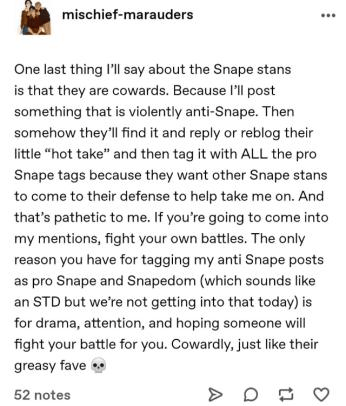
When you see that some Marauder fans use “STD” as an insult, uncaring that AIDS is one in the first place, you get what I mean when I assure you that stanning Lupin, including because you think he is queer-coded for being a furry boy, doesn’t mean you have no prejudices against seropositives (not just the HIV kind).
So, if lycanthropy is a bad allegory for HIV and, of course, homosexuality, then what would be the illnesses that resemble lycanthropy’s problems the most? Is there a disease that is the actual reason for the invention of werewolves in folklore? Is it even possible to make a matching comparison?
Let’s find out.
What disease represents lycanthropy best?
Before we tackle the disease I think is the best real-life equivalent of the type of lycanthropy we see in HP, I wanted to make some honorable mentions, from Wikipedia:
- Hypertrichosis, the Werewolf Syndrome
Hypertrichosis is an abnormal amount of hair growth over the body.[1][2] The two distinct types of hypertrichosis are generalized hypertrichosis, which occurs over the entire body, and localized hypertrichosis, which is restricted to a certain area.[1] Hypertrichosis can be either congenital (present at birth) or acquired later in life.[3][4] The excess growth of hair occurs in areas of the skin with the exception of androgen-dependent hair of the pubic area, face, and axillary regions.[5]
Several circus sideshow performers in the 19th and early 20th centuries, such as Julia Pastrana, had hypertrichosis.[6] Many of them worked as freaks and were promoted as having distinct human and animal traits.
- Lupus Vulgaris
Lupus vulgaris (also known as tuberculosis luposa[1]) are painful cutaneous tuberculosis skin lesions with nodular appearance, most often on the face around the nose, eyelids, lips, cheeks, ears[2] and neck. It is the most common Mycobacterium tuberculosis skin infection.[3] The lesions may ultimately develop into disfiguring skin ulcers if left untreated.
The word lupus (from the Latin word for wolf) is attributed to the thirteenth century physician Rogerius, who used it to describe erosive facial lesions that were reminiscent of a wolf’s bite. Lupus is a chronic autoimmune disease that can damage any part of the body (skin, joints, and/or organs inside the body).
- Leprosy
Leprosy, also known as Hansen’s disease (HD), is a long-term infection by the bacteria Mycobacterium leprae or Mycobacterium lepromatosis.[4][8] Infection can lead to damage of the nerves, respiratory tract, skin, and eyes.[4] This nerve damage may result in a lack of ability to feel pain, which can lead to the loss of parts of a person’s extremities from repeated injuries or infection due to unnoticed wounds.[3] An infected person may also experience muscle weakness and poor eyesight.[3] Leprosy symptoms may begin within one year, but, for some people, symptoms may take 20 years or more to occur.[4]
Leprosy has historically been associated with social stigma, which continues to be a barrier to self-reporting and early treatment.[4] Separating people affected by leprosy by placing them in leper colonies still occurs in some areas of India,[16] China,[17] Africa,[18] and Thailand.[19]
The social perception of leprosy in medieval communities was generally one of fear, and people infected with the disease were thought to be unclean, untrustworthy, and morally corrupt.[133] Segregation from mainstream society was common, and people with leprosy were often required to wear clothing that identified them as such or carry a bell announcing their presence.[137] The third Lateran Council of 1179 and a 1346 edict by King Edward expelled lepers from city limits. Because of the moral stigma of the disease, methods of treatment were both physical and spiritual, and leprosariums were established under the purview of the Roman Catholic Church.[133][138]
- Clinical Lycanthropy
Clinical lycanthropy is defined as a rare psychiatric syndrome that involves a delusion that the affected person can transform into, has transformed into, or is, an animal.[1] Its name is associated with the mythical condition of lycanthropy, a supernatural affliction in which humans are said to physically shapeshift into wolves. It is purported to be a rare disorder.
- COVID-19
Okay, just kidding.
Let’s get to the real deal.
After much pondering, I found that there is one disease that could be a good equivalent of lycanthropy. This disease seemingly inspired the creation of werewolves in folklore, just as it helped create zombies, vampires, and other monsters.
That disease is:
- Rabies
Furious Rabies.
Now, I think, you can imagine how scary lycanthropy really is.
Rabies creates fear because, unlike AIDS, it is a disease that seems able to turn animals and people into raging beasts. And guess what? It’s also a blood-borne disease like lycanthropy and AIDS! Let’s have a look at the symptoms:
- Hypersalivation
- Photophobia, which explains why a werewolf appears only during the night.
- Hyperesthesia, a condition that involves an abnormal increase in sensitivity to stimuli
- Aggressivity
- Dementia
- Incurability
- Premature death.
Just look at videos of rabid animals seizing and take in the gravity of the situation.
In fact… that’s actually where lycanthropy and rabies start to diverge.
With lycanthropy, you age sooner because the disease takes its toll on your body, but you live for decades more, notably if you do a Greyback and “embrace” your werewolf inside. You’re not the one dying when infected.
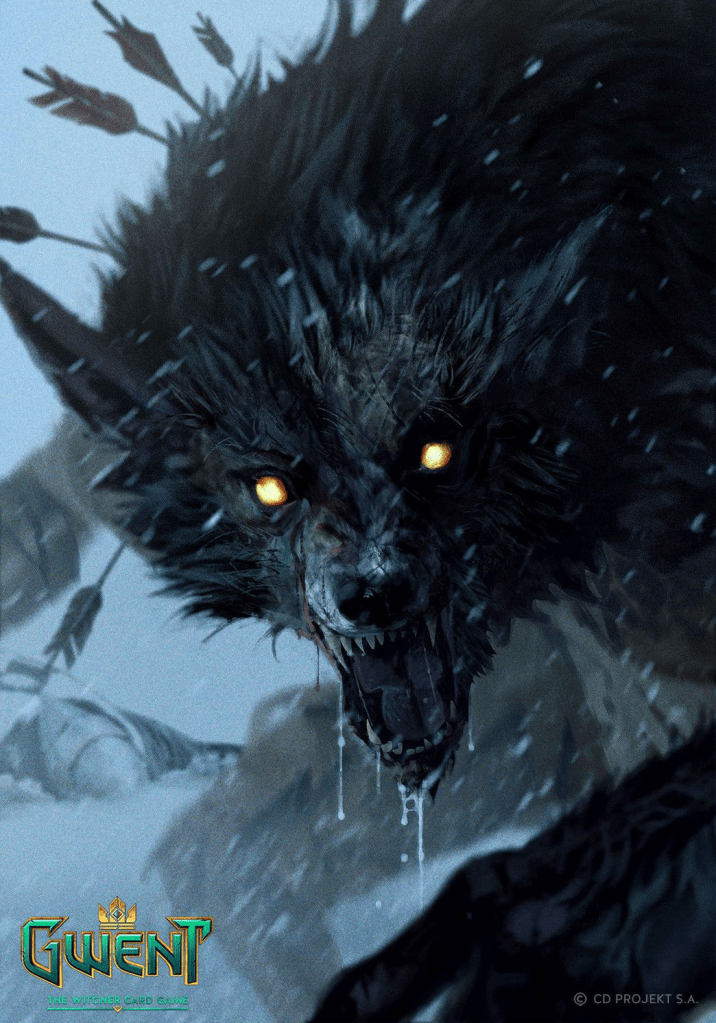
But with rabies, if you’re bitten and don’t get the vaccine before the first symptoms appear, you have around a…100% chance to die a painful death in the following week.
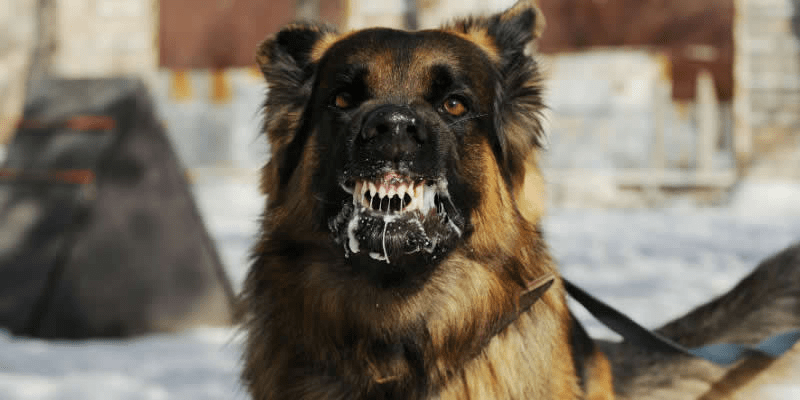
So the one problem with rabies, is that it’s a disease so severe it actually puts stigma back on lycanthropy. Still, real-life rabies is a far better equivalent.
JKR has argued that werewolves were created because of a botched attempt to become an Animagus, [quote + is it true she’s the one who said it?] and it’s really sad because she missed a wonderful opportunity.
She could have invented a story taking place in the Prehistoric magical world, between a man and a wolf extremely loyal to one another. Let’s say, the wolf is dying of rabies, and wizards perform a ritual that allows the man and the wolf to become one: A werewolf [man-wolf]. This way, the wolf could live on through the man, and it was together that they confronted the pain and insanity of rabies. Meanwhile, they and their descendants try to search for a cure for rabies and that new magical illness that is lycanthropy.
She could have said that every werewolf is, in fact, taking care of their own diseased wolf inside them, or that their wolf is the one saving the man, catching the Muggle rabies for itself. Werewolf, the symbol of wolf-man friendship.
She could have imagined that lycanthropy is a form of rabies that’s been mutated with magic. Wizards and witches affected with lycanthropy survived longer and are, in a sense, immune to the more lethal rabies. Just like drepanocytosis helps survive in countries where paludism remains a scourge.
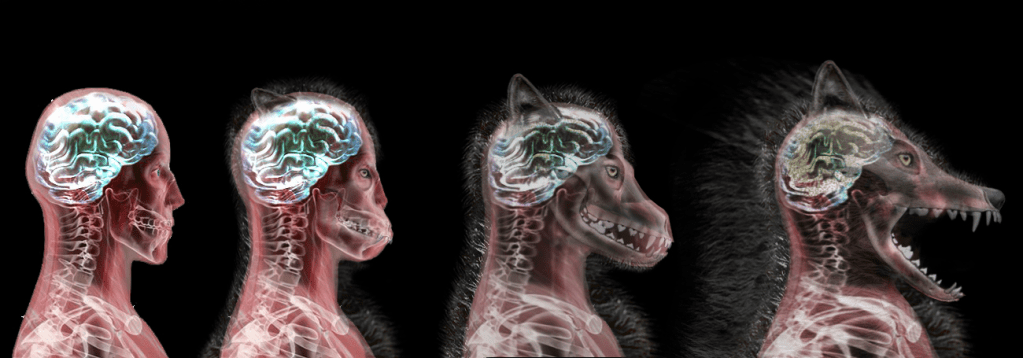
Basically, it would mean that lycanthropy is like having rabies once a month as the wolf is set free. But instead of dying in a week, you have a chance to live on.
The deal would have been to fight against the idea that werewolves are rabid-animals all the time, and that it justifies discrimination. You cannot imagine the absolute fear people get whenever they encounter an animal that seems to carry rabies. There’s a reason people can panic at the mere sight of dogs and foxes. AIDS is discriminated against because at best people just don’t want to spend the rest of their lives taking meds, and at worst because they imagine that having AIDS makes you dangerous to touch and unable to have sexual relations later. With rabies, not only the people at the time could not help the infection, they didn’t understand that the infected weren’t possessed by demons, rather they were simply sick. They are in agony, they are dying, and nothing can be done for them. And don’t you dare approach the victims when they’re agitated because you could get bitten, infected and die yourself.
There’s a House MD episode on that: https://www.youtube.com/watch?v=r3E4U4YEo0I
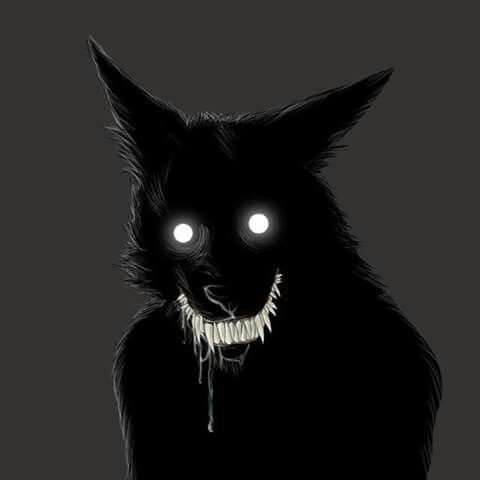
Lycanthropy has a direct link with rabies in history. It’s as though rabies has been incarnated by a demon, which appears at every full moon (very poetic). Werewolves could then represent “The True Face of Rabies” in the magical world.
On the other hand, having rabies as the origin of lycanthropy reinforces lycanthropy-stigma a thousand times more than what AIDS-stigma could ever hope to do. That would have been an interesting dark and tragic take in HP!
So now that we’ve seen an illness that lycanthropy could represent more accurately, wild rabies, you can imagine why trying to compare lycanthropy with HIV is really bad. It was already far-fetched, but now it’s like trying to say that AIDS-seropositives are in some way rabies-infected. Fucking ouch.
In the end though, not even rabies is a perfect representation. There is simply no true equivalent of lycanthropy in the real world, no disease to associate lycanthropy with, let alone AIDS… It is too unique.
However, it is irrefutable that wizards like Lupin do represent a mortal danger each time a month, just like someone or an animal infected with rabies would, and even in the case that lycanthropy represented AIDS–which it hardly does faithfully–it can only stress the danger of Lupin’s transformations into a werewolf and the importance of the management of his disease. Because if he fails, there will be great harm done.
Conclusion
So, what is lycanthropy in HP? It is the illness that causes you to transform into a werewolf every full moon, and which can be transmitted through a werewolf’s bite during that time. This is an illness that pains the infected and represents a danger to any human who happens to cross the path of a werewolf.
What lycanthropy is not: an equivalent for AIDS. It is not an equivalent for homosexuality either, and those comparisons precisely play into homophobic and serophobic principles–not to mention how ridiculous it is in general to claim that werewolves are a metaphor for gays. Just like comparing porphyria to lycanthropy was potentially stigmatizing to those affected in real life, or taking werewolves and monsters in general as metaphors for mental illness has allowed false ideas on psychiatric issues to spread, making prejudices fester for centuries.
Porphyria has been suggested as an explanation for the origin of vampire and werewolf legends, based upon certain perceived similarities between the condition and the folklore.
The theory has been rejected by a few folklorists and researchers as not accurately describing the characteristics of the original werewolf and vampire legends or the disease, and as potentially stigmatizing people with porphyria.
What this all means: Remus Lupin is NOT a queer-coded character for the mere fact he happens to be a werewolf.
One thing is clear: lycanthrophobia is unacceptable. The HP universe could do so much to help werewolves, raise associations and institutions in their favor, get them free Wolfsbane, create a cure and fight against the stigma they suffer. After all, even though Lockhart was a fraud, that doesn’t mean a « Homorphus Charm » doesn’t exist.
“Nice loud howl, Harry — exactly — and then, if you’ll believe it, I pounced — like this — slammed him to the floor — thus — with one
hand, I managed to hold him down — with my other, I put my wand to his throat — I then screwed up my remaining strength and performed the
immensely complex Homorphus Charm — he let out a piteous moan — go on, Harry — higher than that — good — the fur vanished — the fangs
shrank — and he turned back into a man. Simple, yet effective — and another village will remember me forever as the hero who delivered them
from the monthly terror of werewolf attacks.”
Take a second to picture the scene… Lockhart’s a creep.
On the other hand, we have to remember that lycanthropy is a real danger too, and werewolves, notably adult ones, have to accept their responsibility in doing everything they can so an accident doesn’t ever happen, or they could ruin the life of an innocent. And this… is something Remus Lupin will struggle to learn.
 The Sneep Project
Your comment: