A Textbook Case of Radicalization
Severus Snape – The Death Eater Days 1
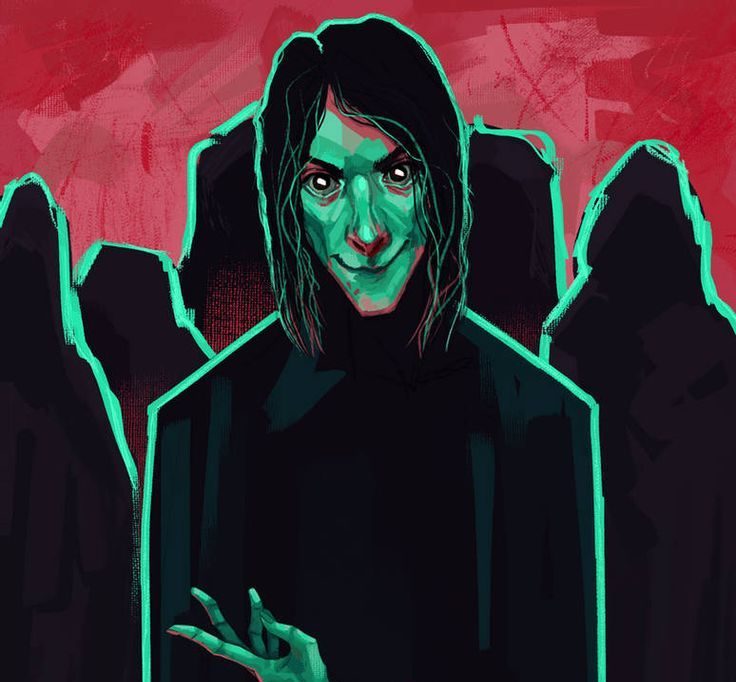
art by MyObscureImaginarium
Introduction
“And you overlook Dumbledore’s greatest weakness: He has to believe the best of people. I spun him a tale of deepest remorse when I joined his staff, fresh from my Death Eater days, and he embraced me with open arms — though, as I say, never allowing me nearer the Dark Arts than he could help. […]”
Why did Snape become a Death Eater in his youth? That is the question.
This essay will sadly have to make use of lots of speculation, probability and guessing. We are never explicitly told the reasons Snape joined the Death Eaters. Instead, we are given clues and it’s up to us to understand what may have enticed him to turn this way. This is the one essay where sources such as Pottermore and Rowling’s post-publication comments will hold a little more place in our argumentation.
And before you scream heresy: this essay is not meant to excuse Snape for joining the Death Eaters. We don’t care about that. That was a bad choice, simple as that. But if you’re curious enough to understand what can drive someone – in this case, a fictional character – to join a cultish, radicalized faction, then this essay may interest you.
Furthermore, I’d like to debunk the idea that if Snape joined the Death Eaters, it’s because he was a new Bellatrix – doing evil because he loved evil. It denotes a lack of understanding of how radicalization takes place (such as TERF-y ones). This lack of awareness in the functioning of a hate group such as the Death Eaters is a real problem, and if you don’t take the time to recognize how radicalization groups function – especially when it comes to spotting a vulnerable person and using their needs, weaknesses and fears in the group’s advantage, then we’ve got bad news for the account of your resilience against extremism.
It would be foolish to think Snape pulled a Cursed Child- Diggory the day he decided to become a Death Eater. He is a textbook case of radicalization, as we’ll see, and he is interesting because unlike Bellatrix, the Malfoys or Regulus, he is the most representative case of those who fell prey to extremist, sometimes terrorist groups. In other words, he’s the example you’d most likely follow if you were, even without realizing it, to become part of a dangerous cult.
As this is a subject that has been much debated already, we have asked and obtained the authorization of reddit user pet_genius and tumblr user Rose2Jam for the extensive use of their essays:
- The Death Eaters as a Cult (by pet_genius)
- Snape was a good person who went bad and then good again, and his remorse was true (by pet_genius)
- Why it was practically inevitable that Severus would join a cult (by Rose2Jam)
I also recommend reading the book Psychological Perspectives on Radicalization as it gives very useful information that – we never know – could help you or your loved ones out in real life. And because this book is that neat, I think this passage is relevant as a disclaimer for this essay:
[…] it is important to make a distinction between the role of scientists in terms of analyzing and trying to understand the reasons and motives behind certain behavior (in this case performing terrorist attacks) and justifying the actions. Specifically, we stress that our motivation to understand the reasons behind actions does not imply a motivation to justify these actions. Thus, our analysis in terms of reasons or motives does not alter the fact that illegal (violent) actions have been undertaken that cannot be justified and, as such, demand punitive legal actions no matter what the motives might have been and how well one might be able to understand them.
Last disclaimer: I am not a student of psychology or criminology or literature, so this essay will look amateur-ish and probably lack a lot of the nuances of radicalization. I will do my best considering what I currently know. Don’t hesitate to add your own perspectives on this subject in the comments.
Pre-Hogwarts: Primed to be groomed
Dysfunctional household
Here’s pet_genius in their essay:
Evidence of domestic abuse:
During Harry’s Occlumency lessons, he sees this:
a hook-nosed man was shouting at a cowering woman, while a small dark-haired boy cried in a corner… [illustrate]
To cower: to shrink away or crouch especially for shelter from something that menaces, domineers, or dismays. [also: to crouch in fear]
No one seems to care that [Severus] is crying, which shows neglect, at least.
In The Prince’s Tale, we see this:
His black hair was overlong and his clothes were so mismatched that it looked deliberate: too short jeans, a shabby, overlarge coat that might have belonged to a grown man, an odd smocklike shirt.
Again, poverty and neglect. He is clearly ashamed of what’s under the coat, because:
Harry wondered why he did not take off the ridiculously large coat, unless it was because he did not want to reveal the smock beneath it.
There is also this:
“How are things at your house?” Lily asked.
A little crease appeared between his eyes.
“Fine,” he said.
“They’re not arguing anymore?”
“Oh yes, they’re arguing,” said Snape. He picked up a fistful of leaves and began tearing them apart, apparently unaware of what he was doing. “But it won’t be that long and I’ll be gone.”
“Doesn’t your dad like magic?”
“He doesn’t like anything, much,” said Snape.
This confirms that Snape’s dad doesn’t like him or his mom, and that Snape’s only hope is that soon he’ll be out of there. Also, he calls a man shouting at a cowering woman “arguing” and this is his version of “fine”.
Harry describes Snape as being very obviously not well-cared for or loved [notably compared to James]:
slight, black-haired like Snape, but with that indefinable air of having been well-cared-for, even adored, that Snape so conspicuously lacked.
Physical abuse is implied by Snape’s mother’s cowering, the fact that Snape appears to always be wearing a long coat. This could be “just” his shame at his clothes, but long sleeves in the summer are a pretty classic sign of physical abuse. Adult Snape’s relative indifference to physical pain (Fluffy bites him, he’s knocked out, Harry casts a stinging hex) is another hint (you can’t accuse him of being stoic about other things). It’s also confirmed to horrific effect by Pottermore [Pottermore screen]:
It was also an accurate description of the desperately lonely and unhappy childhood he had with a harsh father who didn’t hold back when it came to the whip.
Yikes.
—
I’ll add two more clues to what pet_genius noted:
He was on platform nine and three quarters, and Snape stood beside him, slightly hunched, next to a thin, sallow-faced, sour-looking woman who greatly resembled him.
Kid Snape’s body language speaks clearly: hunching is a way to protect yourself from hits and make yourself unnoticeable, typically after you suffered physical (but also verbal) violence.
Second, the trauma of Snape’s household abuse lasts in his adult years. This is his reaction after Harry has broken into his mind and they together witness scenes of his childhood–the shouting parents, the boy in his bed shooting down flies, the broomstick bucking under the boy and a girl laughing:
“ENOUGH!”
Harry felt as though he had been pushed hard in the chest; he took several staggering steps backward, hit some of the shelves covering Snape’s walls and heard something crack. Snape was shaking slightly, very white in the face.
How is all this relevant in the process of Snape’s radicalization? Well, now is the time to tap into what researchers have concluded as to what could attract someone into radical, violent groups. It has to do with human needs, as Psychological Perspectives on Radicalization says:
Each terrorist may have a unique psychological need that forms the underlying motivation for why he or she radicalizes. […] Identifying this need will be useful in determining how best to approach this individual in interventions. Needs are important, as they can motivate us to behave in a certain manner.
For example, Abraham Maslow (1970) proposed five different human needs, which can be arranged in a hierarchy, where the basic needs need to be fulfilled before a person will spend time and energy on the “higher” needs. From the bottom (with the basic existential needs) to the top, these are:
(1) physiological needs (the minimal requirements for life such as food and water),
(2) safety needs (being protected from danger from the environment),
(3) attachment needs (being accepted by others),
(4) esteem needs (feeling competent, feeling respected by others and the self), and
(5) self-actualization needs (playing, exploring).
In the literature on processes of radicalization, four needs can be distinguished that overlap with several of Maslow’s needs [need for identity, need for justice, need for significance and need for sensation].
[…] For someone to be truly vulnerable to radicalization, more is needed. Most significantly, he or she must possess a certain “motivational imbalance,” where one need is so strong that it dominates others and is conducive to extreme behavior (Kruglanski, Jasko, Chernikova, Dugas, & Webber, 2017). In this context, [we] will distinguish between justice seekers, identity seekers, significance seekers, and sensation seekers. Such a motivational imbalance can be caused, or worsened, by crucial events in the individual’s life; traumatic events such as the death of a loved one, or an experience of discrimination, [in other words trigger] factors.
Domestic violence heightens Severus’ need for safety, while emotional neglect and abuse stress on attachment needs. Any groomer who saw Snape could immediately understand which needs to target:
[…] Harry, whose attention had been focused entirely on the two beside the window, saw his father: slight, black-haired like Snape, but with that indefinable air of having been well-cared-for, even adored, that Snape so conspicuously lacked.
Furthermore:
Negative events at home (domestic problems), losing perspective on work, or problems at school can also trigger further radicalization, particularly in the vulnerability phase. For example, a divorce or disagreements with family members can increase an individuals’ identity need (social support) or a need for significance (a need for a purpose in life to focus on).
It is made clear in Harry Potter that parental failure is a weakness that Voldemort exploits with joy. Barty Crouch Jr. has a very dysfunctional relationship with his dad, as Sirius explains:
“Once [Barty Crouch Jr] had died, people started feeling a bit more sympathetic toward the son and started asking how a nice young lad from a good family had gone so badly astray. The conclusion was that his father never cared much for him.”
Voldemort clearly took advantage of this, played up the parallel between Tom Riddle Sr. and Barty Crouch Sr., and BCJ had clearly come to see him as something of a father figure. The consequence:
“Imagine how he will reward me when he finds I have done it for him. I gave you to him — the thing he needed above all to regenerate — and then I killed you for him. I will be honored beyond all other Death Eaters. I will be his dearest, his closest supporter… closer than a son…” […] “The Dark Lord and I,” said Moody, and he looked completely insane now, towering over Harry, leering down at him, “have much in common. Both of us, for instance, had very disappointing fathers… very disappointing indeed. Both of us suffered the indignity, Harry, of being named after those fathers. And both of us had the pleasure… the very great pleasure… of killing our fathers to ensure the continued rise of the Dark Order!”
Severus lacked a mother and a father figure that fulfilled the role of parents. He would be extremely vulnerable to what could be his new parental figures among the Death Eaters, like the Malfoys or Voldemort himself. Ashes in their essay The Abandoned Boy and his Problematic Fathers:
I believe Voldemort, as the man who has experimented with boundaries of magic in ways no one else has, is an attractive father figure for someone like Snape (and Barty Jr. as well). After all, Snape spends his spare time inventing hexes, making great shortcuts to Potions. He has a genuine thirst for learning and is inventive and original. In SWM, we see that he has written far more longer answers than anyone else, he is poring over his paper after exams. Voldemort, as a man who pushed boundaries, is an attractive mentor who shows him a new path. Joining a cult not only gives you power and protection (one he desperately needs because of his social inferiority and as someone who is relentlessly bullied), but it also gives you an identity.
Cults usually instill a homogenous, stable identity centered around [a] charismatic leader. Cults turn your unbearable feelings (sense of rejection, social inferiority), and externalise it and manage to a higher purpose. A cult acts as a safe container for people who cannot understand their trauma or overpowering feelings. As a boy with an unstable identity, it is easier for him to project on Voldemort and re-enact an attachment that he has rejected in early childhood: the one with his father. Voldemort also reinforces a world view that the system had taught a half blood working class boy with nowhere to go arrives at: “There is no good or evil. There is only power and those too weak to seek it”.
Ostracization in Muggle society
Severus suffered two ways in Muggle society. First, through socio-economic ostracization.
Snape wasn’t Weasley poor or Remus Lupin poor, he grew up in a slum. His family was Muggle poor, a bit like Merope in her last years. The Weasleys always had lots of food and they were relatively well-groomed. They were quick to spend their money on a trip to Egypt. Notice the Snapes in comparison:
He was on platform nine and three quarters, and Snape stood beside him, slightly hunched, next to a thin, sallow-faced, sour-looking woman who greatly resembled him. [Eileen]
When he introduces himself to Lily:
‘Haven’t been spying,’ said Snape, hot and uncomfortable and dirty-haired in the bright sunlight.
Just after the memory of the cowering woman:
A greasy-haired teenager sat alone in a dark bedroom, pointing his wand at the ceiling, shooting down flies… A girl was laughing as a scrawny boy tried to mount a bucking broomstick–
And some years later:
Professor Quirrell, in his absurd turban, was talking to a teacher with greasy black hair, a hooked nose and sallow skin.
Eileen is thin, Severus is scrawny and has dirty then greasy hair, and they both have sallow skin. Now, it might be their natural complexion, hinting at ethnic origins, but another interpretation is that they are suffering from malnourishment or sickness, which isn’t much of a surprise given the environment they live in is heavily polluted.
Severus’ home is filled with flies, which either indicates he lives near waste or that his home is very dirty:
A greasy-haired teenager sat alone in a dark bedroom, pointing his wand at the ceiling, shooting down flies…
While we can’t confirm the last statement, we can for the first. This is where Snape lives:
Many miles away the chilly mist that had pressed against the Prime Minister’s windows drifted over a dirty river that wound between overgrown, rubbish-strewn banks. An immense chimney, relic of a disused mill, reared up, shadowy and ominous. There was no sound apart from the whisper of the black water and no sign of life apart from a scrawny fox that had slunk down the bank to nose hopefully at some old fish-and-chip wrappings in the tall grass.
Snape isn’t the only one scrawny: the fox is.
Cokeworth, where the Snapes and the Evans live, is a fictional town that seems to be part of the Black Country:
The Black Country is an area of the West Midlands county, in the United Kingdom, covering most of the Metropolitan Boroughs of Dudley, Sandwell and Walsall. […] It became industrialised during its role as one of the birth places of the Industrial Revolution across the English Midlands with coal mines, coking, iron foundries, glass factories, brickworks and steel mills, producing a high level of air pollution. The name dates from the 1840s, and is believed to come from the soot that the heavy industries covered the area in, although the 30-foot-thick coal seam close to the surface is another possible origin. [Wikipedia]
During the 60ies and the 70ies, due to the neo-liberal regime enforced by Margaret Thatcher aka “the Iron Lady”, towns that survived on coal mines and coal-fueled industries underwent a horrific socio-economic decline. It was followed with lots of protests and police violence, notably during the Poll Tax Riots. Ruining the lives of countless families earned Thatcher the name of “Milk Snatcher” and protests continued after her death. All of this to say: the Snapes’ socio-economic situation in Cokeworth was fucked and was clearly linked with the decline of industrial towns in the UK.
But they’re not fucked like any other family in their town. No, they’re special, renowned, infamous.
Petunia’s laugh was like cold water.
‘Wizard!’ she shrieked, her courage returned now that she had recovered from the shock of his unexpected appearance. ‘I know who you are. You’re that Snape boy! They live down Spinner’s End by the river,’ she told Lily, and it was evident from her tone that she considered the address a poor recommendation.
Not only did Snape spend his childhood living in a British slum, he was an outcast in that very slum. He came from the lowest of the low. Snape’s poverty and lower-class status is ingrained in his attitude:
Snape spat bitterly on the ground.
And to think people used to believe Snape was a pureblood who owned a Manor like the Malfoys…
Later, Petunia shows herself more hateful against Severus:
Petunia was breathless, alarmed at being caught. Harry could see her struggling for something hurtful to say.
“What is that you’re wearing, anyway?” she said, pointing at Snape’s chest. “Your mum’s blouse?”
She wants to hurt him, and she knows exactly what will hurt him the most. She strikes two birds with one stone: Snape must wear the clothes of his parents because he is that poor, and to top it, it is his mother’s; that’s classism with a touch of sexism. As we know, Petunia will continue to be a classist and a bully in the future.
It hurts Severus so much his magic gets out of control, a branch cracks and falls on Petunia. This is reminiscent of Harry’s reaction to Aunt Marge insulting him and his parents to the point he accidentally inflates her, then decides to leave the Dursleys’ home.
Severus wears the clothes of his mother and probably his father. In comparison, the Weasleys were wealthy enough to buy new clothes, books, wands and pets for their first children, which were then passed on from generation to generation. Ron, while he used his older brothers’ stuff, never had to wear his mother’s blouse.
If Molly hadn’t wasted her money to buy Harry a handsome set of robes for the Yule Ball, her son would have been spared a night of humiliation in old-fashioned, second-hand dress robes.
- “Mum, you’ve given me Ginny’s new dress,” said Ron, handing it out to her.
“Of course I haven’t,” said Mrs. Weasley. “That’s for you. Dress robes.”
“What?” said Ron, looking horror-struck.
“Dress robes!” repeated Mrs. Weasley. “It says on your school list that you’re supposed to have dress robes this year… robes for formal occasions.”
“You’ve got to be kidding,” said Ron in disbelief. “I’m not wearing that, no way.”
“Everyone wears them, Ron!” said Mrs. Weasley crossly. “They’re all like that! Your father’s got some for smart parties!”
“I’ll go starkers before I put that on,” said Ron stubbornly. […]
“I’m never wearing them,” Ron was saying stubbornly. “Never.”
“Fine,” snapped Mrs. Weasley. “Go naked. And, Harry, make sure you get a picture of him. Goodness knows I could do with a laugh.” [Molly is a bitch to her son in this scene]
- Harry, Ron, Seamus, Dean, and Neville changed into their dress robes up in their dormitory, all of them looking very self-conscious, but none as much as Ron, who surveyed himself in the long mirror in the corner with an appalled look on his face. There was just no getting around the fact that his robes looked more like a dress than anything else. In a desperate attempt to make them look more manly, he used a Severing Charm on the ruff and cuffs. It worked fairly well; at least he was now lace-free, although he hadn’t done a very neat job, and the edges still looked depressingly frayed as the boys set off downstairs.
Later again, it is Lily who uses classist insults, telling him to « wash his [greying] pants ». She truly is Petunia’s sister.
Psychological Perspectives on Radicalization also argues that one’s low socioeconomic position can make someone vulnerable to radicalization, but most importantly:
The relation between socioeconomic status and radicalization is likely to depend to a large extent on (perceived) inequality in a society. Participation in a terrorist group is greater in societies that are unequal (i.e., large differences in economic wealth) compared to more egalitarian societies (Lee, 2011). On top of that, the more inequality is perceived, the stronger the feeling of being treated unjustly. This so-called “relative deprivation” is considered a root factor of radicalization (Moghaddam, 2005).
Additionally:
Reasons for joining reportedly were repression […], an appealing idea of a fresh start, the feeling of not belonging in the society where they grew up, and a sense of adventure.
It’s not for nothing that one of the solutions offered to lower criminality rates is to offer employment and a good, stable home. It allows delinquents to fulfill their physiological and safety needs. It develops their resilience against violent groups as they don’t need to consider joining them to live safely.
Snape didn’t have the wealthy and high status background as well as the healthy support system that people like Harry, James, Sirius or Neville benefited from. He was poor and given the ostracization he suffered in his town and later at school, it is likely that he wasn’t able to find employment in the normal Wizarding World or in the Muggle world. As a young adult, he needed a job, housing and money, and yet had no support system but the DEs to provide them. The Death Eaters seemed like a rational move to him, probably because the richest families supported Voldemort (as did most of the Wizarding Community). In fact, it seemed to be a smart move because he needed to live a better life than in a slum, to rise socio-economically speaking, and he probably dreamed of being treated as highly as people like the Potters, the Blacks or the Malfoys. Joining Voldemort would offer him the possibility of taking his share of the cake (wealth and high status). I think this is why Dumbledore refers to Snape’s employ under Lord Voldemort rather than a service.
“He was still in Lord Voldemort’s employ on the night he heard the first half of Professor Trelawney’s prophecy.”
In general, Severus suffered from Muggle ostracization:
Petunia’s laugh was like cold water.
‘Wizard!’ she shrieked, her courage returned now that she had recovered from the shock of his unexpected appearance. ‘I know who you are. You’re that Snape boy! They live down Spinner’s End by the river,’ she told Lily, and it was evident from her tone that she considered the address a poor recommendation.
I used to think she considered the other side of the river in general a poor recommendation, but no. It’s specifically Spinner’s End. The Snapes are so infamous in Cokeworth that a total stranger like Petunia can recognize Severus and tell where he lives.
It is inconceivable for her that this neighbour boy can be a wizard, and to (hammer reality in the conversation), she reminds everyone that he is « that Snape boy » who lives at Spinner’s End by the river. He comes from such a bad place, it is laughable to think he could be a wizard. Bellatrix seems to have the same thought:
“He lives here?” asked Bella in a voice of contempt. “Here? In this Muggle dunghill?”
The fact that Petunia knows his family by reputation suggests that the Snapes were viewed negatively by a larger part of the town, and likely Severus had to deal with the consequences of his family being considered “white trash”. So, very likely he was bullied by other Muggle kids.
When Petunia discovers that Snape and Lily are going to a school of magic, and learn from Dumbledore that she cannot ever go to Hogwarts because she lacks it, this is what she calls mages:
« That’s where you’re going,” said Petunia with relish. “A special school for freaks. You and that Snape boy… weirdos, that’s what you two are. »
« A special school for freaks » and “weirdos”. This low-key sounds like Petunia is calling them retards. Also, notice Petunia repeatedly refuses to name Snape… he’s that low:
- ‘I know who you are. You’re that Snape boy! »
- « You and that Snape boy… »
- “That boy found it! You and that boy have been sneaking in my room! »
Even years later, her self-pompous despise is as strong as ever:
- “I heard — that awful boy — telling her about them [Dementors] — years ago,” she said jerkily.
As Harry so smartly remarks:
“If you mean my mum and dad, why don’t you use their names?” said Harry loudly, but Aunt Petunia ignored him.
Hatred of magic and wizards was shared between Petunia and Tobias, the two Muggles that Snape directly knew:
“Doesn’t your dad like magic?”
“He doesn’t like anything, much,” said Snape.
Did Tobias hate Eileen after he learned she was a witch and his son a wizard? Did Eileen then come to despise Muggles and teach it to Severus?
Speaking about Snape’s father…
Harry disliked his Muggle relatives. Just like Snape at 10 yo, he wasn’t bent on exterminating them, and he knew being Muggle-Born made no difference. And yet, hating his Muggle relatives was enough for people to assume he wanted revenge against Muggles and Muggle-Borns:
“I don’t care what sort of blood you’ve got!” said Harry fiercely. “Why would I want to attack Muggle-borns?”
“I’ve heard you hate those Muggles you live with,” said Ernie swiftly.
It isn’t fair for Harry: anyone would hate the Dursleys. But Ernie has a point: if your Muggle guardians are despicable, if they hate magic and wizards, then you’re primed to hate Muggles in return and later join those who seem to fight for “wizard liberation”, aka the Death Eaters.
It took Ariana to be beaten up by Muggles for Dumbledore to buy into wizard imperialism. It took Ariana to be killed by him or Grindelwald – a wizard – for him to snap out of it.
“The child who is not embraced by the village will burn it down to feel its warmth,” and is hasn’t been any clearer that Snape followed this path.
Psychological Perspectives on Radicalization again:
When it comes to radicalization in the sense of political violence claiming to be Islamic and although this interpretation does not exhaust the concept, some researchers emphasize economic factors and social exclusion as the main explanation of radicalization, especially among young people from sensitive neighborhoods. Thus certain populations, having faced discrimination and stigmatization because of their origins, may develop an intense feeling of victimization or injustice, engage in violence perceived by themselves as legitimate towards a society in which they do not find their place. […] Economic and social exclusion, feelings of injustice and humiliation would be at the origin of social hatred and, according to F. Khosrokhavar (2016), of a sacralization of hatred against society in the younger generations of working classes.
The Muggle world – Petunia, Tobias, Cokeworth as a whole – treated Snape worse than the trash he lived in. Why should he like Muggles? Why should he treat them better than they treated him?
Hogwarts: A textbook case of radicalization
Bullying
Severus Snape was bullied to horrific extents by the Marauders. To know the full story, you can read this essay also written by pet_genius: The Marauders vs Snape was Bullying, not rivalry. In our essay, we will concentrate on the effect their bullying had on Severus’ vulnerability to cult-like organizations like the Death Eaters.
Now, remember:
Besides stressful events at home, stressful events at work or school are also often listed (e.g., Kleinmann, 2012; Lankford, 2012). For example, in a study comparing 81 suicide terrorists and rampage, work, and school shooters in the United States between 1990 and 2010, Lankford (2012) found that three-quarters had experienced problems at school or work.
In general, the atrocious school violence Snape experienced for 10 months every year at Hogwarts primed him to be at once an identity seeker, a justice seeker and a significance seeker.
Identity Seekers:
Groups provide us with safety and attachment and are an important source of self-esteem. According to social identity theory (Tajfel & Turner, 1979), a person’s sense of who they are depends to a large extent on to which social groups they belong to. This so-called *social identity* is particularly important, as it can boost our self-esteem (when we belong to a successful and important social group) or lower our self-esteem (if we belong to a social group that is stigmatized or frowned upon). As with any social group, an extremist group can be attractive to a person, as it can provide them with safety, attachment, and self-esteem.
[…] The results showed that before joining, levels of self-esteem were generally low; during membership self-esteem was high; and after leaving the group, individuals generally experienced low levels of self-esteem again. Indeed, some individuals reported to have “fallen in a black void” after leaving the group, as they had to distance themselves from their friends who were all members. So, whereas joining an extremist group can be attractive to fulfill the identity need, leaving an extremist group may be less attractive, as it implies losing the protection, attachment, and self-esteem one is looking for (Bjørgo, 1997; Van der Valk & Wagenaar, 2010).
[…] The sudden appearance of a strong group […] formed an excellent opportunity to fulfill the basic need to belong to a successful group.
A distinction can be made between realistic threat, which refers to a perceived threat of loss of materialistic resources (for example, one’s job) and *symbolic* threat, which refers to a threat to one’s culture or identity. Individuals who feel a realistic or symbolic threat are also more likely to approve ideology-based violence. […] Out-group threat was found to be an important predictor for the decision to join an extremist group.
Joining a group may […] also be a way to deal with (perceived) danger from the environment.
The need for a positive identity may be dependent on age. The developmental psychologist Erik Erikson (1968) termed adolescence as “a time of storm and stress.” In this age period, people are particularly concerned about who they are and to which groups they belong. Adolescents may, therefore, be particularly susceptible to propaganda that aims at identity needs.
Justice seekers:
Some individuals may be particularly attracted to extremist groups to counter injustice done toward themselves or their social group. Many extremist groups have this element of injustice fitted into their ideology. […] Extremist groups can be very attractive to justice seekers, as they provide tools and social support to fight perceived injustice. Feelings of injustice and relative deprivation have been identified as so-called “root factors of radicalization” (Moghaddam, 2005; Venhaus, 2010; Schmid, 2013; Van den Bos, 2018). […]
Feelings of injustice can result in negative emotions and thereby also in radicalization (Van den Bos, 2018). Experienced anger, frustration, hatred, and humiliation as a result of feelings of injustice are important factors that are at the background of radicalization (Moghaddam, 2005; Feddes et al., 2012). These emotions can play a role at the individual level (for example, you are angry because of what someone did to you as a person) as well as the group level (anger because of what someone did to members of your group). At the group level, fear, anger, contempt, hate, and humiliation are mentioned as motivating group-based retribution and revenge (e.g., Lickel, 2012).
In sum, feelings of being treated unjustly can be a powerful drive to join extremist groups.
Significance seekers:
The need for significance is considered a dominant motivator for radicalization (Kruglanski et al., 2018). It is related to Maslow’s need of having a positive self-worth. Radicalization can be a result of re-establishing a sense of significance, for example, when you lose face (after having been insulted) or experience a strong setback in life. For example, negative experiences at school or at home are often mentioned as reasons for joining extremist right-wing groups (Möller & Schuhmacher, 2006; Van der Valk & Wagenaar, 2010). Humiliation is a particularly interesting emotion in this respect. In numerous “school shootings” in the United States, humiliating bullying of the perpetrator was mentioned as a driving factor (Leary et al., 2003). Humiliating or denigrating experiences, but also traumatic experiences (such as a confrontation with death), may result in feelings of deep uncertainty about one’s place in the world, a state that is called “existential uncertainty” (Van den Bos, 2009). As a result, individuals may start derogating out-groups that are perceived as threatening their view of the world. Indeed, experimental work has shown that when individuals think about their own death, they denigrate threatening out-groups more and also show greater support for violent acts against these groups (Pyszczynski et al., 2006).
Rose2jam in their essay:
Let’s look at Snape’s Hogwarts experience. He’s a good student, and he pours himself into learning as much magic as possible, and at being the best he can possibly be, probably motivated by a desire to be better than what his Father thinks possible.
During this time, he is regularly bullied and abused by the Marauders. Sometime [during] his 5th year, the Incident at the Shrieking Shack took place. It definitely sucks to have been so thoroughly fucking duped, and put into a life-threatening situation involving a goddamn werewolf. But perhaps even worse than that, the salt in the wound, was that no one fucking did anything about it.
He saw Sirius and James and Remus get out of that situation without facing any sort of proper punishment (as in, they all still stayed at the school as opposed to being expelled like they DEFINITELY SHOULD HAVE BEEN–at least Sirius should have been). Dumbledore was looking out for the Marauders, but no one was looking out for Severus.
On top of that, Severus isn’t allowed to TELL anyone about it, not even Lily. So, he goes through what was possibly one of the most traumatic experiences of his life, and he can’t even tell anyone that it happened.
On to Snape’s Worst Memory. At this point, he’s spent 5 years in Slytherin House, with fellow students who casually throw around the M word. He gets attacked by James and Sirius, he’s practically defenseless, and then the girl who he’d considered his closest friend for so long… has to force herself not to smile when he’s thrown upside down and exposed to everyone on the grounds. Sure, she was trying to defend him at first, but she also fucking nearly smiled at his humiliation, his pain, his abuse. So he hurls the one word that he knows is going to cut the deepest, that will hopefully hurt her as badly as she has hurt him. And it works.
Petunia refused to name Snape, called him a freak and a weirdo, « that boy who lives in the Muggle dunghill that is Spinner’s End ». The Marauders give him a new name: Snivellus (based on « snivelling »). As an identity seeker, Snape would want to restore his dignity, affirm who he truly is – Severus, not « that boy » or « Sniv » – get a new identity that will finally command respect and allow him to be treated like a human being. Thus he gives himself a new name: “The Half-Blood Prince”, which plays on his mother’s last name to bestow upon himself a regal title.
Snape’s wish to be respected, if that was indeed what pushed him to join the DEs, does not come from a place of superiority, a feeling of entitlement to be the king of the world, like it was the case of the Malfoys or the Black family (including Regulus). It comes with having been treated like trash and wishing he was treated like any other person.
In both studies, it was found that the more the participants felt feelings of shame and humiliation in daily life (which are indicators of significance loss), the higher their need for closure (seeking a sense of certainty and meaning in life) and the greater their support for extremism (measured by items such as “Killing is justified when it is an act of revenge”).
Rereading SWM, one of the things that really stuck out was the « You wait… » line Snape said to James. I think it’s pretty easy to infer from that line that the persecution he received from the Marauders was a driving force in pushing him towards wanting to become a Death Eater.
In Snape’s case, the thing that makes sense is that the Marauders, and Dumbledore who enables them, are far more dangerous (see murder attempt by werewolf) than Avery and Mulciber who, as far as we know, haven’t done anything remotely close to what the Marauders do. The Marauders are the wanna-be murderers. Add this to the othering process (Slytherins vs others, me vs the world (Snape was clearly unpopular)), as well as to Snape’s deeper understanding of Dark Magic and true evil… and you get why Snape’s pov was completely different and he could rationalize that the Death Eaters were in the truth. If the Death Eaters offered protection to him, protection that Dumbledore and the others denied him, then Snape could start to think that the Death Eaters were in fact the true protectors of the weak.
Lucius is the 7th year prefect, so whatever protection he provided, if any, evaporated in Snape’s second year, and we all know how popular Snape was, otherwise. The way he was treated by the Gryffindors and by Dumbledore, the “good guys,” was atrocious (and no, this was not a « rivalry » and they did not hate Snape because he was evil from the start). Lily was the only good influence, he was being pulled in the other direction by everything and everyone else. It is kind of remarkable that he stayed friends with her, and would have continued to be friends with her, despite sharing a dorm with people who must have had issues with it.
In summary, Snape in his teenage brain may have equated the Order with the Marauders and everyone at school who participated in laughing at his bullying. Before joining the DEs, the Order and his school peers were his enemies. But he was too weak to protect himself against them. The way they treated him ruined any chance of him willingly joining the Order and severely heightened that of joining the Death Eaters.
There can be sympathy for the little boy who saw magic as his escape from Muggle abuse only to then realize he’s at the bottom of the totem pole among wizards, but not quite disenfranchised enough to get the protection he so strongly needs from people like Dumbledore who protects muggle borns, werewolves and giants.
Voldemort is renowned for manipulating people into joining him; just like regarding real-life radicalization, the abused, bullied, lone, rejected, deprived, marginalized–people who, like Snape, have no support system–are the perfect targets.
And Snape was vulnerable. Several times in the books, he has been compared to prey: a rabbit (OotP), a pet turned savage (HBP), a wounded animal (DH). This is what Voldemort makes of it:
“Anyway, this — this wizard, about twenty years ago now, started lookin’ fer followers. Got ’em, too — some were afraid, some just wanted a bit o’ his power, ’cause he was gettin’ himself power, all right. Dark days, Harry. Didn’t know who ter trust, didn’t dare get friendly with strange wizards or witches… terrible things happened. He was takin’ over.“
In Rowling’s own terms:
Well, that is Snape’s tragedy. Given his time over again he would not have become a Death Eater, but like many insecure, vulnerable people (like Wormtail) he craved membership of something big and powerful, something impressive. He wanted Lily and he wanted Mulciber too. He never really understood Lily’s aversion; he was so blinded by his attraction to the dark side he thought she would find him impressive if he became a real Death Eater.
— J. K. Rowling when asked why, if Snape truly loved Lily, he didn’t give up associating with Dark Magic to be with her (BLC: Bloomsbury Live Chat)
What Snape wanted was to stop being a victim, to stop people from being able to hurt him, and the examples he’d seen then of people who weren’t victims were (privileged) abusers and bullies. So he sought out a movement of such people in the hopes that he could stop being weak.
James felt entitled in treating Snape like his living punching bag. Snape isn’t allowed to defend himself. When James is angry, he can take his anger onto Snivelly. He strips him away from his dignity. Snape cannot have a hold of own body, it’s in James’ control.
Severus is reduced to less than a human. He is violated in every sense of the word.
During Snape’s Worst Memory, we hear:
“Leave him alone,” Lily repeated. She was looking at James with every sign of great dislike. “What’s he done to you?”
“Well,” said James, appearing to deliberate the point, it’s more the fact that he exists, if you know what I mean…”
Many of the surrounding watchers laughed, Sirius and Wormtail included, but Lupin, still apparently intent on his book, didn’t, and neither did Lily.
The Marauders wanted him dead. The fact he existed was a crime in itself. Everybody laughs, effectively agreeing with him that Snape doesn’t belong in this world and he should rather die.
Snape wasn’t allowed to be treated with basic human decency, he was treated lower than crap. Why should he care about them if they died in return? How are they victims when they perpetrate the same kind of prejudice-driven persecution on him? Why should he risk his life resisting Voldemort for the sake of people who wouldn’t give a shit if he died, and took part in his torture?
The answer might seem obvious to you: because it is the right thing to do. But it is uncommon that a troubled teenager can achieve and sustain such a high level of maturity, AND not get convinced that getting rid of the bad guys of his life (who are objectively horrible persons) is not the right thing to do. Not to mention that confrontation with death triggers an intense, chronic feeling of anxiety and unsafety, and tunnel-vision. When your life’s on the line and you know no one is looking out for you but would rather be glad if you were dead, it is incredibly harder to contemplate solutions that are not radical. Teenager Snape had no third party to guide him and help him make the right choices.
As our reference book says:
People who join extremist groups often do have a vivid recall of an event or situation that served as the last straw.
Was that event Snape’s Worst Memory… or the Werewolf Incident? Perhaps that’s when Snape decided he was better off with the Death Eaters, although he tried to remain friends with Lily.
It would cost nothing for Dumbledore to expel James and Sirius. He has the power and the legitimacy to do that. And he does…
Nothing.
Rowling once said:
“James could certainly have been kinder to this boy who was a bit of an outcast. And he wasn’t. And these actions have consequences. And we know what they were.”
Confrontation with death and with figures of authority – and worse, confrontation with death and silencing from figures of authority – are trigger factors to join radicalized groups as well as to engage in extreme, violent acts. Psychological Perspectives, on that subject:
Pyszczynski and colleagues tested the hypothesis that being confronted with one’s mortality increases support for terrorist violence. Their research started from the observation that threats to a cultural worldview and self-esteem, experienced injustice, and humiliation are root causes underlying terrorism. Building further on this notion, the authors predicted that a threat to one’s own existence (also called “mortality threat”) can increase support for violent solutions. […] The results of the study were in line with the predictions made by terror management theory: thoughts of death led Iranian participants to be more favorable toward martyrdom and more willing to join the cause. In a second study among 127 American students, the researchers found similar results in that students in the mortality threat condition responded more positively to statements such as “If we could capture or kill Osama bin Laden we should do it, even if thousands of civilians are injured or killed in the process.” The researchers pointed out that reminders of death can have dramatic consequences for support of extreme violence to solve global conflicts.
This is where the issues surrounding Snape’s family – mainly, the neglect, abuse and low socioeconomic status – take on a whole new level of significance.
Snape had no parents to complain to the Professors about the horrible bullying and attempted murder, requiring that more severe measures be taken against the Marauders. He had no family to comfort him, protect him or guide him. Though Snape’s parents may have been alive throughout his school years, he was listed as one of the “abandoned boys”, alongside Tom Riddle and Harry Potter, as orphans who found a home in Hogwarts.
Hogwards was the first and best home he had known. He and Voldemort and Snape, the abandoned boys, had all found home here…
What this means is that the Marauders were bullying what was essentially an orphan without any semblance of parental or guardian support to defend him against school bullies.
And even if his parents had rooted for him, would they have been able to do anything against the wealthy and highly socially standing families of Potter and Black, given they were living in the slums and were more or less cast away from the Wizarding Society (notably Tobias, who was a Muggle)? Would Dumbledore even have listened to them?
This is all the more important when you consider that while the Marauders bullied a bit of everyone, their “special case” was Snape. We are never told a single instance where they dared picking on a legitimately potent Death Eater wannabe such as Lucius, Avery or Mulciber, likely because messing with them would inevitably bring repercussions from their families and their friends. You don’t get away unscathed with bothering the members of a terrorist group. It was far easier to target an effectively parentless and friendless boy.
We know Dumbledore doesn’t shy from taking advantage of an incredibly vulnerable and defenseless child through fear and menace. He forbade Snape from talking about the Werewolf Incident to anyone, like Lily. Had Snape had parents actually looking out for him, what Dumbledore did would amount to locking Severus away from the core support system that is his family, forbidding a kid to tell his parents about what happened at school, to protect his prized students and his own ass. This reeks of corruption and cowardice.
In summary, here are the main trigger factors that Snape has encountered thus yet, matched with the book’s listing:
- Being confronted with death. This is an often-mentioned trigger factor in the personal realm that plays an important role in the vulnerability phase of radicalization. […] In line with this, experimental research on terror management theory has shown that being confronted with one’s own mortality can trigger the radicalization process (Pyszczynski et al., 2006). Participants who were reminded of death supported the use of extreme violence more.
- Concrete and intense experiences with discrimination, racism, and exclusion […].
- A confrontation with propaganda. […]
- Negative confrontations with authorities and being detained [in his case, silenced] are important trigger factors as well. For example, Muslims may experience feelings of unfairness as they feel disproportionally targeted by authorities (Blackwood, Hopkins, & Reicher, 2013). This can give rise to negative emotions such as frustration, hate, and contempt, which, as argued previously, have been shown to play an important role in the process of radicalization.
In particular:
In a longitudinal study (which allows for making causal statements), Ward, Krohn, and Gibson (2014) found that contact with the police increased the risk of future violence. This association was particularly strong for low offenders (individuals with a relatively low frequency of crime offenses). Ward and colleagues emphasize that labeling may play an important role here. Putting the label “criminal” on a person may actually lead to more criminal behavior, a phenomenon psychologists call self-fulfilling prophecy. The beliefs others have about a person can influence how a person sees him- or herself and thereby actually make this person behave accordingly.
An equivalent is also called the Pygmalion effect.
The self-fulfilling prophecy factor is hinted at the general hate against Slytherins and the assumption they can only breed Dark wizards (Hagrid anyone?). From Snape’s memories:
- “Who wants to be in Slytherin? I think I’d leave, wouldn’t you?” James asked the boy lounging on the seats opposite him, and with a jolt, Harry realized that it was Sirius.
Sirius did not smile. “My whole family have been in Slytherin,” he said.
“Blimey,” said James, “and I thought you seemed all right!”
- “It’s too late. I’ve made excuses for you for years. None of my friends can understand why I even talk to you. You and your precious little Death Eater friends – you see, you don’t even deny it! You don’t even deny that’s what you’re all aiming to be! You can’t wait to join You-Know-Who, can you?”
Notice Lily doesn’t even give Snape the time to deny it.
As a tumblr user said (the link broke, sorry):
“All I can think of is Severus saying “You want a Death Eater? Fine. I’ll give you a Death Eater.” when he joins the Death Eaters after years of being hated on by everyone for supposedly being one (even though he’s not and at first is horrified by it). When there have been years of completely ignored complaints of severe bullying that leads up to him literally being forbidden to talk about being almost murdered by a werewolf. Meanwhile, one of his main tormentors gets to be Head Boy and is unspeakably popular despite his horrible personality, is well loved by his family and friends, and basically is given a thousand chances that he expects rather than appreciates. Life is stacked against Snape and eventually, after struggling for years to prove everything wrong out of stubbornness and spite, he finally succumbs to it. After all, if you’re going to be accused of being a monster, you might as well try to make the best of it.
Continuing with the theme of negative confrontations with authority:
While James was Head Boy, Lupin remained a Prefect till the end of his school career.
Remus finished his school career as a Prefect.
https://www.harrypotter.com/fr/writing-by-jk-rowling/remus-lupin
Two Marauders out of four, including the leader and Snape’s main enemy, held positions of authority and power over him thanks to Dumbledore. Of course, they didn’t refrain from bullying Snape till they were out of Hogwarts.
Snape seems to despise Aurors as an adult:
“All the subjects required, in short, for an Auror,” said Snape, with the faintest sneer.
(He says ACAB.)
Here’s a reason not to join the Death Eaters:
“He — he was taking over everywhere!” gasped Pettigrew. “W-what was there to be gained by refusing him?”
“What was there to be gained by fighting the most evil wizard who has ever existed?” said Black, with a terrible fury in his face. “Only innocent lives, Peter!”
But in Snape’s perspective, those are not innocent lives. The Marauders are not innocent. The schoolmates that took pleasure in his torture are not either. Hogwarts, the Ministry, Muggles, none of them are innocent. Only Lily, in his perspective, and even then…
I doubt Snape would see the DEs as wholly innocent either, but in any case, Sirius’ reason to resist joining the DEs cannot apply to Snape after all the ways the world has used him for sadistic play; that’s one more factor of resilience against radicalization broken in pieces. He’s been disillusioned, his hopes and dreams of Hogwarts dashed and sullied starting from the train.
Lily almost smiles when Severus is hung upside down, which denotes quite a lack of empathy from a girl we’re supposed to think of as the antithesis of Voldemort together with Harry. This comes from the same author who shared a photo of a trans woman’s underwear and said she deserved it by the way. And then, Lily not only puts an end to her friendship with Snape, labelling him as a Death Eater wannabe (the foundations for a self-fulfilling prophecy), but she dates and marries James Potter. Snape, at that point, has lost everything to the worst “good guy” we see in the HP saga, and has been horribly betrayed by his ex best friend. Was he truly her best friend? If I were in Snape’s shoes, I’d start thinking that was all pretense and she saw me as inconsequential.
So who does he have left? He’s got no family, no friends, nothing to fulfill his attachment needs, no one to give him love and companionship.
Or does he?
Being bullied does not automatically make someone part of a cult-like fascist group. This is the difference between Snape and other bullied characters of HP: there was another element to account for in his past when it came to this fateful decision.
Grooming
The Death Eaters were recruiting, and Severus Snape might as well have held a board with “I’m fresh prey for recruitment!” above his head.
Snape’s grooming started from his very first day at Hogwarts. As explained in pet_genius’s essay:
There’s a reason why Lucius is seen patting him on the back as soon as he is sorted – perhaps the policy was to groom all newcomers. Like Barty, he might have looked for a father figure. Harry notices the many similarities between Snape and Voldemort, and these are all things Voldemort must have used on young Snape as well.
And:
Look who is being kind:
Harry walked with him to the stool, watched him place the hat upon his head. “Slytherin!” cried the Sorting Hat. And Severus Snape moved off to the other side of the Hall, away from Lily, to where the Slytherins were cheering him, to where Lucius Malfoy, a prefect badge gleaming upon his chest, patted Snape on the back as he sat down beside him.
The Slytherins are cheering, and Lucius takes this 11 year old with a clear Muggle last name and who definitely looks poor under his wing immediately. The grooming begins. It’s not a secret that Snape and Lucius were close at school, otherwise, what’s this about?
[Sirius:] “Tell me [Snape], how is Lucius Malfoy these days? I expect he’s delighted his lapdog’s* working at Hogwarts, isn’t he?”
I view this as Lucius stepping in as a father/older brother figure, for someone who was desperate for it. It is clear that this relationship persisted throughout Snape’s life, and it looks like it was all in all a good one (albeit a dishonest one, once Snape switched sides).
*A much more sinister interpretation of this comment has some merit (look into the history of “fagging” in British boarding schools). If you take it as true, Snape’s mental state, that led him to join the Death Eaters, is explained away completely, with no need to assume racism at all. You also have to wonder just how cruel Sirius is being with this little comment. I am choosing to view Lucius’s relationship with Snape as a benign one.
[…] As for him being part of a gang who all turned out to be Death Eaters? Well, that’s the point: he’s been groomed.
One of the listed trigger factors in the personal realm, per our book:
Meeting a radical person. Radicalizing individuals are often motivated by and receive “coaching” from other radical individuals, such as recruiters who instruct their followers with propaganda and the ideology. A charismatic person or individual leader served as a key factor in the radicalization process of several European cases of terrorism. Former Islamic extremist Maajid Nawaz explains (De Wever, 2015, April 6):
It was not until a recruiter of Hizb ut-Tahrir approached me that I became enthusiastic. He pointed out the anger that was within me and he offered me a dream. I connected my anger to radical Islam, a deplorable ideology. This step made me a radical.
Often recruiters are charismatic persons who are seen as important because of their position in a group or because they demonstrate knowledge of an ideology or religion. Again, it is important to realize that recruiters, through observation and conversation, identify a person’s dominant psychological need (i.e., identity-related needs like safety and a need to belong or justice-related needs) and then “tailor” their approach to this need. Radical persons that trigger an individual to join a group may be friends or family, but they can also be strangers. An undercover reporter of the Daily Mail posing as a 15- year-old girl in 2015 described how a militant named “Amatullah” behaved as a “mentor” after the reporter contacted him (Daily Mail, March 8, 2015).
Snape was love-starved:
Harry, whose attention had been focused entirely on the two beside the window, saw his father: slight, black-haired like Snape, but with that indefinable air of having been well-cared-for, even adored, that Snape so conspicuously lacked.
making him a perfect prey for lovebombing. Anyone who wanted to get Snape to their side merely needed to show him love and attention, a promise of belonging and safety.
Remus Lupin is an example of this phenomenon.
Per PoA and Pottermore, because Lupin felt accepted by the gang formed by Sirius and James, he gave them his loyalty, became part of their gang, enabled and excused their evil acts, and partook in them [see detention cards + marauder’s map + snape in a drag] even though he was a Prefect and later Snape’s colleague (both as teachers and as Order members).
“But apart from my transformations, I was happier than I had ever been in my life. For the first time ever, I had friends, three great friends. Sirius Black… Peter Pettigrew… and, of course, your father, Harry — James Potter. Now, my three friends could hardly fail to notice that I disappeared once a month. […] But of course, they, like you, Hermione, worked out the truth… And they didn’t desert me at all. Instead, they did something for me that would make my transformations not only bearable, but the best times of my life. They became Animagi.” [PoA]
It’s interesting that Lupin qualifies the transformations into a werewolf as the best times of his life considering how painful they’re reputed to be and how dangerous the excursions were.
From Pottermore:
He did not approve of their relentless bullying of Severus Snape, but he loved James and Sirius so much, and was so grateful for their acceptance, that he did not always stand up to them as much as he knew he should.
It’s not just that he “did not always stand up to them as much as he knew he should”: he does not flinch when Snape is treated monstrously by his friends in SWM, he constantly covered for his friends during the nightly excursions despite of their dangerosity, and Lupin appears on the detention cards in HBP. He wasn’t just a semi-bystanding cop, he was actively involved in the gang’s delinquency:
It was, as Harry had anticipated, useless, boring work, punctuated (as Snape had clearly planned) with the regular jolt in the stomach that meant he had just read his father or Sirius’s names, usually coupled together in various petty misdeeds, occasionally accompanied by those of Remus Lupin and Peter Pettigrew.
This is what the power of love can do. If you can call that true love.
Another thing to know is that radicalized groups target teens: teenagehood is a moment of turmoil where one’s identity is constructed. It is also renowned for being a time of bullying, which was Snape’s case, making them vulnerable to outside influence that promises them power, dignity, belonging, love and especially justice.
From Rose2Jam:
[It is unbelievably easy] for a Cult Leader to find people with damaged lives and low self-worth, to suck them in with promises of a fulfilling life and grandeur, and for those people to be easily swept up and brainwashed into believing that what they are doing is right.
And from pet_genius:
What was the pitch, how did they get him? I am assuming they promised him a future free of oppression by people like his Muggle dad, possibly a lucrative career; maybe revenge against those who had wronged him played into it.
This is the kind of brainwashing Snape might have been subjected to in his House:
“We’ve all got to listen to her explain how Muggles are like animals, stupid and dirty, and how they drove wizards into hiding by being vicious toward them, and how the natural order is being reestablished.” [from Neville, DH]
Here’s a translated excerpt from Psychologie des Comportements Criminels by Catherine Blatier:
Ils font appel à la culture du martyre […]
Afin de s’intégrer dans un environnement structuré, la personne qui se radicalise adopte un nouveau comportement, se représente comme guerrier, souvent idéalisé dans des jeux vidéo, ou s’engage dans une quête spirituelle ou de rédemption, avec la figure du héros comme modèle.
→ They appeal to the culture of martyrdom […]
→ In order to integrate into a structured environment, the person who becomes radicalized adopts a new behavior, represents themselves as a warrior, often idealized in video games, or embarks on a spiritual or redemption quest, with the figure of the hero as a model.
One of the identified processes of recruiters wanting to radicalize the target:
établir des adages : “Les terroristes sont des combattants de la liberté” ;
→ establishing adages: “Terrorists are fighters for freedom”;
Did you know? In an interview, Rowling says that the Death Eaters used to be called “the Knights of Walpurgis”. A knight – a chivalrous, heroic figure – exactly the kind of grooming tactic one uses to draw impressionable, sensation-seeking and justice-seeking people in:
JK ROWLING: Well some of them are totally redundant now because its been written and I keep them out of sentimentality’s sake, I suppose. But some of it has backstory in it like this – in here is the history of the Death Eaters and I don’t know that I’ll ever actually need it – but at some point – which were once called something different – they were called the Knights of Walpurgis. I don’t know if I’ll need it. But I like knowing it. I like to keep that sort of stuff on hand.
Paxman, Jeremy, interviewer. « JK’s OOTP interview, » BBC Newsnight 19 June 2003.
What makes Snape feel the happiest? What could he have sought among the Death Eaters that he couldn’t initially get with Dumbledore’s side? Safety, what his Patronus is imbued with. This is what Snape craved, even as an adult:
“Then you will find yourself easy prey for the Dark Lord!” said Snape savagely. “Fools who wear their hearts proudly on their sleeves, who cannot control their emotions, who wallow in sad memories and allow themselves to be provoked this easily — weak people, in other words — they stand no chance against his powers! He will penetrate your mind with absurd ease, Potter!”
This passage is interesting in that it can be taken as a metaphor for what the Death Eaters and Voldemort did to Snape: they targeted a weak child and “penetrated his mind”, in a more vicious way than Legilimency. They sabotaged his relationship with Lily and eventually his life and Snape hates himself for having fallen for it, as evidenced by the way his Dark Mark “hurts” even without Voldemort’s intervention – just by being reminded of his biggest mistake:
Snape suddenly did something very strange. He seized his left forearm convulsively with his right hand, as though something on it had hurt him. [GoF]
One of the tactics used by terrorists is to isolate the potential recruit, having them burn bridges with all those who do not align with the radicalized ideologies, so that their only contacts are the hate group for further radicalization and resistance to de-radicalization. This also facilitates the binary vision of “us vs them”, “we are good vs they are evil”, and eventually, “we are the heroes vs they are the villains” through the weaponisation of the victim’s feelings of injustice.
In Snape’s case, the “good side” antagonized him in the cruelest of ways; a recruiter wouldn’t have to make any effort to convince him the outside world was the true evil. Snape’s only tie with the good side was Lily, and he lost her as she burned bridges with him and sided with Snape’s personal enemies, who were objectively bad people (with James, I’d argue, as a psychopath). The only people he had contact with became the Slytherins, amongst whom lived plenty of Death Eaters, notably Lucius Malfoy, who appeared to be the first if not the main groomer. If any propaganda / brain-washing tactic was used on Snape to facilitate his isolation from the outside world, that would be exposing him to the continuous, years-long dehumanization of Muggles, Muggle-borns and blood traitors, which could (partially) explain why he called Lily a mudblood in a moment of distress, something he would obviously regret and not believe in.
As per Psychological Perspectives on Radicalization:
The decision to join a group together with peers. Radical groups provide individuals with a feeling of belonging, which is a basic human need (Baumeister & Leary, 1995). Events, rituals, and ceremonies take place in the group context, like organizing demonstrations, learning about the ideology together, and eating together. This results in a greater connectedness to fellow group members and greater identification with the group as a whole. The decision to join the extremist group is a trigger factor that precedes a subsequent series of trigger factors that strongly influence the radicalization process. […] This so-called bunch of guys phenomenon has also been observed in criminal groups. In a large study involving 1354 youths in the United States, Monahan, Steinberg, and Cauffman (2009) showed that, particularly in the age range of 16 to 20 years, there is a strong influence of peers on development of delinquent behavior.
[…]
Breaking social bonds. Once inside, extremist groups often force a person to break outside connections with family and friends who do not share the extremist ideology, a phenomenon that is also called bridge burning (Bjørgo & Carlsson, 2005). When radical people break social bonds, they typically radicalize further as the person becomes more resilient against attempts of the outside world to convince them to step out of the group. Recruiters of extremist groups often convince individuals to burn bridges. As a recruiter of the extremist group ISIS put it (Callimachi, 2015, June 27): “We are looking for isolated people. And if they are not yet isolated, we isolate them.”
[…]
A radical group can offer feelings of connectedness and brother- or sisterhood, a sense of meaning in life, an important goal to strive for, simple answers to difficult questions, and, sometimes, the promise of heroism and paradise after death. People who are vulnerable for different reasons (e.g., the death of a close family member, experienced unfairness, discrimination, humiliation and alienation from society, or a feeling of meaninglessness or disconnectedness [e.g., Moghaddam, 2005; Kruglanski et al., 2013; Doosje et al., 2016]) may therefore more easily be lured into such groups by means of the messages that they convey or they may actively search for radical groups.
[…]
The second group process is making the distinction between us and them. This process is also more strongly prevalent in radical groups. […] For example, radical groups often force their members to clearly choose and spend time with their radical group and no longer associate themselves with previous groups (such as family or old friends). Members of radical groups sometimes are forced to stop seeing or texting their parents or old friends in an attempt to create a stronger bond between the comrades, almost replacing the family bond.
The Marauders were able to get away with nearly the same amount of violence and prejudice as the Death Eaters, because this time, they had Dumbledore to cover their backs. Instead of defending Severus for being of a lower blood status and a blood traitor, for being poor, suffering prejudice as a Slytherin, etc, Dumbledore favoured the bullies with high blood status (pureblood), from the highest class (one of whom is a descendant of the Ancient and Most Noble House of Black), showered with privileges, good looks and talents in popular subjects (such as Quidditch), and had them get away with attempted murder, sexual assault, intense and relentless bullying. Dumbledore, in Snape’s eyes, was no better than Voldemort. At that time, in his own perspective, he was worse.
This is the difference between Sirius and Severus: Sirius had Gryffindor House and James for most of the year, he was able to flee his dreadful family in Grimmauld Place and live with his best friend. Where could Snape go if he wanted to flee from Slytherin House and his abusive household? He was stuck in Slytherin House from the moment the Hat sorted him there, and he had no money to travel away and change schools. He couldn’t even flee from the Marauders, so how could he escape from all the Slytherins?
Rose2Jam on this subject:
So, what sort of support system does Severus have during all this? He has Lily, sure (who literally told him he should be GRATEFUL to James, one of his abusers). But, what he really has, is Slytherin House (7). I’ll say it plainly: Severus was sorted into a house that was already full of existing cult members. McGonagall says in Sorcerer’s Stone that “Your house will be like your family” (she at least says it in the movies, I’m too lazy to get up and reference my books rn lol). So, Severus’ family, his support system, for 10 months out of every year, is a house that is already full to the brim with pureblood elitists with prejudiced ideals, who would absolutely vindicate Severus in his dislike for muggles. As a kid first getting sorted into the house, it’s obviously not unreasonable to become friends with the people you’re literally living with. His dorm mates became his family.
Severus had been beaten down his entire life. By Muggles and Magic Folk alike. And finally, he’s betrayed by Lily, his last lifeline to the light. He betrayed her as well, of course. But he did try to show remorse. And she doesn’t forgive him (9), which was her prerogative, of course.
So. Who does he have left?
Slughorn, his then Head of House, was useless. Slughorn praises bullies as long as they’re funny to him, see: Ginny. He is unconcerned with the (mental) welfare of his students and delusional about the dangerosity of his House at the time:
“The whole Black family had been in my House, but Sirius ended up in Gryffindor! Shame — he was a talented boy. I got his brother, Regulus, when he came along, but I’d have liked the set.”
He sounded like an enthusiastic collector who had been outbid at auction.
And then came Voldemort. Rose2Jam on that:
Each of those events led Severus to becoming an angry young man, who hates muggles, hates (some) magic folk, and resulted in him feeling weak, helpless, and desperate. For what? For power, for a family, for a community. For a world where he is no longer the weird one. For a world where he’s respected, strong. For the world he thought he was going to be a part of, when he arrived at Hogwarts in his first year.
And it just so happens that this is the exact world that Voldemort is (allegedly) trying to create.
Severus Snape was angry, and vulnerable, and as such, he was practically the poster child for the type of person who would be susceptible to falling for a cult. Maybe he was recruited by his friends in Slytherin House. Maybe he was recruited directly.
Either way, charismatic Tom Riddle came along, understood how he felt, where he was coming from, told him he deserved better, and offered him all of the things he never had in his life. And being at rock bottom, being the lowest of the low, to Severus it must have seemed like a miracle of an opportunity, or perhaps, like the only chance he had left.
Wizards in Snape’s time were more ambiguous about Voldemort. Or, to put it simply: a significant part of them agreed with his vision and many wanted to join him.
“Were — were your parents Death Eaters as well?”
“No, no, but believe me, they thought Voldemort had the right idea, they were all for the purification of the Wizarding race, getting rid of Muggle-borns and having purebloods in charge. They weren’t alone either, there were quite a few people, before Voldemort showed his true colors, who thought he had the right idea about things… They got cold feet when they saw what he was prepared to do to get power, though.
Voldemort didn’t yet have the reputation of a heartless psychopath. He was reputed to be intelligent, talented, charming, and seemed to want to bring glory to the wizarding community. Even in Harry’s time, even among the « good » wizards, Muggles are treated like subhumans – at best, there is a very patronizing attitude towards, a sort of fetishization. It is likely that it was even worse in Snape’s time. Bigotry was normalized.
We know Voldemort was trying to obfuscate the nature of the relationship, like all cults – they never admit that this is what they are.
“I am glad to hear that you consider them friends,” said Dumbledore. “I was under the impression that they are more in the order of servants.”
“You are mistaken,” said Voldemort.
Voldemort’s group also presented an opportunity to study Dark Arts without the idiotic stigma that comes with it. The Dark Arts have been branded evil for no valuable reason, see the essay: Misconceptions on the Dark Arts. To a knowledge-seeker like Snape, who loved the Dark Arts even long after betraying Voldemort, it would further his desire to join the Death Eaters.
It could have made him a sensation seeker as well:
Sensation seeking relates to Maslow’s dimension of self-actualization, where adventure and play are key elements. Sensation seekers are those who are typically on the lookout for excitement and adventure, and these persons may be particularly attracted to radical groups.
Extremist groups target the need for sensation in their publication campaigns by using pictures of tough-looking warriors and the promise of adventure (Van San, 2015).
The need for sensation may also come about from simple boredom when not much is happening in life and there is no positive outlook that things will be better in the future, in combination with an attraction to arms, violence, and excitement (Venhaus, 2010; Crone, 2016), for example, in the case of unemployment or having a job without prospects. Glory, thrills, and romance may then form important motivators to meet the need for sensation or, in Maslow’s terms, the need for self-actualization: realizing one’s full self, dreams, and capabilities.
Yet the most important part was Voldemort’s fantastic ability to manipulate people into his ranks:
[Diary!Tom:] “But I was patient. I wrote back. I was sympathetic, I was kind. Ginny simply loved me. No one’s ever understood me like you, Tom… I’m so glad I’ve got this diary to confide in… It’s like having a friend I can carry around in my pocket… […] If I say it myself, Harry, I’ve always been able to charm the people I needed.”
This is Voldemort manipulating an eleven-year old Ginny. But don’t forget what Dumbledore said:
“Miss Weasley should go up to the hospital wing right away,” Dumbledore interrupted in a firm voice. “This has been a terrible ordeal for her. There will be no punishment. Older and wiser wizards than she have been hoodwinked by Lord Voldemort.”
Indeed. Quirell, an adult Ravenclaw, was lured and trapped by Voldemort:
“I met him when I traveled around the world. A foolish young man I was then, full of ridiculous ideas about good and evil. Lord Voldemort showed me how wrong I was. There is no good and evil, there is only power, and those too weak to seek it… Since then, I have served him faithfully, although I have let him down many times. He has had to be very hard on me.”
In his biography on Pottermore:
I saw Quirrell as a gifted but delicate boy, who would probably have been teased for his timidity and nerves during his school life. Feeling inadequate and wishing to prove himself, he developed an (initially theoretical) interest in the Dark Arts. Like many people who feel themselves to be insignificant, even laughable, Quirrell had a latent desire to make the world sit up and notice him.
Quirrell set out deliberately to find whatever remained of the Dark wizard, partly out of curiosity, partly out of that unacknowledged desire for importance. At the very least, Quirrell fantasised that he could be the man who tracked Voldemort down, but at best, might learn skills from Voldemort that would ensure he was never laughed at again.
Though Hagrid was correct in saying that Quirrell had a ‘brilliant mind,’ the Hogwarts teacher was both naive and arrogant in thinking that he would be able to control an encounter with Voldemort, even in the Dark wizard’s weakened state. When Voldemort realised that the young man had a position at Hogwarts, he took immediate possession of Quirrell, who was incapable of resisting.
As explained by Hagrid:
“Anyway, this — this wizard, about twenty years ago now, started lookin’ fer followers. Got ’em, too — some were afraid, some just wanted a bit o’ his power, ’cause he was gettin’ himself power, all right.
Voldemort’s manipulation skills again, by pet_genius:
Through the memory of the meeting with Heptzibah Smith, we see that Tom was definitely charming when he needed to be, and knew how to make people feel good. He did not use magic to trick her into showing him her precious locket and cup: he used muggle manipulation – flattery, making an old and forlorn lady feel valuable, perhaps even flirting with her (she’s certainly flirting with him). He was pleasant enough that Ms. Smith eagerly looked forward to his visits.
Helena Ravenclaw, daughter of Rowena Ravenclaw (founder of Ravenclaw House) and extremely intelligent, fell to Voldemort’s manipulating skills.
She closed her eyes and nodded.
« I had… no idea… He was flattering. He seemed to… understand… to sympathize… »
Yes, Harry thought. Tom Riddle would certainly have understood Helena Ravenclaw’s desire to possess fabulous objects to which she had little right. [ouch?]
« Well, you weren’t the first person Riddle wormed things out of. » Harry muttered. « He could be charming when he wanted… » [like Harry is currently being, considering his true thoughts about her]
As did even Snape’s Head of House, Slughorn, a few years ago, when he discussed Horcruxes with Tom Riddle.
Snape stood no chance.
pet_genius adds:
Finally, here is Dumbledore talking about why people associated themselves with the young Tom Riddle:
“As he moved up the school, he gathered about him a group of dedicated friends; […] They were a motley collection; a mixture of the weak seeking protection, the ambitious seeking some shared glory, and the thuggish gravitating toward a leader who could show them more refined forms of cruelty. In other words, they were the forerunners of the Death Eaters, and indeed some of them became the first Death Eaters after leaving Hogwarts.”
Dumbledore himself recognizes that not all Death Eaters were thugs who were interested in flexing their muscles in more refined forms. In my view, Snape was a combination of the first two, until Lily was put in the crossfire, at which point he had forgone protection and glory.
And when Snape joined the Death Eaters, the Dark Mark burned into his arm, it was too late. Like Regulus:
From what I found out after he died, he got in so far, then panicked about what he was being asked to do and tried to back out. Well, you don’t just hand in your resignation to Voldemort. It’s a lifetime of service or death.
Rose2Jam:
Most people who join a cult don’t necessarily do it signing up for the… end result of what happened to them. Some of them totally do, like Heaven’s Gate. Most of them knew that the end result was going to be the “evacuation of their earthly vessel”. But the people who joined the Manson Family, for instance, did not initially join it KNOWING how it was going to end.
Bigotry?
It’s unsure whether Snape truly was a bigot
Unlike Draco and Regulus, Severus had experience with terrible Muggles. But while he held some amount of disdain for Muggles as a child, he was still anxious to be friends with Muggleborn Lily Evans and never speaks of her heritage with derision in their childhood flashbacks; on the contrary:
“No, it doesn’t make a difference.”
Then, in regard to Snape’s prejudice against Muggles:
“Tuney h-hates me. Because we saw that letter from Dumbledore.”
“So what?”
She threw him a look of deep dislike.
“So she’s my sister!”
“She’s only a —” He caught himself quickly; Lily, too busy trying to wipe her eyes without being noticed, did not hear him.
If you think he was about to tell Lily, “So what? She’s only a Muggle”, then you have to consider he makes the effort not to insult Petunia for being a Muggle in the Hogwarts Express. It’s also totally possible that Snape was just going to call Petunia a “jealous cow” or the like, ruling out prejudice.
Of course, the main evidence for Snape’s prejudice against Muggleborns comes from Lily Evans:
“No — listen, I didn’t mean —”
“— to call me Mudblood? But you call everyone of my birth Mudblood, Severus. Why should I be any different?”
However, the reliability of Lily’s accusation is flawed.
She’s prone to rumors:
“And you’re being really ungrateful. I heard what happened the other night. You went sneaking down that tunnel by the Whomping Willow, and James Potter saved you from whatever’s down there —”
Snape’s whole face contorted and he spluttered, “Saved? Saved? You think he was playing the hero? He was saving his neck and his friends’ too!
That rumor is a lie by omission to frame James saving Severus out of the nobility of his heart, instead of being motivated by wanting to save his and his friends’ neck – which Snape says but Lily ignores it.
Moreover, both Rowling and Sirius suggested that she only pretended to hate James:
- “How come she married him?” Harry asked miserably. “She hated him!”
“Nah, she didn’t,” said Sirius.
“She started going out with him in seventh year,” said Lupin.
“Once James had deflated his head a bit,” said Sirius.
“And stopped hexing people just for the fun of it,” said Lupin.
- MA: How did they get together? She hated James, from what we’ve seen.
JKR: Did she really? You’re a woman, you know what I’m saying. [Laughter.]
The more I read that, the more disgusted I am.
Lily is more willing to believe the Marauders (people she ought to hate) than Severus (their victim and her supposed best friend). As such, it is possible that those were lies told to Lily by her friends (because they didn’t want her to be friends with Severus) or something that she herself made up to shut Snape’s mouth and quickly end their relationship.
Even if what Lily said was true, it is unsure whether Snape called people Mudbloods with racist intent. Let me explain. Did Snape throw the word around because it was a way to be integrated among his Slytherin peers and avoid their bullying? Did he consider he had the right to claim and use that word as he was technically Muggleborn himself?
It is also intriguing that Sirius and Lupin never say or confirm that Severus called people Mudbloods left and right, even though it could represent a perfect excuse to James’ bullying. If Sirius “knew” Snape was racist, then why was it weird for him to think Snape might have been a Death Eater? Why doesn’t he say, “Snape was part of a gang of Slytherins who nearly all turned out to be Death Eaters and he was known for being prejudiced against Muggle-borns and Muggles” as an argument in favor of his Death Eater past?
Rowling also never mentions Snape joining the Death Eaters out of bigotry; she mentions other motives. Remember that, it’ll come useful later.
pet_genius summarizes:
Nearly everyone thinks muggles are subhuman. “Muggle” seems to mean “knuckle-dragger”. Let’s not start with how they treat Squibs (thrown any children out a window recently, Neville’s uncle?).
If Snape is so racist, how come the two people he hates the most (James and Sirius) are purebloods? How come nobody ever accuses him of racism, in real time or in retrospect, except Lily, who only finds his racism problematic when it’s directed at her, and who in fact, bothers to make excuses for him for years and is surprised that he sees something in Avery and Mulciber? Like it or not, if Snape threw the M-word around (which we don’t actually see), he did not use it more than was generally acceptable. […]
It is clear that he did not join up because he was a huge racist, but because he wanted to be powerful, and because these people, Lucius in particular, accepted him (unlike the non-racists who hated him because he exists). […] He became a Death Eater to gain power and influence, after 7 years of grooming by the bad guys and abuse by the good guys. This was fueled by very understandable hatred for Muggles. Real life adult humans do evil deeds with much less prompting. Don’t believe me? Read up on the Milgram Experiment and the Stanford Prison Experiment.
Notice that Snape and Filch are on friendly terms, Pottermore suggesting it was the case since he was a child:
Although the precise circumstances surrounding the makers’ loss of their map are not given in the Harry Potter novels, it is easy to conclude that they eventually over-reached themselves and were cornered by Argus Filch, probably on a tip-off from Snape, whose obsession it had become to expose his arch-rival, James Potter, in wrongdoing.
Such a bigot!
Harry finds it unlikely that the Half-Blood Prince, Severus Snape, must have been a Death Eater (something even Sirius didn’t know until the end of book 4):
“I don’t see where you get that from,” said Harry heatedly. “If he’d been a budding Death Eater he wouldn’t have been boasting about being ‘half-blood,’ would he?”
And it’s not just that he’s a Half-Blood. Snape is also “Muggle-Born” in the sense that he’s born from Muggle Tobias Snape, and his mother may be Muggle-Born or Half-Blood as well (offering even more Muggle grandparents). Per Rowling, half-bloods could be subject to the slur Mudblood:
Non-bigots in the wizarding world would say half-blood. Pure blood supremacists would say mudblood.
It’s evident that half-bloods are targets of disdain amongst the Death Eaters:
“Did you know he’s a half-blood too?” said Harry recklessly. Hermione gave a little moan in his ear. “Voldemort? Yeah, his mother was a witch but his dad was a Muggle — or has he been telling you lot he’s pureblood?”
“STUPEF —”
[…]
“He dared — he dares —” shrieked Bellatrix incoherently. He stays there — filthy half-blood —”
If not considered a Muggle by bigots but a wizard, then his friendship and continued love for Muggleborn Lily also made him a blood traitor.
So if bigotry was at play, it must have involved internalized bigotry… but then, why proudly call himself a Half-blood? You see the problem here?
Regulus and Draco joined the Death Eaters from a position of privilege and power; they wanted to ensure it, even expand it. Their motivation to join was ideological, based on a desire to further pureblood agendas. They never lacked power, having grown up in homes where they were told they were the best simply because of their blood and aristocracy. Malfoy was a bully at Hogwarts and even enjoyed the position of prefect despite his dubious behaviour. We don’t know much about Regulus at Hogwarts but he was the seeker of the Quidditch team and Quidditch players tend to have a lot of social capital.
Both Regulus and Draco genuinely believed that their status and their birth are the reasons they are meant to rule whom they consider their inferiors: the “dirty-blooded” and non-wizards.
For Draco:
“I know one thing — last time the Chamber of Secrets was opened, a Mudblood died. So I bet it’s a matter of time before one of them’s killed this time… I hope it’s Granger,” he said with relish.
For Regulus:
- Hermione crossed the room to examine them. ‘They’re all about Voldemort,’ she said. ‘Regulus seems to have been a fan for a few years before he joined the Death Eaters…’ […]
- “For years he talked of the Dark Lord, who was going to bring the wizards out of hiding to rule the Muggles and the Muggle-borns… and when he was sixteen years old, Master Regulus joined the Dark Lord. So proud, so proud, so happy to serve…” (DH)
Or as Kreacher so finely puts it:
“He had proper pureblood pride.”
It’s literally impossible for Snape to be a new Draco or Regulus.
Radicalized bigotry is not required to join the Death Eaters
If Snape truly became a bigot at some point in his life, it was very unlikely that he was fully radicalized until he went to Hogwarts. In fact, he may not have been until after he joined the Death Eaters. Psychological Perspectives on this subject:
Wiktorowicz (2005), like Moghaddam, frames radicalization as solely springing from feelings of injustice, thereby overlooking any other motivating need. […] Adopting or identifying with radical ideals […] becomes a precondition for joining the group, and indoctrination of these idea(l)s in later stages is often even implied to be sufficient for a turn to violence. […] Such explanations seem far from adequate. When it comes to joining a radical group, for example, other factors such as social affection, friendship, and love often are an equally important “lure” for the seeking individual (Veldhuis & Staun, 2009). Moreover, ideological “frame alignment” often takes place after joining […].
pet_genius:
Snape being a half-blood and associated with a Muggle-born to a degree, it’s weird to think the Death Eaters tempted him by playing up the blood supremacy parts of it; they might have played it considerably down. In fact, it does not seem like it was a big part of the agenda during the First War at all. According to Hagrid:
“Now, yer mum an’ dad were as good a witch an’ wizard as I ever knew. Head boy an’ girl at Hogwarts in their day! Suppose the myst’ry is why You-Know-Who never tried to get ’em on his side before.”
This is [supported] by JKR:
It depends how you take defying, doesn’t it. […] Also, James and Lily turned him down, that was established in « Philosopher’s Stone ». He wanted them, and they wouldn’t come over.
Voldemort was recruiting muggle-borns. Of course that does not mean he was not racist, but that’s not the genocidal* maniac we’ve come to know and love. Very possibly, he became more of one because Lily brought him down the first time. Voldemort’s not alone in being racist, but not racist enough to exclude exceptionally talented people, like Lily – Slughorn (who was Tom’s teacher and mentor!) was the exact same way. This is the environment Snape came of age in.
* »Genocide » is exactly the wrong word. Muggle-borns cannot be driven to extinction like Jews, Armenians, etc. They are born to Muggles, per the name. You could kill every last one of them and it won’t solve anything, new ones will be born to unsuspecting parents; to exterminate them, you’d have to kill all Muggles. Voldemort knows this, he is not an inbred moron. Not that it’s okay, but what he had in mind was probably an apartheid/Jim Crow-type situation.
Besides, Death Eater beliefs weren’t fringe. Sirius again:
“They weren’t alone either, there were quite a few people, before Voldemort showed his true colors, who thought he had the right idea about things… They got cold feet when they saw what he was prepared to do to get power, though.”
It was not his ideology people found distasteful, it was his methods. Lupin:
“Last time we were outnumbered twenty to one by the Death Eaters and they were picking us off one by one…”
The Order was the fringe group. The Death Eaters were nearing victory and legitimacy.
The Death Eaters were not much more racist than everybody else. In any case, they were not much more racist than mainstream wizarding society before or after the First War.
- Slughorn is allowed to teach. He, in fact, teaches Tom Riddle. He is remarkably racist, only not violent. Politically, he seems neutral, maybe leaning slightly toward the Dumbledore end of the spectrum. What does that say about wizarding society, if this person is neutral?
- Lucius Malfoy, a known former Death Eater and pureblood supremacist, remains influential with the Ministry, coming and going as he pleases. He even has influence over the Hogwarts Board of Governors.
- According to Molly, Arthur Weasley is held back because he is a muggle lover:
“We know what Fudge is. It’s Arthur’s fondness for Muggles that has held him back at the Ministry all these years. Fudge thinks he lacks proper wizarding pride.”
- Known racist Dolores Umbridge moves up the ranks in the Ministry.
- Dumbledore accuses Fudge of caring too much about blood status:
“You are blinded,” said Dumbledore […] “by the love of the office you hold, Cornelius! You place too much importance, and you always have done, on the so-called purity of blood!”
About Slughorn’s influence as Head of Slytherin House, pet_genius adds:
I’m not blaming Horace for Tom being a psychopath, but some of the particular ways his psychopathy manifested in seem to have been directly due to Slughorn’s influence. Slughorn is a blood-supremacist, who was convinced Tom must come from fine stock. Slughorn tests drinks for poison using house elves; Tom Riddle tests the effectiveness of his Horcrcux’s protection on Kreacher. Slughorn emphasizes the importance of connections and outright praises Tom for knowing more than he needs to, and encourages an attitude of “it’s only wrong if you get caught.”
Let’s remark how Slughorn’s House was a breeding ground for Death Eaters and yet he bemoaned the fact Lily the Muggle-Born wasn’t Sorted into Slytherin.
“Lily Evans. One of the brightest I ever taught. Vivacious, you know. Charming girl. I used to tell her she ought to have been in my House. Very cheeky answers I used to get back too.”
Worse is that… he was, and remained, prejudiced against her, although in a “more acceptable” way:
“Your mother was Muggle-born, of course. Couldn’t believe it when I found out. Thought she must have been pure-blood, she was so good.”
“One of my best friends is Muggle-born,” said Harry, “and she’s the best in our year.”
“Funny how that sometimes happens, isn’t it?” said Slughorn.
“Not really,” said Harry coldly.
Slughorn looked down at him in surprise. “You mustn’t think I’m prejudiced!” he said. “No, no, no! Haven’t I just said your mother was one of my all-time favorite students?”
Ew.
In the end
It’s totally possible for Snape to have joined the Death Eaters on a racist motive, but the evidence strongly suggests that wasn’t the case, and his recruitment to the Death Eaters is not proof of ideological extremism.
For Lily
Nithya: Lily detested mulciber,averyif snape really loved her,why didnt he sacrifice their company for her sake
J.K. Rowling: Well, that is Snape’s tragedy. Given his time over again he would not have become a Death Eater, but like many insecure, vulnerable people (like Wormtail) he craved membership of something big and powerful, something impressive.
J.K. Rowling: He wanted Lily and he wanted Mulciber too. He never really understood Lily’s aversion; he was so blinded by his attraction to the dark side he thought she would find him impressive if he became a real Death Eater.
Rowling proposes two elements in her answer to explain why Snape joined the Death Eaters, and it is clear that bigotry was not part of it in her argument. Her first explanation aligns Snape with identity seekers and significance seekers, as well as emphasizes the role of his vulnerability and insecurity. The second explanation seems to refer to the grooming that occured: “he was so blinded by his attraction to the dark side” that he thought joining the Death Eaters would impress Lily.
This is not out of character at all by the way. We know that if Voldemort intends on killing Lily, then Snape will defect to protect her. And yet, he didn’t defect any sooner, even though objectively, Lily was just as much in mortal danger from Voldemort and his followers at the time.
Let’s forget for a moment how much of a dunderhead he’s being and wonder why he believed this.
The first reason is that, since the Death Eaters knew that Snape would do anything for Lily, they decided to use that to their advantage so they could convince Snape he needed to join them. If Snape can come to believe that becoming a Death Eater would impress Lily and make her stay with him, imagine what other lies he could have gobbled down. It shows the extent of his cognitive dissonance as a teen or young adult.
The second is that Snape thought that the dark side didn’t represent a particular danger to Lily, in other words, that they weren’t any more bigoted than the rest of the population. It makes even more sense if he thought that since he was accepted despite being the son of a Muggle, then there was no reason a full Muggleborn wouldn’t be able to join them. This is the same boy who advised Lily to go to Slytherin, apparently unaware that the House contained people who represented a danger to her, and unaware that Slytherin House was renowned for allowing no Muggle-Born in their numbers because of the values Salazar Slytherin operated under. Her being Muggle-Born truly didn’t make a difference to him…
Yet another explanation is that Snape saw no difference between the kind of people Lily was hanging out with, and his own roommates, which is why he didn’t understand her aversion to them.
“We are, Sev, but I don’t like some of the people you’re hanging round with! I’m sorry, but I detest Avery and Mulciber! Mulciber! What do you see in him, Sev, he’s creepy! D’you know what he tried to do to Mary Macdonald the other day?”
Lily had reached a pillar and leaned against it, looking up into the thin, sallow face.
“That was nothing,” said Snape. “It was a laugh, that’s all – ”
“It was Dark Magic, and if you think that’s funny – ”
“What about the stuff Potter and his mates get up to?” demanded Snape. His color rose again as he said it, unable, it seemed, to hold in his resentment.
We have already discussed it in Misconceptions on the Dark Arts: Lily draws a line where Dark Magic is concerned, using it to reason that what wannabe Death Eaters and what the Marauders do is different.
“I know James Potter’s an arrogant toerag,” she said, cutting across Snape. “I don’t need you to tell me that. But Mulciber’s and Avery’s idea of humor is just evil. Evil, Sev. I don’t understand how you can be friends with them.”
And yet, we know the Marauders used Dark Magic, as every jinx, hex and curse tap into it. Setting a werewolf on 15 yo Snape is setting a rank 5, Dark creature on a kid, and Sirius did that just because Severus was being too nosy in his tastes. What James and his friends inflicted to Snape amounted to “wounds that run too deep for the healing”, exactly the effects that Dark Magic runs by. Regardless they weren’t using Dark Magic only, the Marauders’s idea of humor was evil. As Lupin says, he (and his friends) were “hexing people just for the fun of it”.
Lily was friends with Peter Pettigrew at some point, calling him “Wormy” affectionately, even though there were obvious (predicting?) signs of his evilness:
Wormtail was on his feet now, watching hungrily, edging around Lupin to get a clearer view.
“How’d the exam go, Snivelly?” said James.
The same way…
Malfoy was watching her with a hungry expression on his face.
“The Cruciatus Curse ought to loosen your tongue,” said Umbridge quietly.
It’s clear that Lily’s judgement, both on Dark Magic and the choice of respectable friends, was extremely clouded and biased. I know Rowling said that:
“She might even have grown to love [Snape] romantically (she certainly loved him as a friend) if he had not loved Dark Magic so much, and been drawn to such loathsome people and acts.”
But it makes no sense to say later after the books are done that Lily would have chosen Severus if he weren’t so drawn to loathsome acts and people. Seriously? Then choking a kid with soap and stripping him in front of a mob wasn’t loathsome? Hanging out with a guy who attempted to kill her best friend and another who did commit mass murder and yet another who enabled them–these aren’t loathsome people? So perhaps the difference is that they weren’t loathsome to her because they weren’t picking her as their favourite target. What also made the difference is that Snape loved Dark Magic, which shouldn’t be a problem in itself.
Given that, it is easy to get why Snape thought that joining the Death Eaters would impress Lily. She was the kind of girl turned on by the same kind of people Wormtail followed around like a puppy and hero-worshipped: the biggest bullies in the playground.
“You’d want to be quite sure he was the biggest bully in the playground before you went back to him, wouldn’t you?”
This is to put in perspective with another of Rowling’s comments.
MA: How did they get together? She hated James, from what we’ve seen.
JKR: Did she really? You’re a woman, you know what I’m saying. (Laughter.)
Something she clearly expressed through Sirius:
“How come she married him?” Harry asked miserably. “She hated him!”
“Nah, she didn’t,” said Sirius.
After all James and his mates have done, Lily never really hated him, and never thought what he did could be truly evil. That point of view, indeed, would be hard for anyone to understand.
There are several parallels to be made between the Marauders and the Death Eaters. In particular, James parallels in turn Draco, Dudley and Tom Riddle, while Sirius was paralleled at least once with his cousin Bellatrix. Pettigrew, of course, actually became a true Death Eater.
Per Rowling, Snape became a Death Eater for Lily. Either that means that Snape was completely fucked up in his logic, or it shows that Snape understood Lily had tastes with Dark things although she pretended otherwise.
Lastly? Here is Neville recounting how the Death Eaters wanted to force him to behave by kidnapping his grandmother:
“It had worked really well, kidnapping kids to force their relatives to behave, I s’pose it was only a matter of time before they did it the other way around.”
We also read:
“Well, their brother was attacked by a werewolf. The rumor is that their mother refused to help the Death Eaters. Anyway, the boy was only five and he died in St. Mungo’s, they couldn’t save him.”
And:
“I haven’t got any options!” said Malfoy, and he was suddenly as white as Dumbledore. “I’ve got to do it! He’ll kill me! He’ll kill my whole family!”
And:
In the old days he had huge numbers at his command; witches and wizards he’d bullied or bewitched into following him, his faithful Death Eaters, a great variety of Dark creatures. You heard him planning to recruit the giants; well, they’ll be just one group he’s after. […] Voldemort doesn’t march up to people’s houses and bang on their front doors, Harry,” said Sirius. “He tricks, jinxes, and blackmails them.” (OotP)
The most startling example:
“Not Harry! Please – I’ll do anything –”
Lily offered anything to Voldemort to save her baby. Anything. Becoming a Death Eater, slaughtering Muggles, enslaving other Muggle-Borns like her – she was ready to do anything, if only it meant she and her baby could live.
It’s a very interesting moment. Before this, we could wonder what she would have done if Voldemort had chosen not to kill her, and rather put her in a dilemma. Would she betray the Order and work for Voldemort so she can preserve her son – furthering the purposes of the Death Eaters against the rest of the population? Or would she rather let her son die than join Voldemort?
But now, we know Lily has already made her choice: her son over the world.
And it’s not just like Lily silently accepted it was game over for both her and her baby, shielding him as a last act of love. She had to top it with an offer to do anything for Voldemort just so Harry could live.
Rowling, when you write such things, don’t get surprised if people “dare” to ask if Lily ever was a Death Eater.
However, I believe it won’t be difficult for you to understand that the circumstances of her joining the Death Eaters, if she had been heard by Voldemort, couldn’t have been judged the same way we condemn people like Bellatrix. Including if Lily had done crimes that rivaled those performed by Bellatrix herself.
So perhaps the Death Eaters blackmailed Severus by threatening to go hunt Lily if he didn’t work for them as a Death Eater. Yes, threatening the loved ones of a person without a support system to fall back to, so that person can work for criminals, that is a thing. It doesn’t mean the person believes in their ideology, or likes doing what he does, especially if it goes against their and/or the loved one’s principles… but the decision has already been made for them.
Early Adult Life: The Birth of a Death Eater
Self-preservation
After relying on himself for such a long time, being met not by love, compassion or acceptance, but by despise, abuse, mockery, abandonment, injustice, prejudice and loss, it is easy to think that Snape has learned to care first and foremost for himself and the one person he loved unconditionally, his best friend Lily. We saw how Snape might have been forced to work for the Death Eaters to protect Lily; what about protecting himself?
“Anyway, this — this wizard, about twenty years ago now, started lookin’ fer followers. Got ’em, too — some were afraid, some just wanted a bit o’ his power, ’cause he was gettin’ himself power, all right. Dark days, Harry. Didn’t know who ter trust, didn’t dare get friendly with strange wizards or witches… terrible things happened. He was takin’ over.“
Either he took the identity of half blood fighting against the Death Eaters and not only would he be abused by « his side » but he’d risk losing to Voldemort 20 to 1, or he took the identity of DE in which he would be (apparently) respected, protected, valued and winning. Able to be who he wanted to be from the beginning.
His one crime is reporting half of a prophecy. Could it have been a desperate attempt to stay alive? It’s not like he could go back to Voldemort bare-handed if he failed to become a DADA teacher.
But we have no evidence that Snape was threatened to be killed by the Death Eaters if he didn’t join them!
Yeah but we have no evidence he joined the Death Eater fully willingly either.
However, the Death Eaters weren’t the only ones he had to worry about. Who else represented a danger to his survival? That’s right: Dumbledore and the Marauders.
What happened during the Shrieking Shack Incident is crucial to understand Snape’s choices. The attempt on Snape’s life by the future members of the Order turned what was meant to be classic bullying into a question of life and death. When Dumbledore, the leader of the Order, forbade Snape to ever tell anyone that the Marauders tried to kill him, including to his best friend Lily, and seemingly gave a mere slap on the wrist to his bullies, he cemented the idea that Severus’ life held no value to him. Worse: that if Severus got murdered by the Marauders, Dumbledore would probably cover it all up and let them get away with the murder of a Half-Blood. Not to mention that silencing Snape had the effect of cutting him off from any support system that may have protected him if the worse were to happen again.
Remember that the first thing Snape says, as he meets Dumbledore on the hilltop, is:
“Don’t kill me!”
Here is Dumbledore talking about why people associated themselves with the young Tom Riddle:
“As he moved up the school, he gathered about him a group of dedicated friends; […] They were a motley collection; a mixture of the weak seeking protection, the ambitious seeking some shared glory, and the thuggish gravitating toward a leader who could show them more refined forms of cruelty. In other words, they were the forerunners of the Death Eaters, and indeed some of them became the first Death Eaters after leaving Hogwarts.”
Joining Dumbledore’s main antagonist, Lord Voldemort, represented an opportunity to shield Snape from him and his golden boys.
Even if it weren’t a question of life and death, Snape might have found an interest in being under Voldemort’s employ: for instance, working on the sidelines as a Potion Dealer would give him enough money to rent a home and buy his stuff. The following comes from a forensic psychologist; sorry again, I lost the link, so take try to judge the argument by yourself:
My work as a forensic psychologist also influences my view of characters like Snape because there is a troubling culture of dehumanisation and othering wrapped up in this notion of purity politics I’ve been seeing. […] Listen, I do understand the impulse, but let me tell you as someone whose job is to evaluate people with criminal backgrounds and assess whether reform is a possibility the leading cause of career-criminals and repeat-offenders is whether or not they can leave correctional institutions and reintegrate into society with functional support-systems and access to resources, and this ostracisation furthers the stigma and ease to discriminate against people with records in our society. You may be thinking, “Well good, that’s what they deserve”, but you’ve got no idea how problematic this line of thinking is. Aside from the disproportionate way your willingness to support such othering affects non-white offenders (systemic racism does exist in the UK and given the number of posts about the U.S. prison-pipeline and the privatisation of your gaols I would think this detail would matter even more there) it almost ensures that these people who might have been one-time offenders become repeat-offenders because they lack either the access to needed resources (gainful employment being only one of them, a sense of community and purpose being another) and support-systems.
Joining the Death Eaters was a bad choice, but it might have been his best choice if he wanted to live out the war.
A Secret Purpose?
Snape may have believed Lily wouldn’t be attacked if he had a say in this. Perhaps he thought that he could protect Lily if the worst were to happen. Voldemort was taking in everywhere, the Order was losing. If Snape managed to be spared by the DEs, in fact protected by them, then if Lily ever asked for help on his part, he could offer it to her, taking her under his wing – playing on the fact he’s a Death Eater (more or less close to Voldemort) to warn anyone that Lily is not to be manhandled by any of them.
Perhaps he’s the one who managed to convince Voldemort to ask Lily and her husband if they wanted to join him, emphasizing on her great magical skills, even though Lily is Muggle-Born and both are very anti Death Eaters. This way, he was already giving a chance for them all to be spared and avoid being murdered.
Too Late (or almost)
From Psychological Perspectives on Radicalization:
In the later stages of radicalization, people can become resilient against deradicalization. In other words, the so-called “shield of resilience” can turn around and prevent radical individuals from leaving their ideology and group behind.
What the resilience against deradicalization means is that there was a point where only Snape could save himself. No one can force you out of an extremist movement, let alone their ideology. They can only help.
Don’t forget, from our reference book:
4.1. Vulnerability factors for cult commitment and membership
When we interviewed former cult members regarding the factors that had encouraged them to join the cultic group, they mainly reported spirituality, personal development, and life dissatisfaction. […]
Members presented with social and affective vulnerability, which could be a motivation for joining cultic groups (Buxant and Saroglou, 2008, Elleven et al., 2004). Additionally, cultic groups were present in the member’s environment before his or her commitment, be it in the neighborhood, at work or through social associations (32.2% reported a social presence of the group), or in their family (19.4% reported having family members in the group). According to Bandura’s social learning theory (Bandura, 1986), we can assume that having a family member in a cult could have provided influential models for the former cult members and that they imitated the behavior that they had observed during their childhood.
As other authors (Buxant et al., 2007, Galanter, 1982, Spero, 1982) have reported, we highlighted a high prevalence of psychiatric and addictive disorders during the year preceding commitment to the group: anxiety disorders (51.6%), mood disorders (45.2%) and addictions (12.9%)*.
When we interviewed former cult members regarding the factors that had influenced them to stay in the cultic group, the most frequently cited factors were those that were linked to the group (an inability to question the creeds of the group, regressive and reassuring feelings resulting from being part of the group), and a relationship with other cult members or with the cult leader (family members in the cult, romantic relationships in the cult, a feeling of dependence on the group or the cult leader, or affinities between cult members). Burke and Permanente asserted that immersion in the dysfunctional and manipulative culture of the cult may lead to the development of a temporary dependent personality disorder (Burke and Permanente, 2006). The emotions of the members are intense and fluctuate between the positive reinforcement gained from being a cult member, anxiety from the possibility of being disqualified from membership, and rejection or even abuse resulting from the constraints imposed by the cult. (…) Furthermore, during cult membership, many abandoned their studies or quit their jobs and distanced themselves from their close relatives. Given these conditions, without the support of family or friends, some former cult members felt helpless and found it difficult to resume life from where they had left off.
The confusion in Snape’s morale compass was hinted in the very infamous book Cursed Child:
One person. All it takes is one person. I couldn’t save Harry for Lily. So now I give my allegiance to the cause she believed in. And it’s possible — that along the way I started believing in it myself.
Snape turned his life around before he believed in the right cause. This is a common phenomenon in deradicalization. One does not suddenly realize they’ve been a bad guy all along. One does not necessarily stop fundamentally believing in what the hate group has brainwashed them with, especially given the very prevalent cognitive dissonance in those groups. One’s first step towards liberation can stem from another feeling of injustice born inside the radicalized group, for example, witnessing hypocrisy or being made a target of violence once again. That’s okay. That’s only the first step, and it’s a step that matters.
Then, not only had Snape likely developed resilience against de-radicalization, he knew that defecting was impossible unless he was willing to risk his life.
From pet_genius:
Voldemort isn’t just interested in immortality. He wants complete control. He wants everyone fearing him – even fearing his name. He has people isolated and distrustful, fearing for their lives.
“From what I found out after he died, he got in so far, then panicked about what he was being asked to do and tried to back out. Well, you don’t just hand in your resignation to Voldemort. It’s a lifetime of service or death”.“
We know the real story of Regulus’s disappearance, and it’s different. Kreacher tells us that Regulus died in the Horcrux cave – but more telling is that Regulus forbade Kreacher from telling his parents what had happened to him. Why did he feel the need to do that? This suggests that Regulus knew LV destroyed traitors’ families, which is a tactic used in cults and other abusive dynamics.
We know LV would leverage Draco’s welfare against Lucius for his failure in the Department of Mysteries, too.
The Death Eaters’ behavior at the graveyard reflects what was expected of them during the first war. LV refers to his Death Eaters as his “true family”, and yet:
Then one of the Death Eaters fell to his knees, crawled toward Voldemort, and kissed the hem of his black robes.
“Master… Master…” he murmured.
The Death Eaters behind him did the same; each of them approaching Voldemort on his knees and kissing his robes, before backing away and standing up, forming a silent circle, which enclosed Tom Riddle’s grave, Harry, Voldemort, and the sobbing and twitching heap that was Wormtail. Yet they left gaps in the circle, as though waiting for more people.
[..] Death Eaters were expected to crawl on their knees and to kiss their master’s robe. He had enforced such discipline that 13 years later, they all remembered their place in the circle. He expected to be worshiped, and humiliated his own people.
We see the signs of Voldemort’s discipline ingrained in Snape as a Death Eater when he meets Dumbledore. Nowhere in the books have we seen Snape so submissive and degraded as during his Death Eater days.
He begs not to be killed; I think it’s not just that he fears Dumbledore killing a DE on the spot, it’s that Snape has learned, under Voldemort’s reign, to fear for his life whenever he talks to a leader. He immediately falls to his knees, just as the Death Eaters are expected to do whenever their Lord arrives; it would have been humiliating but most telling if Snape had sought to kiss the hem of Dumbledore’s robes. He begs Dumbledore to save Lily, just like Snape has begged Voldemort to spare her; he shouldn’t need to beg the leader of the Order to save the life of someone on his side, but Snape’s judgement is clouded and he might expect the same kind of behavior from Dumbledore than from Voldemort, who doesn’t shy from killing followers and their families. It’s not hard to imagine that he learned very soon that nothing can be taken for granted as a servant, especially not the protection or rescue of someone you hold dear… regardless they are loyal to the Dark Lord. Most of all, he is willing to give “anything” to his new master. He already knew what to offer, I reckon, because he had already given everything to a master once: dignity, allegiance, absolute control over his life. He is ready to give it all again to his new master, although this time, it is all for Lily. I’m curious to know how long it took for Snape to learn not to act like a Death Eater servant under Dumbledore. He seems to have achieved so by the end of the First War. And yet, just like the other Death Eaters, he remembers everything when the Dark Lord resurrects; after the test of his true loyalties, he blends in like no other.
Something I read a long time ago:
There is an amazing documentary called “The Return: Life after ISIS”. It is about 15 year-old girls from the UK who were radicalized to ISIS; they were smart but had been bullied for being brown and Muslim, and they didn’t feel like they “fit in” with their families or their peers at school. Then these older men online told them they were important and made them feel good about themselves for the first time. They gave the girls money to come to Syria. Immediately upon arriving, they realized what a terrible mistake that was: they were married off and one of them had 3 babies by the time she was 19, dying to escape but having no way to leave, no money, no passport, no safe way out. She’s now stateless, her three children are dead and she’s barely 20. The other girls are dead too. People literally die before they can leave in many cases.
But the danger didn’t come only from Voldemort; it came from the “good side”, the Ministry of Magic:
Crouch’s principles might’ve been good in the beginning — I wouldn’t know. He rose quickly through the Ministry, and he started ordering very harsh measures against Voldemort’s supporters. The Aurors were given new powers — powers to kill rather than capture, for instance. And I wasn’t the only one who was handed straight to the dementors without trial. Crouch fought violence with violence, and authorized the use of the Unforgivable Curses against suspects. I would say he became as ruthless and cruel as many on the Dark Side. He had his supporters, mind you — plenty of people thought he was going about things the right way, and there were a lot of witches and wizards clamoring for him to take over as Minister of Magic. When Voldemort disappeared, it looked like only a matter of time until Crouch got the top job.
Want an example?
“Rosier and Wilkes — they were both killed by Aurors the year before Voldemort fell. The Lestranges — they’re a married couple — they’re in Azkaban. Avery — from what I’ve heard he wormed his way out of trouble by saying he’d been acting under the Imperius Curse — he’s still at large.
It took Dumbledore personally vouching for Snape to keep him out of trouble. Dumbledore himself.
“Snape has been cleared by this council,” said Crouch disdainfully. He has been vouched for by Albus Dumbledore.”
“I have given evidence already on this matter,” he said calmly. “Severus Snape was indeed a Death Eater. However, he rejoined our side before Lord Voldemort’s downfall and turned spy for us, at great personal risk. He is now no more a Death Eater than I am.”
At great personal risk. But one does not gain Dumbledore’s trust so easily. As Snape will say years later:
“I have spied for you and lied for you, put myself in mortal danger for you.
This is the price of leaving the Death Eaters.
Dumbledore also had to offer protection to Draco, Narcissa and Lucius to convince him to defect, and even then, they stay in Voldemort’s ranks until the very end, even if they aren’t as implicated in the movement… because Voldemort turned on them.
It is incredibly easy to fall into a radicalized group, of any sort. It can be incredibly hard, or even dangerous, to try to leave it. It demands courage and support from the outside world. That was Snape’s reality as a teen then as a young adult.
Conclusion
As our reference book says:
When viewed as a whole, the bigger picture that emerges from the chapters of this book is that of radicalization as a complex phenomenon. A multitude of (trigger) events, processes, and circumstances have to come together in a very specific way to end up with the “cocktail” of radicalization.
It was especially true where Snape was concerned.
Snape as a young man was powerless, vulnerable and angry. He faced neglect and abuse at home from his father and mother, from the Marauders and his teachers at school (where he had previously hoped things would be different from his home), and the biggest examples he ever had of people with power and privilege was them using it against others and himself. In other words, Snape’s powerlessness and vulnerability as a working class, ugly, but incredibly talented half-blood were used to radicalize and groom him. The books make a specific point about Snape in how people who are disenfranchised and vulnerable fall prey to cults and bigoted movements – even hate groups that would normally want them dead. Hate groups that come to want your loved ones dead.
I found this tumblr post poignant (again, the link broke, sorry):
Can I just say: as a Jew, and as a politics student who has studied radicalisation, I actually have a lot of respect for people who turn away from white supremacist or other hate groups, because I know how easy it is to join, and how difficult it is to leave.
The thing a lot of people don’t understand is that it’s REALLY, REALLY EASY to fall victim to radicalisation. And typically, from religious cults to white power groups to ISIS, the process is fundamentally the same: young, emotionally vulnerable people are targeted. […]
And you can’t just leave. Many people become trapped this way – they become disillusioned and want to leave, but they know that if they do, they face retribution. The group WILL send members after them, with the intent of serious violence. It takes courage to leave. […]
Yes, we’re all responsible for our own choices. But it isn’t as simple as that. Sometimes we aren’t strong enough to choose what is right over what is easy, so we make bad choices. Sometimes, our true character is revealed not through our good choices, but how we handle our bad ones.
I hope this essay made you better understand the underlying issues that made Snape’s redemption arc so important and amazing. It requires incredible moral strength to surpass what you learned from personal (traumatic) life experiences to do a complete 180° on your choices, notably when it comes to risking your life as selflessly as Snape came to do.
He fell at the bottom of the hole when he decided to serve Lord Voldemort. But his story didn’t end there. His bravery and the lingering care he had for Lily helped him save himself. A decade later, he was saving people who will remain anonymous to us.
“Lately, only those whom I could not save.” [I told you I’d make that quote stick in your head.]
And:
One person. All it takes is one person. I couldn’t save Harry for Lily. So now I give my allegiance to the cause she believed in. And it’s possible — that along the way I started believing in it myself.
Lily had left his life long ago. There was nothing but his own will, bravery, sense of morality and value for human life to guide him from then on.
Each baby step will count.
Additional Ressources:
- HAL open source: Approches critiques des sociologies de la radicalisation
- Devon Children and Families Partnership – Child Abuse: Radicalization and extremism
- Science Direct – Cult membership: What factors contribute to joining or leaving?
art by MyObscureImaginarium


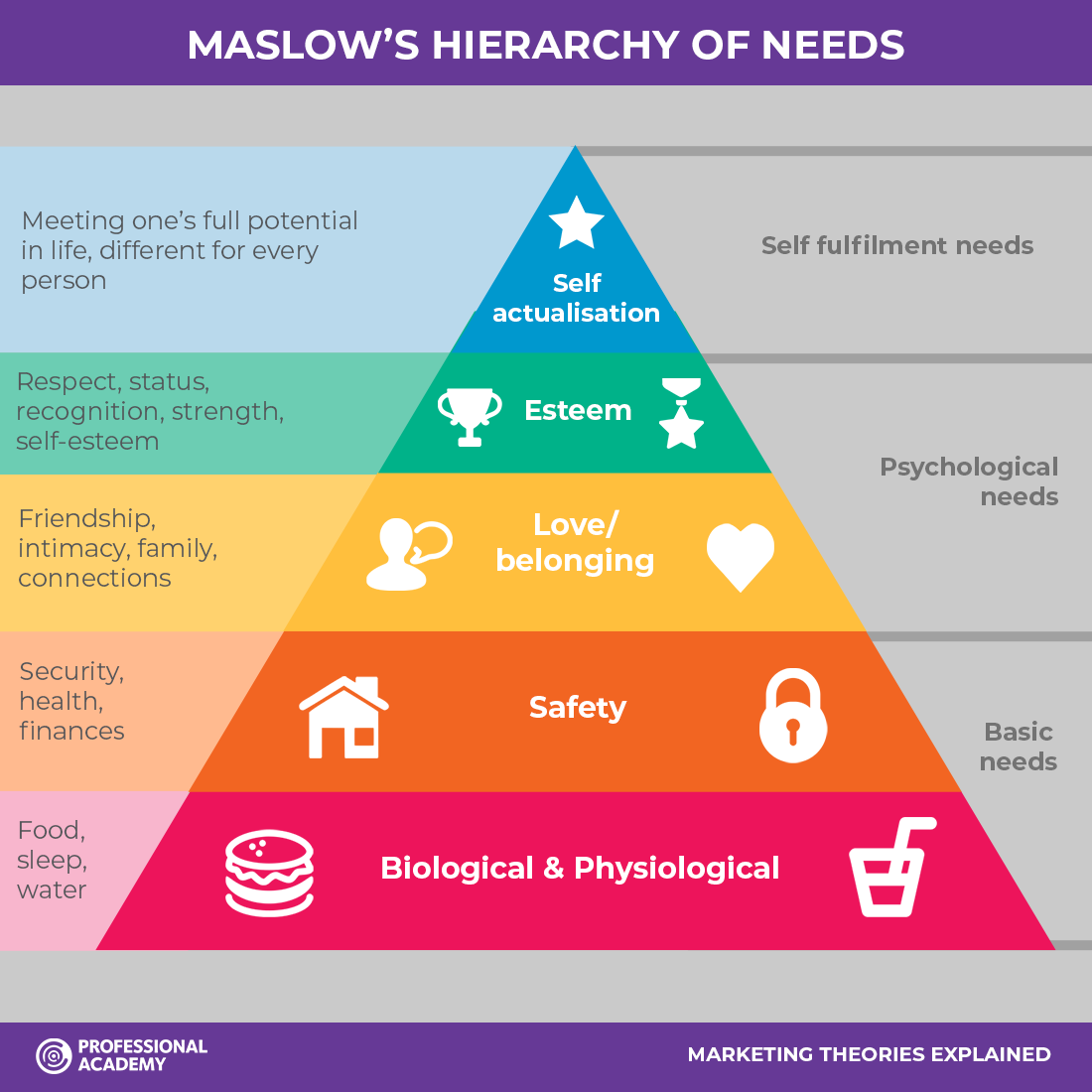
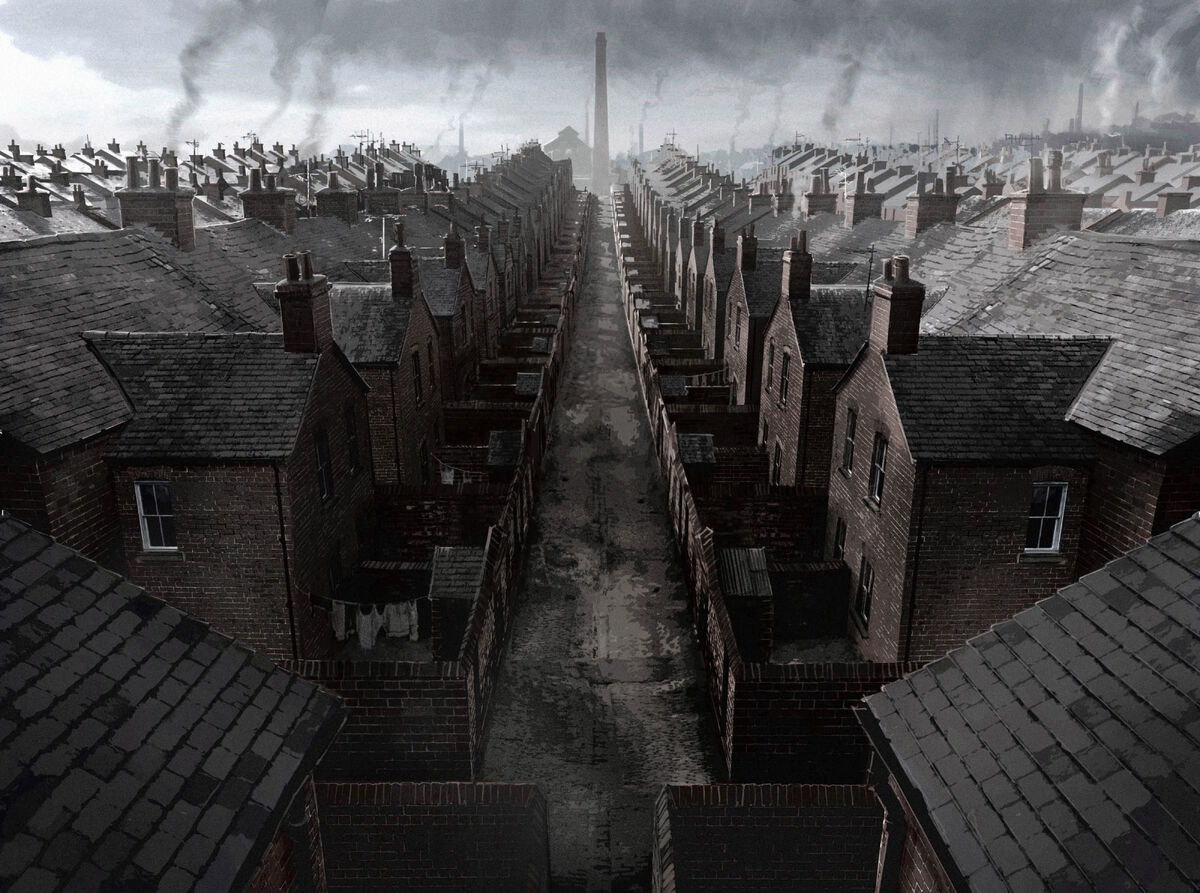
_coal_trades_for_last_year,_addresses_and_names_of_all_ironmasters,_with_a_list_of_blast_furnaces,_iron_(14741151646).jpg/1280px-thumbnail.jpg)
Your comment: