Misconceptions on the Dark Arts
Introduction
“I know your theory,” said Lily, and she sounded cold. “Why are you so obsessed with them anyway? Why do you care what they’re doing at night?”
“I’m just trying to show you they’re not as wonderful as everyone seems to think they are.”
The intensity of his gaze made her blush.
“They don’t use Dark Magic, though.”
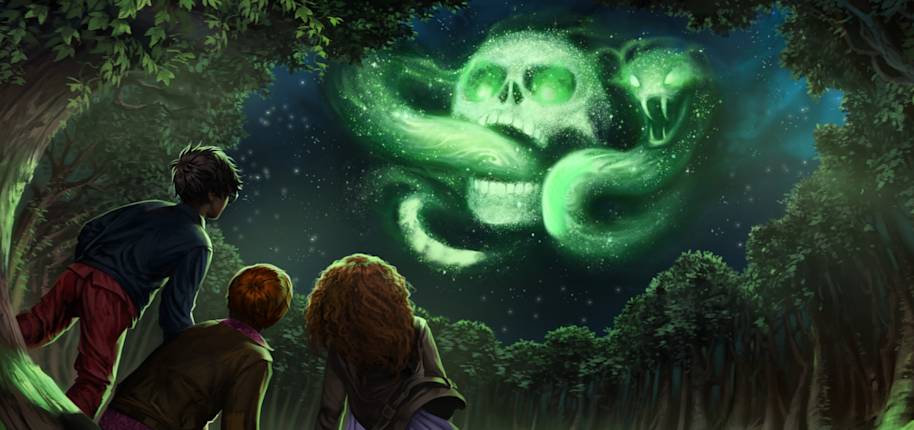
I have a bit of a bone to pick here with the subject of Dark Arts/Dark Magic in Harry Potter. See, whenever someone studies or loves or uses what the protagonists defined as Dark Magic, they’re casted as an evil, corrupted person. At the very least, it’s implied they’re suspicious and prone to fall to the Dark Side. This dichotomy between Dark and “Light/non-Dark” magic serves to dictate who’s a good person and who’s an evil person, as you see Lily doing above. Meaning that by her standards, Snape shouldn’t be evil for calling her a Mudblood as he didn’t use Dark Magic to do that… and that Hitler, a Muggle, could not be evil as per definition, he genetically cannot use Dark Magic.
But obviously, that’s not how the world works, and that’s not how it should work in HP. So, what does the saga mean by Dark Magic? What to make of it?
You might ask: Why this essay? Because it’s time to stop making it a flaw that Snape loves the Dark Arts,, and to put to light the saga’s failed moral logic.
What are the Dark Arts?
Years ago I perused the seven books to find anything related to the Dark Arts and their nature. I, of course, lost all of this research, so I did it again. I have put the results in a side document because reading five pages of quotes isn’t useful on its own.
What I have found is that there’s only one proper definition of the Dark Arts, given by the specialist himself, Severus Snape:
“The Dark Arts,” said Snape, “are many, varied, ever-changing, and eternal. Fighting them is like fighting a many-headed monster, which, each time a neck is severed, sprouts a head even fiercer and cleverer than before. You are fighting that which is unfixed, mutating, indestructible.” […] “Your defenses,” said Snape, a little louder, “must therefore be as flexible and inventive as the arts you seek to undo. These pictures” — he indicated a few of them as he swept past — “give a fair representation of what happens to those who suffer, for instance, the Cruciatus Curse” — he waved a hand toward a witch who was clearly shrieking in agony — “feel the Dementor’s Kiss” — a wizard lying huddled and blank-eyed, slumped against a wall — “or provoke the aggression of the Inferius” — a bloody mass upon the ground.
Note that:
“Your defenses,” said Snape, a little louder, “must therefore be as flexible and inventive as the arts you seek to undo.
Snape is explicitly telling us that Defense Against the Dark Arts is like the Dark Arts, at least in spirit (which is why he loves the subject of Defense, not just the Dark Arts, and why wanted to become a DADA teacher).
The examples that Snape gives clearly show that the Dark Arts refer to all that is harmful: Dark Magic is magic that’s harmful to people; Defense Against the Dark Arts is magic that undoes Dark Magic without, I assume, being harmful by itself.
But there’s a problem: how would you define “harmful magic”?
Looks like a simple question, but it isn’t. Clearly, the saga sees a difference: not all that’s harmful magic falls under the scope of the Dark Arts. Or else, how would you justify Lily’s response, the fact that Dark Magic is restricted, the fact that hating the Dark Arts is a thing, a thing that indicates someone’s a good person?
More examples given by the books relate, in summary, to the types of spells called “jinxes”, “hexes” and “curses”, the epitome of the later being the “Unforgivables”: Imperio, Crucio and Avada Kedavra. But they’re also Dark Creatures, like Inferi, werewolves and vampires, and Dark objects, such as the Horcruxes.
Indeed, Rowling herself has said, in her website, in 2006:
Every now and then somebody asks me for the difference between a spell, a charm and a hex. Within the Potter world, the boundaries are flexible, and I imagine that wizards may have their own ideas. Hermione-ish, however, I’ve always had a working theory:
Spell:
The generic term for a piece of magic.
Charm:
Does not fundamentally alter the properties of the subject of the spell, but adds, or changes, properties. Turning a teacup into a rat would be a spell, whereas making a teacup dance would be a charm. The grey area comes with things like ‘Stunning Spells’, which on balance I think are Charms, but which I call spells for alliterative effect.
Hexes:
Has a connotation of dark magic, as do jinxes, but of a minor sort. I see ‘hex’ as slightly worse. I usually use ‘jinx’ for spells whose effects are irritating but amusing.
Curses:
Reserved for the worst kinds of dark magic.
But then… does that mean that any, and I mean, every character who has ever used a jinx, a hex and/or a curse, has used Dark Magic? If so, are they all evil?
Obviously not. Both in watsonian and in doylist terms. Because here’s the thing with the next example: Dark objects.
While a Horcrux is easy to understand as a Dark object, since it involves ripping one’s own soul, supposedly with murder (thus why the Avada is an Unforgivable Curse… although murder is theoretically forgivable, especially in the case of euthanasia), not all objects need to be as extreme to fall under the definition of being Dark. If “Dark” means “able/designed to hurt”, then… wands are Dark objects. Just as guns and knives would be.
And yet, isn’t it common knowledge that it’s not the object, but the user, and even more specifically, the method by which it’s used, that determines what’s evil and what’s not? After all, sacrificial protection requires – you guessed it – a sacrifice to work, but Lily isn’t a “Dark Witch” for protecting her son with this morbid Charm that involves her own sacrifice.
Countless books, movies, anime, video games, etc, have shown that « Dark forces » are tools that may be necessary to save the world; the users must beware of their corrupting ability, especially given how powerful they often are, but that doesn’t make them or the users evil by default. On the other hand, « Light » magic has also been shown to be potentially corrupting and used for evil (the first example that comes to mind being Galeem from Smash Bros Ultimate — don’t judge by references by themselves). The world, and real-life in particular, isn’t black and white. It’s not that simple.
The last example is the Dark creatures, and some of you might have reacted to the word “werewolves”. I would also for the word “vampires”, as we see a peaceful one in Slughorn’s party named… Sangini (horribly lazy name). Is Lupin a Dark creature? If we were to differentiate the werewolf from the human, and if the Marauders hated the Dark Arts that much, then why were they hanging around and playing with a Dark creature and making it roam Hogsmeade of all places where the werewolf almost bit and killed people several times, to their amusement?
This last example, indeed, makes us question: given that the saga says there’s a difference between “dark” and “Dark” magic, who determines it? Who determines what is Dark and what is not, if the mere definition of “Dark Magic is all magic that’s harmful” doesn’t suffice?
Several answers could be given: the Ministry, the Order, the author, the characters themselves who, as she said, each has their own idea…
A perfect example of what that gives: branding Parseltongue, the mere ability to talk to snakes, as Dark Magic. Harry was greated by a peaceful snake in PS:
As the snake slid swiftly past him, Harry could have sworn a low, hissing voice said, « Brazil, here I come… Thanksss, amigo. » [good luck sliding over there]
Harry then saved Justin Finch-Fletchley from Malfoy’s conjured snake:
Harry wasn’t sure what made him do it. He wasn’t even aware of deciding to do it. All he knew was that his legs were carrying him forward as though he was on casters and that he had shouted stupidly at the snake, “Leave him alone!” And miraculously — inexplicably — the snake slumped to the floor, docile as a thick, black garden hose, its eyes now on Harry. Harry felt the fear drain out of him. He knew the snake wouldn’t attack anyone now, though how he knew it, he couldn’t have explained. [reminds me of Lily]
And this is the thanks he gets:
“Hannah,” said the stout boy solemnly, “he’s a Parselmouth. Everyone knows that’s the mark of a Dark wizard. Have you ever heard of a decent one
who could talk to snakes? They called Slytherin himself Serpent-tongue.”
Two years later, in Rita’s newspapers:
Parseltongue, the ability to converse with snakes, has long been considered a Dark Art. Indeed, the most famous Parselmouth of our times is none other than You-Know-Who himself. A member of the Dark Force Defense League, who wished to remain unnamed, stated that he would regard any wizard who could speak Parseltongue “as worthy of investigation. Personally, I would be highly suspicious of anybody who could converse with snakes, as serpents are often used in the worst kinds of Dark Magic, and are historically associated with evildoers.” [The rod of asclepius features a snake and yet is the symbol of medicine, because it’s the dosage that makes the poison, so I’d take that as a positive. Even if it’s a wrongful attribution, the caduceus is also associated with medicine, since it features two snakes. The negative association of snakes with evil, in Occident… comes from the Bible.]
Pay attention to the last part of that extract:
Similarly, “anyone who seeks out the company of such vicious creatures as werewolves and giants would appear to have a fondness for violence. ”
In short: Dark Magic as all harmful magic is just a vague definition; what’s Dark and what isn’t, even if it’s harmful… is up to anyone to personally decide.
“Dark Arts” cannot be defined as “evilness” but merely as a tool of predilection for evilness, given that basically every mage has used Dark Magic and yet isn’t necessarily evil or corrupted, even without repenting for it. Hating the Dark Arts does not equal hating evilness or an evil group, it equals hating a spectrum between hands, knives and guns, including the mere interest of gaining knowledge about them; if not, at best, their use for harmful purposes, specifically, evil purposes (given that we can harm to deflect a greater harm and thus do good).
If “Dark Arts” were to be defined by “anything illegal in the world of magic”, then hating the Dark Arts would equal to hating anything that the Ministry or any high structure of power forbids… in a saga where confronting authority and revolting when necessary is a virtue.
What does that mean then?
As pet_genius says:
The Dark Magic/Light Magic dichotomy is nonsense.
Indeed.
And in Snape’s case: Lily’s viewpoint that not using Dark Magic differentiates the Marauders and the wannabe Death Eaters is not only uncorrect (they did use Dark Magic) but at best childish.
So don’t ever tell me again that there’s such a thing as “Dark Magic” that has anything to do with morality. Really, it’s just a matter of who gets the privilege to use a harmful spell without bad rep and who isn’t.
User pet_genius has kindly given me the authorization to use their essay, which I will shamelessly immortalize in mine on The Sneep Project. They explore the subject of the Dark Arts further below, so enjoy reading it:
https://www.reddit.com/r/harrypotter/comments/fg11mp/opinion_the_dark_magiclight_magic_dichotomy_is/
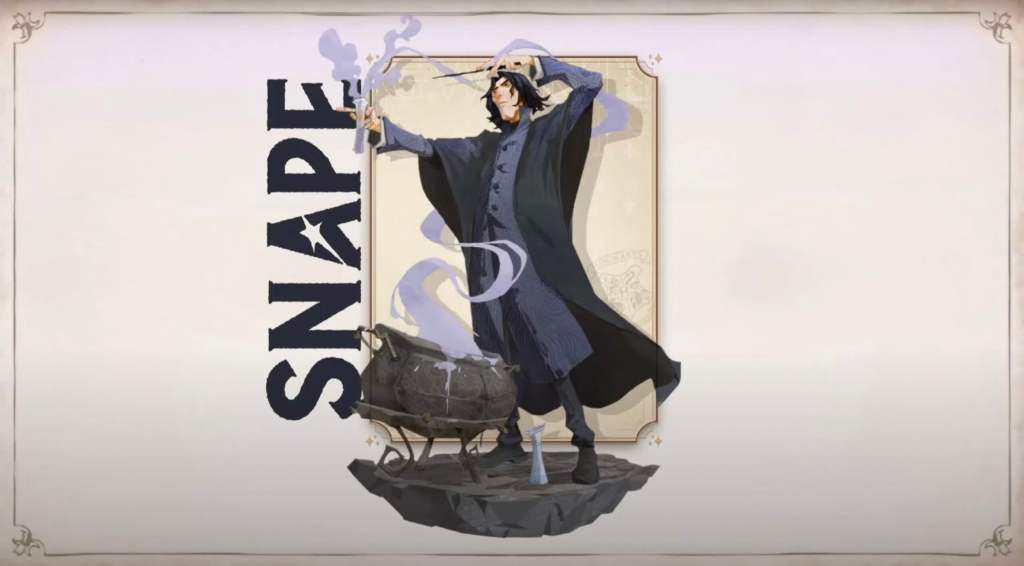
The Dark Magic/Light Magic Dichotomy is Nonsense
[Many of the ideas here come from this essay]
“Dark” definitely does not seem to be equal to “evil”. It is more like “dangerous” or “unknown.”
There seems to be a spectrum of “Dark” and “Light” magic that runs from Horcruxes to the Patronus charm, and it does appear that the Darkest magic is also the most evil.
They’re described as follows:
All I could find was this, in the introduction to Magick Moste Evile — listen — ‘Of the Horcrux, wickedest of magical inventions, we shall not speak nor give direction. . . .’
Shoutout to this book’s author who had the presence of mind to rhyme when writing about them, but more importantly, the book is entitled “Magick Moste Evile”, not “Darkest Magick”; Horcruxes are described as wicked and not as “dark”. It’s clear that they are dark, but also that darkness and badness are not interchangeable.
We know that a Horcrux is an object that contains part of the soul to grant immortality, and that you have to commit premeditated murder to create one, plus do something so vile we don’t even know what it is. You can’t be a good person and engage in this sort of thing; Slughorn knows what they are, but is appalled by them (and scarcely believes his favorite student to be capable of making one). They destroy the soul. They are evil.
The Patronus charm, conversely, is on the opposite end:
“The Patronus is a kind of positive force, a projection of the very things that the dementor feeds upon — hope, happiness, the desire to survive — but it cannot feel despair, as real humans can, so the dementors can’t hurt it.”
Harry re: the Silver Doe:
But instinct, overwhelming instinct, told him that this was not Dark Magic. He set off in pursuit.
The Doe Patronus is Snape’s, of course. Snape is a Dark Arts expert and enthusiast, yet he can cast a Patronus so strong it’s barely recognizable as such even to Harry, so bright it burns Harry’s retina. Dark Magic hasn’t ruined Snape’s soul.
But being able to cast the least dark spell does not make you good:
The moment he had passed the place where the Patronus cat patrolled, he felt the change in temperature: It was warm and comfortable here. The Patronus, he was sure, was Umbridge’s, and it glowed brightly because she was so happy here, in her element, upholding the twisted laws she had helped to write.
JKR has explained that none of the Death Eaters can cast a patronus, except Snape. This calls for an explanation, and my personal explanation is based on Muggle psychology: I view them as a cult, and cult leaders need to keep their followers down. Having his followers constantly thinking back to their happiest moments, moments that do not involve Voldemort, would have gotten in the way of that. My belief is that they couldn’t cast a patronus because they were not allowed to.
Anyway, the Dark=Bad and Light=Good equivalencies are already crumbling under scrutiny.
Moving on to the so-called Unforgivables, they are used to noble ends, or at least by “non-Dark” wizards, multiple times:
- Harry uses Imperio and Crucio, on a Goblin and on the Carrows, respectively. Cruciating the Carrows is badass, but serves no strategic purpose.
- Snape euthanizes Dumbledore.
- McGonagall uses Imperio:
“Professor McGonagall rose to her feet, pointed her wand at the groggy Death Eater, and said, “Imperio.”
Amycus got up, walked over to his sister, picked up her wand, then shuffled obediently to Professor McGonagall and handed it over along with his own. Then he lay down on the floor beside Alecto. Professor McGonagall waved her wand again, and a length of shimmering silver rope appeared out of thin air and snaked around the Carrows, binding them tightly together.”
Desperate times call for desperate measures, and the Unforgivables had indeed been sanctioned by fanatical Dark Wizards hater, Barty Crouch Sr.:
“Well, times like that bring out the best in some people and the worst in others. Crouch’s principles might’ve been good in the beginning—I wouldn’t know. He rose quickly through the Ministry, and he started ordering very harsh measures against Voldemort’s supporters. The Aurors were given new powers—powers to kill rather than capture, for instance. And I wasn’t the only one who was handed straight to the Dementors without trial. Crouch fought violence with violence, and authorized the use of the Unforgivable Curses against suspects. I would say he became as ruthless and cruel as many on the Dark Side. He had his supporters, mind you—plenty of people thought he was going about things the right way, and there were a lot of witches and wizards clamoring for him to take over as Minister of Magic. When Voldemort disappeared, it looked like only a matter of time until Crouch got the top job. But then something rather unfortunate happened…” Sirius smiled grimly. “Crouch’s own son was caught with a group of Death Eaters who’d managed to talk their way out of Azkaban. Apparently they were trying to find Voldemort and return him to power.”
The same Barty Crouch Snr. then went on to employ the Imperius Curse liberally on his son, once he took him out of Azkaban.
I can imagine benign uses for each of the unforgivables. We’ve seen euthanasia. Personally, if I could Imperius someone who is in the midst of a psychotic episode to spare them involuntary hospitalizations, for example, I would do that in a heartbeat. Same goes for addicts. Even Crucio might be a more humane punishment than evil shoving wizards in hell with the Dementors or subjecting them to the Dementor’s kiss, which is what the Ministry thinks of as suitable punishment for anything.
There is no ethical system I know of in which murder, rape, slavery, theft, and deception are good, even though 3 of those can be considered necessary at times.
With regard to murder, I discussed the Killing Curse, but there is also this dialogue:
“Harry, the time for Disarming is past! These people are trying to capture and kill you! At least Stun if you aren’t prepared to kill!”
“We were hundreds of feet up! Stan’s not himself, and if I Stunned him and he’d fallen, he’d have died the same as if I’d used Avada Kedavra!”
Firstly, this pretty much proves that Lupin did use AK in that battle, but more importantly, Harry recognizes that there is no difference between using AK and causing someone to plummet to his death even if the Stunning Spell is perfectly legitimate.
As for rape, naturally, we’re going to have fewer examples in this series because it’s meant for kids and teens, but we do have love potions.
Hermione:
“Look,” sighed Hermione, “Secrecy Sensors detect jinxes, curses, and concealment charms, don’t they? They’re used to find Dark Magic and Dark objects. They’d have picked up a powerful curse, like the one on that necklace, within seconds. But something that’s just been put in the wrong bottle wouldn’t register — and anyway, love potions aren’t Dark or dangerous —”
But we know (or at least, Dumbledore speculates) that a love potion had been used to get a man to father a child against his will. We even saw Ron under the effect of love potion, acting completely out of character and ruining his relationship. Yet non-Dark wizards Fred and George sell them at their shop.
There is no stealing spell I’m aware of, but I’m sure Accio had been used to steal.
Owning a house elf is not considered practicing a Dark Art.
When it comes to deception, though, we have non-”Dark” spells that are used for this purpose: Obliviate, Confundus (I’m not entirely sure what the difference between Imperius and Confundus is, in terms of the effect on the victim, incidentally. My belief is that Imperius is harder to throw off and can make you do things you’re incapable of doing, not simply act out of misinformation. Possibly, the effect doesn’t wear off unless something breaks it?), and of course, occlumency.
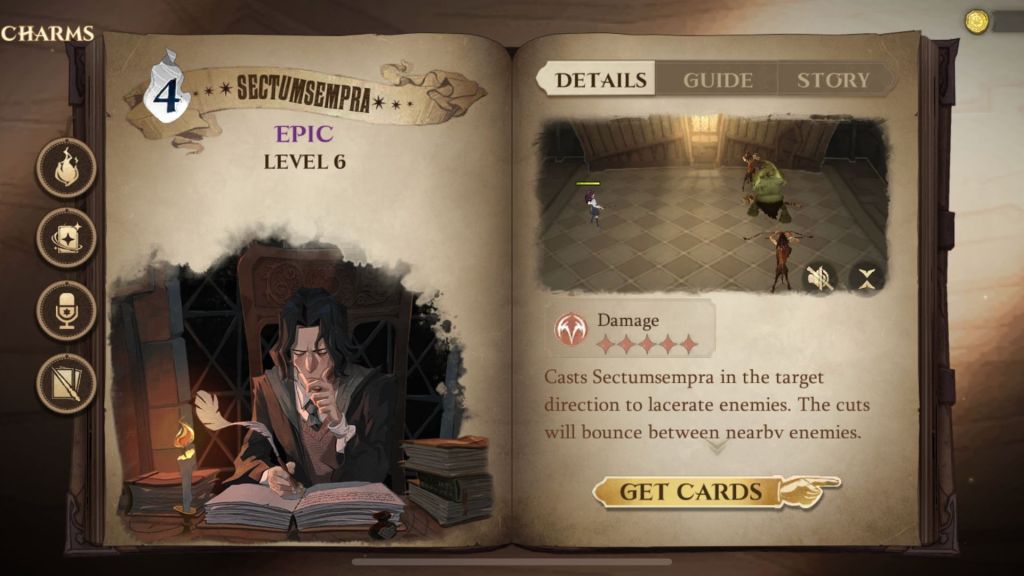
If Dark is interchangeable with evil, then already we know that this at least has nothing to do with any widely-held Muggle ethical beliefs, so the Muggle reader could just dismiss this dichotomy and judge magical actions as one would judge any action, meaning based on the intent behind the action, the action’s result, and the agent’s reaction to said result. For example, in casting Sectumsempra, Harry was not being evil, he was being impulsive and stupid. This, we know, because of his immediate remorse.
James, who reportedly hated the Dark Arts, deliberately and severely harmed Snape with an innocuous household spell and ran around with a textbook Dark creature (who, incidentally, is not a bad person despite being “Dark”). Hagrid frequents Knockturn Alley. Most tellingly, the entire world (except Dumbledore, Voldemort, and Snape, who knew the truth) believed a 15-month year old baby had defeated Lord Voldemort because that baby was “dark”. 15-month olds cannot be good or bad.
If a Dark wizard is defined as someone who uses Dark Magic, nearly every character is a Dark wizard. Hexes, jinxes and curses are all considered Dark Magic. Ginny’s signature spell is a hex. But obviously, using Dark Magic does not a Dark Wizard make, unless your name is Dolores Umbridge:
Professor Umbridge blinked but recovered her poise almost instantly.
“Well, then, you should be able to tell me what Slinkhard says about counterjinxes in chapter fifteen.”
“He says that counterjinxes are improperly named,” said Hermione promptly. “He says ‘counterjinx’ is just a name people give their jinxes when they want to make them sound more acceptable.”
Professor Umbridge raised her eyebrows, and Harry knew she was impressed against her will.
“But I disagree,” Hermione continued.
Professor Umbridge’s eyebrows rose a little higher and her gaze became distinctly colder.
“You disagree?”
“Yes, I do,” said Hermione, who, unlike Umbridge, was not whispering, but speaking in a clear, carrying voice that had by now attracted the rest of the class’s attention. “Mr. Slinkhard doesn’t like jinxes, does he? But I think they can be very useful when they’re used defensively.”
I believe that part of the point of the Barty Crouch Jr./Mad-Eye Moody story was to show that an extremely Dark wizard and an Auror could be so alike that Barty was able to fool everyone, including Dumbledore, for a whole year. We also know that the Ministry has permitted Aurors to use unforgivable curses, i.e., to torture people, at the height of the first war; we know they use Dementors, the Darkest of creatures, contrary to Dumbledore’s advice, and we know that you ultimately have to know the Dark Arts to defend against them successfully, and to protect or save others.
Snape knows this, and Harry does too, even if he doesn’t admit it.
“He tried to jinx me, in case you didn’t notice!” fumed Harry. “I had enough of that during those Occlumency lessons! Why doesn’t he use another guinea pig for a change? What’s Dumbledore playing at, anyway, letting him teach Defense? Did you hear him talking about the Dark Arts? He loves them! All that unfixed, indestructible stuff —”
“Well,” said Hermione, “I thought he sounded a bit like you.”
“Like me?
“Yes, when you were telling us what it’s like to face Voldemort. You said it wasn’t just memorizing a bunch of spells, you said it was just you and your brains and your guts — well, wasn’t that what Snape was saying? That it really comes down to being brave and quick-thinking?”
Harry was so disarmed that she had thought his words as well worth memorizing as The Standard Book of Spells that he did not argue.
Conversely, with enough creativity, the most legitimate magic taught at Hogwarts can be used, I’m sure, to cause substantial damage.
I mentioned Scourgify, but what about Herbology? First years learn about Devil’s Snare, a plant that is used as a murder weapon in Book 5 (RIP, Bode). Second-years tend to Mandrakes. Mandrakes are useful for a variety of healing potions, apparently, but they can also be used as WMDs. One guy with earmuffs can commit a mass-murder.
Finally, it appears that some level of fascination with the Dark Arts is normal and natural, even a sign of prestige:
Slughorn:
“Not at all, not at all, not offended,” said Slughorn gruffly. “It’s natural to feel some curiosity about these things… Wizards of a certain caliber have always been drawn to that aspect of magic…
So, in conclusion, this dichotomy, while valid at times, is a bit childish and superficial at best, and hypocritical and self-serving at worst.
Thanks for listening to my TED talk.
Sources
Pet_genius’ essay: https://www.reddit.com/r/harrypotter/comments/fg11mp/opinion_the_dark_magiclight_magic_dichotomy_is/
Whitehound’s essay: http://members.madasafish.com/~cj_whitehound/Fanfic/Sectumsempra.htm
Deathtocapslock’s essay: https://deathtocapslock.livejournal.com/314966.html
art by: [unknown]
 The Sneep Project
Your comment: