Breaking the Facade of Niceness
Reveal of a Secret 5 – Remadora Edition
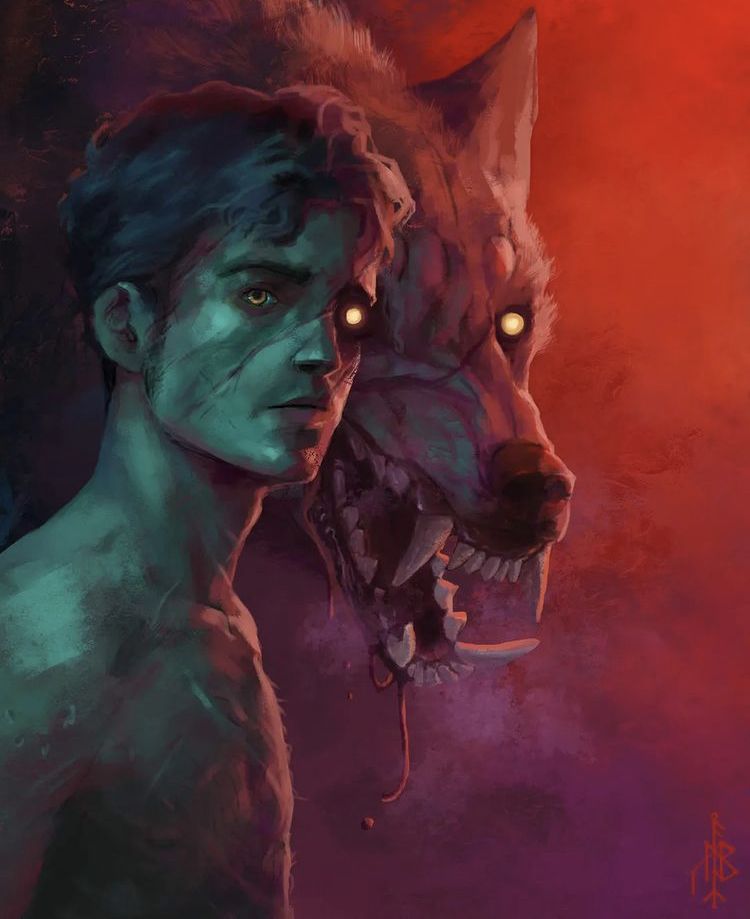
art by runningoutofbattery
Disclaimer: this essay is not sympathetic to Remus Lupin. If you are too susceptible to criticism regarding this fictional character, please come back next time and/or calm your ass. This essay is meant to make you think about Lupin; it’s not meant to be character assassination nor to shame Lupin fans.
Disclaimer 2: there will be mentions of several forms of bigotry, sexual themes and quite disturbing aspects of psychology. If you feel too uncomfortable with that, either take your time or come back later when you’ve gotten a bit more at ease with those subjects.
Introduction
Remus Lupin is a skilled manipulator, as we’ve discussed thus far in the series Reveal of a Secret. But if we want to witness the full extent of his manipulation, we’ll have to delve into his relationship with one Nymphadora Tonks. The Remadora ship has been much criticized for portraying Remus Lupin in a very bad light. In turn, the character of Nymphadora Tonks has received extreme accusations from fans that we believe are important to debunk. This essay will thus attempt to strike two birds with one stone: display Remus Lupin in one of his darkest moments, and reestablish a bit of justice in the criticism given to his relationship with Nymphadora Tonks.
This is a heavy essay and if you haven’t read the parts of the books that will be addressed here, you might get lost in our arguments, so I heavily recommend reading at the very least Chapter 11 of Deathly Hallows, as well as Chapter 29 of Half-Blood Prince if you have enough patience for that.
Drama in the Infirmary
The first big red flag we’ll analyze is in Chapter 29 of Half-Blood Prince. At this point in the story, Dumbledore has died, and Bill Weasley has been bitten by Greyback. Lupin remains unsure of Bill’s fate:
“No, I don’t think that Bill will be a true werewolf,” said Lupin, “but that does not mean that there won’t be some contamination. Those are cursed wounds. They are unlikely ever to heal fully, and — and Bill might have some wolfish characteristics from now on.” […]
“There will probably be some contamination, Arthur,” said Lupin. “It is an odd case, possibly unique… We don’t know what his behavior might be like when he awakens…
Molly Weasley is convinced that those scars as well as the possible ensuing contamination will prompt Fleur–and any given girl–to cancel their marriage with her son. Fleur objects, affirming that she still intends to marry him. Molly and Fleur finally break into tears, while Tonks takes the opportunity to convince Lupin that it doesn’t matter if he’s a werewolf, they can still marry each other:
“You see!” said a strained voice. Tonks was glaring at Lupin. “She still wants to marry him, even though he’s been bitten! She doesn’t care!”
And to our utmost delight, the bullshit has already started:
“It’s different,” said Lupin, barely moving his lips and looking suddenly tense. “Bill will not be a full werewolf. The cases are completely —”
I’m not going to beat around the bush: Lupin is lycanthrophobic. Internalized bigotry is understandable, but it still doesn’t make it okay, especially if it has consequences upon the other members of the marginalized community.
He argues that marrying a werewolf is a problem, that it’s forbidden and everything. Tonks fairly remarks that Bill was disfigured by a werewolf and lightly infected, and yet Fleur still wants to marry him. Lupin answers that it’ll be different for Bill, as he won’t become a full werewolf.
First, I’m not too sure about that. What will people think when they’ll see the scars on Bill’s face? Scars that they can easily guess came from a werewolf? Bill’s mother expected Fleur to turn down the marriage just because Bill had been scratched and bitten by Greyback and turned slightly wolfish. She tries hard to convince herself that the scars don’t matter, but it only highlights the fact they actually do. Bill is not handsome to her anymore. So no, the cases aren’t completely different.
“Of course, it doesn’t matter how he looks… It’s not r-really important…. but he was a very handsome little b-boy… always very handsome . . . and he was g-going to be married!”
“And what do you mean by zat?” said Fleur suddenly and loudly. “What do you mean, ‘ ’e was going to be married?’ ”
Second, if Tonks had been a bit more… experienced about it, she could have asked Lupin the difficult questions that reveal his bigotry. Tonks should have asked him: “What if Bill was a full werewolf? Would it mean he doesn’t have the right to marry Fleur anymore?” Lupin could give three answers to that:
- “Yes, if Bill had become a full werewolf, then he wouldn’t have the right to marry or to have a child.” In that case, we fall into plain discrimination. Directed at Lupin himself, it is pitiful. Directed at his werewolf peers, it becomes ugly.
- “Not really, it’s different in Bill’s case.” But then Tonks might reply, “Why should Bill be the exception?” And Lupin’s justification is revealed to be shaky and, again, bigoted.
- “No, you’re right, I spouted bullshit, werewolves can find a family just as non-werewolves can; it’s not the problem here.” However… this is not the direction Lupin chooses, right? Even after this conversation in the infirmary, he will remain lycanthrophobic.
Lupin’s moral hypocrisy can be pinpointed out here – on one hand he moans about how werewolves are discriminated against, but at the same time he is entirely unwilling to advocate for them. Instead of fighting lycanthrophobia, Lupin reinforces it. He makes his close, non-werewolf friends, and in general all werewolves, suffer the stigma he should fight against.
It finally dawns on Harry that Tonks is in love with Lupin:
And the meaning of Tonks’s Patronus and her mouse-colored hair, and the reason she had come running to find Dumbledore when she had heard a rumor someone had been attacked by Greyback, all suddenly became clear to Harry; it had not been Sirius that Tonks had fallen in love with after all.
I would like everyone to give a big clap for Harry James Potter, who wondered if Tonks loved Sirius romantically. What’s wrong with that? Well, Tonks is Sirius’ first degree cousin once removed, giving a hypothetical relationship between them level 5 of consanguinity. Clearly, Harry believes in the Black’s family inbreeding.
Tonks insists that Lupin being a full werewolf doesn’t matter:
“But I don’t care either, I don’t care!” said Tonks, seizing the front of Lupin’s robes and shaking them. “I’ve told you a million times…”
[…] “And I’ve told you a million times,” said Lupin, refusing to meet her eyes, staring at the floor, “that I am too old for you, too poor… too dangerous…”
[soft laugh]
Edward Cullen: I’m the world’s most dangerous predator. Everything about me invites you in: my voice, my face, even my smell. As if I need any of that. As if you could outrun me! As if you could fight me off! I’m designed to kill.
Bella Swan: I don’t care.
Edward Cullen: I’ve killed people before.
Bella Swan: It doesn’t matter.
Edward Cullen: I wanted to kill you. I’ve never wanted a human’s blood so much in my life.
Bella Swan: I trust you.
Edward Cullen: Don’t.
Bella Swan: I’m here. I trust you!
Anastasia Steele: Why don’t you like to be touched?
Christian Grey: Because I’m fifty shades of fucked up, Anastasia.
Nice. So now Lupin is emulating abusive men in toxic relationships. Edward Cullen and Christian Grey, you couldn’t ask for a better red flag. Let’s deal with that mess.
First, is he just… fucking kidding with Tonks? She is an Auror, the successful apprentice of Alastor Mad’Eye Moody aka Master DE Hunter, she belongs to the Order of the Phoenix to fight Voldemort, and she has just dueled Bellatrix last year, right after Bellatrix managed to murder Sirius. Does Remus think he’s more dangerous than anything she might have encountered until now? This is just so patronizing.
Furthermore, Tonks is a Metamorphmagus! We know she can conjure a pig snout, and based on the definition she gives to a Metamorphmagus, she can transform into anything she wants.
« I’m a Metamorphmagus. It means I can change my appearance at will. I was born one. »
So she’s basically a natural multi-Animagus, which can protect her against werewolves as they don’t attack animals instinctively. If a wolf or a werewolf form doesn’t work, she can always transform into a bear, an elephant, a wolfhound, a donkey, a llama or a fucking dragon to teach him a lesson about who’s the most dangerous beast out here (yes, llamas and donkeys are known to submit wolves and foxes, and can be used as guard animals in a farm).
Second, Lupin is super stupid. We are told Wolfsbane is “particularly complex”; Pottermore adds that the ingredients to make it are very expensive too. Lupin was “never much of a potion-brewer” by his own words, and with people being prejudiced assholes against werewolves, he wasn’t able to get a well-paid, stable job that could allow him to buy the ingredients for Wolfsbane. But if 12 yo Hermione can brew Polyjuice, surely an Auror who studied Potions under Snape, i.e. someone who had to get an O in Potions OWL to be able to even attend Snape’s NEWTs classes, can brew Wolfsbane herself? Even if it requires expensive ingredients, as an Auror, Tonks should have plenty of connections to source them at a lower price. It’s not out of the realm of possibility either to buy those ingredients considering she has the salary of an Auror, or to fetch the ingredients in nature.
Let’s say they really cannot acquire Wolfsbane. It doesn’t cost Lupin much to hide away during his transformations. Well yeah, he’s dangerous like… once a month, if he doesn’t take his precautions. Besides, as we saw in Reveal of a Secret 1, he can actually avoid transforming altogether if he hides in a hole that shields him from the moonlight. Lupin could use his trunk from the 3rd year exams and it’s a win. At this point, if he’s dangerous, it’s out of his own dumbassery.
Three, Lupin is being lycanthrophobic. Again.
Four, you gotta love that he complains that he’s “too poor” to marry Tonks… in front of the Weasleys. Now being poor is a reason not to marry anyone! Ah, gotta love classism.
Five, Lupin is showing a form of misogyny here. He calls himself too poor and gives that as a reason not to marry her, as a way of saying that he cannot provide for her, when Tonks has a secure job with the Ministry of Magic and is probably paid quite well. Now, being poor does not automatically prevent you from marrying and having kids. Displaying implicit bias can though.
The most disturbing part is that Lupin specified his age was a problem. That you marry someone with a 12 years age gap is not an issue in itself. I mean, there’s worse. You could be Edward Cullen, a centenary vampire lusting after a high school 17 year-old girl. Lupin is 36. Tonks is well in her twenties. She’s an independant, responsible woman, so it’s not a case of pedophilia. What bothers me is that Lupin apparently doesn’t see Tonks as an adult, someone old enough to marry. And yet Lupin has just spent a year dating Tonks. He admits only now that he feels “too old” for her. Has Lupin just spent the previous year feeling like he was dating a teenager and expressed no problem with that until it was time to make their relationship more official? For fuck’s sake, at least with Edward it makes sense.
Even worse in my opinion is that those excuses can evidently only draw Tonks closer to him, and this gives off huge grooming red flags. Let me explain.
From the moment Tonks told Lupin that she loved him, Lupin has ghosted her. He still cares for her, apparently, and yet he sounds outright dismissive and cold whenever Tonks is mentioned. When Molly says she invited Tonks to spend Christmas at the Burrow but she wouldn’t come, Lupin says that she’s got her own family to go to anyway. When informed that Tonks actually plans to spend Christmas all alone, he doesn’t have the decency to look the slightest bit concerned for her or to send her a message so that she comes to the Burrow. He will continue eating his turkey in the greatest of calm.
“I invited dear Tonks to come along today,” said Mrs. Weasley, setting down the carrots with unnecessary force and glaring at Fleur. “But she wouldn’t come. Have you spoken to her lately, Remus?”
“No, I haven’t been in contact with anybody very much,” said Lupin. “But Tonks has got her own family to go to, hasn’t she?”
“Hmmm,” said Mrs. Weasley. “Maybe. I got the impression she was planning to spend Christmas alone, actually.”
Harry tells him that Tonks’ Patronus changed, only for Lupin to frame the reason for that changement for an “emotional upheaval” when he knows better.
“Tonks’s Patronus has changed its form,” he told him. “Snape said so anyway. I didn’t know that could happen. Why would your Patronus change?”
Lupin took his time chewing his turkey and swallowing before saying slowly, “Sometimes… a great shock… an emotional upheaval…”
And this scene is just an example of what occurred during the last year.
Because of Lupin’s behavior, Tonks has turned from a feisty and funny woman to a depressed and vulnerable one over the course of a few months, to the point that now, she is on the verge of a mental breakdown. Lupin gives ridiculous reasons to pretend that a deeper relationship is impossible, while at the same time being pretty explicit that he wants Tonks–coupled of course with a huge load of patronizing attitudes. This drives Tonks to insist that she doesn’t care that he’s too old or dangerous for her, she still loves him no matter what.
I’ve said that the relationship between Tonks and Lupin cannot be qualified as pedophilic, but I can’t help imagining what it would be like if Tonks had been a 15 yo girl and Lupin a 27 yo man, and their relationship had followed a similar scenario. It fits extremely well among the inventory of strategies used by groomers. I call this baiting. Take the age problem for example.
Once the victim has been hooked in, notably with the help of love-bombing, groomers use the reason of being too old for their victim to threaten the rupture of their relationship while at the same time being clear that if their age gap hadn’t been a problem, their relationship could continue, as the groomer pretends they still deeply care for their victim. If necessary, they will put some distance between themselves and their target, so that the target becomes desperate for the affection they’re suddenly deprived of. This kind of emotional blackmail prompts the love-starved victim to ignore the red flags given by their age gap as they reason that it does not matter. In their perspective, it does not matter compared to feeling unloved and abandoned. This way, not only the groomer has managed to get even more control over their target, but they have acquired an excuse not to be charged for pedophilia, as the minor will insist that their age differences don’t matter. In fact, the victim may defend their groomer by pointing out that the groomer is the one who said their age differences might be a problem, i.e “they can’t be a pedophile if they’re seemingly reluctant to get into a relationship with a minor, right? It’s all my fault.” Which is exactly the kind of excuse a groomer aims for. By this point, we could assume with reason that the victim has also fallen into some kind of Stockholm Syndrome and/or mental defense mechanism through denial that profits the predator (it’s bad enough to fall for this kind of abusive romantic relationship, it’s worse for someone to admit they’ve been a “willing” victim of pedophilia). There’s a reason a groomer targets these kinds of victims: they’re vulnerable and can be taken control of… just like Lupin had some amount of control over Tonks from the moment she said she was in love with him. If Molly, Arthur and McGonagall hadn’t encouraged the marriage between Tonks and Lupin, but rather tried to convince Tonks that this was a bad idea, it would’ve been the icing on the cake.
I’m fairly sure this wasn’t intentional, and I can’t say that Lupin is being a groomer. And yet, he does use the same strategies as them, and that’s a big problem. It doesn’t help that Lupin is known to be a skilled emotional manipulator and that he’s paralleling Edward Cullen as well as Christian Grey. This doesn’t surprise me too much though, because it comes from Rowling. The woman who keeps romanticizing unhealthy relationships full of red flags [Jily aka Lames]. I mean, one of her favorite books is Nabokov’s Lolita and she calls it “a great and tragic love story”:
- “The writer I really love,” says Rowling in an interview with Thomas Bodmer, “the one I really love is Nabokov. Lolita is probably my favorite novel of the twentieth century: he has everything, he is comical, tragic…”
- “There just isn’t enough time to discuss how a plot that could have been the most worthless pornography becomes, in Nabakov’s hands, a great and tragic love story, and I could exhaust my reservoir of superlatives trying to describe the quality of the writing.”
Lupin giving evidently ridiculous excuses based on self-pity and patronizing rhetoric is not romantic. I agree that Tonks shouldn’t have insisted with him, but out of concern for her own safety.
After Lupin delivers his cheap Twilight remix, Molly unfortunately says:
“I’ve said all along you’re taking a ridiculous line on this, Remus,” said Mrs. Weasley over Fleur’s shoulder as she patted her on the back.
“I am not being ridiculous,” said Lupin steadily. [Risitas laugh] “Tonks deserves somebody young and whole.”
She certainly deserves somebody who respects her.
Again, Lupin is patronizing and it gives off huge misogynistic vibes. Who is he to tell her what she deserves or not? He’s proven he does not see her as an equal who can make her own choices. As though she were a child, as though she didn’t know any better; as if Lupin knew what was best for her. He may reason why it is unwise to continue this relationship with Tonks, but he doesn’t get to make it about her. That’s called gaslighting.
Ah, and yes, now, when you’re a full werewolf, you’re not “whole”. What is this lycanthrophobic bullshit?
As Arthur comes in to show Lupin is an idiot, he uses another manipulative tactic: he tries to change the subject of conversation:
“This is… not the moment to discuss it,” said Lupin, avoiding everybody’s eyes as he looked around distractedly. “Dumbledore is dead…”
Dumbledore was just as dead when Tonks first started the conversation, but Lupin didn’t try to change the topic immediately. He was more than willing to have the whole discussion with her in front of several people, in a way that makes him the person to pity and Tonks the unreasonable one. When it doesn’t seem to work out as planned (Molly and Arthur are visibly disagreeing with him), he tries to change the subject using the fact Dumbledore is dead, even though that’s not the issue. Thankfully, McGonagall intervenes.
“Dumbledore would have been happier than anybody to think that there was a little more love in the world,” said Professor McGonagall curtly, just as the hospital doors opened again and Hagrid walked in.
Lupin gets away with it though. For now.
In summary, throughout this conversation, Lupin displays:
- several forms of bigotry: lycanthrophobia + classism + misogyny/patronizing attitudes
- several forms of manipulation: gaslighting + ambiguous baiting/grooming tactics + change of the subject
He also constantly uses excuses that are simply invalid. According to Tonks haters, we are to understand with those excuses that Lupin doesn’t want to marry Tonks… but that’s not what he says, is it? Instead, he’s saying, “I want to marry you, but I can’t because of these problems (that are not, in fact, sufficient reasons not to marry you).”
As a reminder, not wanting to marry or to have children is a totally valid reason in itself! If the scene had shown Lupin telling Tonks that no, he didn’t want to marry her, he didn’t want to hang out with her anymore, because he didn’t love her that way, then the fan accusations that Tonks was forcing him would have been legitimate. But Lupin never says that. The reasons he shouldn’t marry Tonks come from his own faulty behavior.
And to answer those who call Tonks obsessive, toxic and manipulative, supposedly having planned to use peer pressure so she could force « closeted-gay » Lupin into marriage: up until the battle of the Astronomy Tower, Tonks kept her distance. If she truly was as desperate as antis claim, she would have never stayed where her duty was, nor would she let Lupin have time to think about what he wanted. What we see is that Lupin is willing to marry Tonks and yet irrationally turns her down every time she reasonably objects to the reasons he brings up to stall their wedding.
Lupin eventually marries Tonks. I’m curious to know how he came to terms with feeling too old for her. Barely some weeks later, Tonks becomes pregnant with Lupin’s child.
And I assure you… what we have seen until now is nothing compared to what’s coming next.
The Failures of Lupin’s growth
Now is the time to hear Lupin’s final incriminating speech: Deathly Hallows, Chapter 11, The Bribe. Or more specifically, Lupin’s bribe to Harry.
The Trio has managed to hide in Number 12 Grimmauld Place after the fiasco at Bill and Fleur’s Wedding Party, and Lupin found them there. He informs them that the Death Eaters, in search for Harry, have attacked every Order-connected house in the country.
“At the same time that they were smashing up the wedding, more Death Eaters were forcing their way into every Order-connected house in the country. No deaths,” he added quickly, forestalling the question, “but they were rough. They burned down Dedalus Diggle’s house, but as you know he wasn’t there, and they used the Cruciatus Curse on Tonks’s family. Again, trying to find out where you went after you visited them. They’re all right – shaken, obviously, but otherwise okay.”
Are they? I mean, they did suffer the Cruciatus. I wonder if Tonks was among the victims; if that was the case, then it can’t have been good for the baby she was carrying at the time. Considering how often Lupin uses half-truths and lies of omission, it’s not out of the realm of possibility that she might have been Crucio’ed and he left it out deliberately (especially when his objective is to assure the Trio that Tonks will be “perfectly safe” at her parents’ house, as we’ll soon see).
Second, this is a peculiar way for Lupin to talk about his in-laws. In their analysis of chapter 11 of DH, oneandthetruth points out:
“…they used the Cruciatus Curse on Tonks’s family…They’re all right–shaken, obviously, but otherwise okay.”
Look at that cold-blooded phrasing–why, it’s so heartless, it sounds like something that horrible Snape might say! Lupin doesn’t sound like he even knows the Tonkses, let alone is related to them by marriage. Far more natural phrasing would have been, “my in-laws, Ted and Andromeda” instead of “Tonks’s family.” And why is he referring to his wife by her last name? I know she hates her first name–understandably so–and most people call her by her surname, but her husband is not “most people.” Surely he could come up with some affectionate nickname just for him to use [like Dora]. Unless…
Lupin also sounds largely indifferent to Ted and Andromeda’s suffering. They were tortured, for heaven’s sake, but he shrugs off the aftereffects of their agony by describing them as “shaken… but otherwise okay.” Put Lupin’s callousness together with the Tonkses’ disinterest in his well-being after the Seven Potters Fiasco, and it becomes clear these three tolerate each other only for the sake of ‘Dora. Lupin confirms the DEs got through the heavy-duty protection charms on the Tonks residence because their being in charge of the Ministry allows them to “go nuclear” on anybody they want and get away with it.
“The Death Eaters got through all those protective charms?” Harry asked, remembering how effective these had been on the night he had crashed in Tonks’s parents’ garden.
“What you’ve got to realize, Harry, is that the Death Eaters have got the full might of the Ministry on their side now,” said Lupin. “They’ve got the power to perform brutal spells without fear of identification or arrest. They managed to penetrate every defensive spell we’d cast against them, and once inside, they were completely open about why they’d come.”
Remember that. It’ll come up again soon.
After a bit of conversation unrelated to our object of interest, Lupin asks Harry what the mission Dumbledore left him was, but the young man refuses to tell him. That doesn’t deter Lupin though:
“I might still be of some use to you. You know what I am and what I can do. I could come with you to provide protection. There would be no need to tell me exactly what you were up to.”
Lupin offers to provide the group with protection… under the form of an unmedicated werewolf out in the open. Sure, Remus. It’s not as if a werewolf was able to turn his own best friend into bolognese.
What did he say last year, again?
“I could have bitten any of you… That must never happen again.”
Whoops, I meant.
“And I’ve told you a million times,” said Lupin, refusing to meet her eyes, staring at the floor, “that I am too old for you, too poor… too dangerous…”
But when he wants to go on an adventure with three unequipped, non-Metamorphmagus, non-Animagus 17 year-olds, everything’s forgotten! That he could slaughter his ex-students, one of whom is his deceased best friends’ son/godson–that’s not his first concern, he doesn’t think much of it as long as he gets what he wants: an excuse to avoid his family duties. There goes his spiritual resolve from the end of his professorship.
The last point isn’t surprising either. He’s the same man who gave back the Marauder’s Map to Harry when he stopped being a teacher, even though he knew it was a dangerous object bound to make the boy break more school safety rules. He does that because:
“I am no longer your teacher, so I don’t feel guilty about giving you back this as well.”
Yes: as long as he doesn’t feel guilty, he allows himself to fuck up. Often, he isn’t good for the sake of doing the right thing, but out of guilt. Yet because he wants to have fun so bad, he does all he can to actually forget his guilty feelings:
But I always managed to forget my guilty feelings every time we sat down to plan our next month’s adventure.
The only thing that does make him feel guilty enough to act like a semi-responsible adult is holding a position of responsibility. No wonder he hates it, although he certainly seems to appreciate the power, prestige and popularity that comes with it.
The fact Lupin sees no problem with going on an adventure as an unmedicated werewolf with a bunch of 17 years-old barely able to defend themselves against such creatures also proves my point that his reason not to marry Tonks was not a real concern for him. In other words, he used his lycanthropy as an excuse for his argumentation when otherwise he wouldn’t give two f*cks about it. I mean, he’s spent 3 years running through Hogwarts and Hogsmeade as a werewolf during the night knowing he was two inches from biting people left and right, he has neglected his Wolfsbane for at least a whole week or two in Prisoner of Azkaban and it’s implied he was “forgetful” about it many more times, he doesn’t provide solutions for the Trio to remain safe while Lupin transforms–why should it be a problem when Tonks wants to engage with him? Please let it not be because she’s a woman…
Harry does not wonder how he could hide away in nature with an unmedicated werewolf in his group, let alone how to use him in battle, but rather…
Harry hesitated. It was a very tempting offer, though how they would be able to keep their mission secret from Lupin if he were with them all the time he could not imagine.
Harry’s got a point: it looks as though Lupin attempts to discover the Trio’s mission regardless Harry wants to keep it secret. His bookworm friend has noticed something else of importance:
Hermione, however, looked puzzled. “But what about Tonks?” she asked.
“What about her?” said Lupin.
She’s your wife??
“Well,” said Hermione, frowning, “you’re married! How does she feel about you going away with us?”
“Tonks will be perfectly safe,” said Lupin. “She’ll be at her parents’ house.”
And now is time for yet another excerpt of metametatron4’s essay. Told you it was gold:
Lupin’s statement that Tonks will be « perfectly safe » with her parents is the same sort of behavior we saw from him in PoA when he convinced himself that Sirius must have entered Hogwarts not as an Animagus but with dark magic he learned from Voldemort. Lupin’s convinced himself of a lie. We the audience know that it is a lie since we read about Bellatrix vowing to kill Tonks herself at the beginning of DH and we know that Ted Tonks later goes on the run, but Lupin must know he’s lying to himself too. He’s the one who informed Harry that Death Eaters broke through the powerful enchantments protecting the home of Ted and Andromeda Tonks and tortured them with the Cruciatus Curse at the start of the same conversation where he insisted Tonks will be safe at her parents’ house.
But the circus doesn’t stop there:
There was something strange in Lupin’s tone; it was almost cold.
You think?
There was also something odd in the idea of Tonks remaining hidden at her parents’ house; she was, after all, a member of the Order and, as far as Harry knew, was likely to want to be in the thick of the action.
Are we to understand that Harry suspects Lupin must have, in some way, forced his young wife to stay at home? Yikes.
“Remus,” said Hermione tentatively, “is everything all right.. you know… between you and —”
“Everything is fine, thank you,” said Lupin pointedly. Hermione turned pink.
There was another pause, an awkward and embarrassed one, and then Lupin said, with an air of forcing himself to admit something unpleasant, “Tonks is going to have a baby.”
Look at the way he phrases this: it’s as though Tonks wasn’t his wife and his baby wasn’t his own. It is also horrible to see how he treats that news: knowing his wife is pregnant is disgusting to him. Spoiler: he wished she never fell pregnant. He now intends to leave his wife and his unborn baby behind in the same house Tonks’ parents were tortured in while he’s having fun with the Trio.
Some people think this means that Lupin never wanted to have a baby, meaning that he was forced, or even raped. I’ll disagree right there, because Lupin will say:
“[…] – how can I forgive myself, when I knowingly risked passing on my own condition to an innocent child?”
That doesn’t sound like “I never wanted that child” or “Tonks forced me” or anything like that. What this means is that Lupin knowingly took the decision to have unprotected sex with his wife, and then got cold feet at the inevitable consequences. What did it cost Lupin to put on a condom? That’s right, nothing. And if for some reason he couldn’t find or afford protection and didn’t know any spell that could prevent pregnancy? Abstain. If he really couldn’t stand not having sex for some hours? Wank. If he really couldn’t stand not having sex with his wife? Have sex without vaginal penetration. Use your head!
So we have another instance of misogyny from Lupin. Indeed, he is taking full advantage of his ability, as a cisgender man, to discard his own baby without too many consequences. Tonks? She’s pregnant and facing hard choices about her fetus and herself. One future is offered to her: 9 months of pregnancy, alone and abandoned, then raising the baby on her own. Her whole life would change. Lupin merely has to close a door. Does the wizarding world even have any sort of laws for child support, visitation or parental rights? Is divorce or split households even a thing considering those people still live in the medieval/Victorian era? Likely not, meaning Tonks wouldn’t get an ounce of compensation. And she’d still have to deal with a half-werewolf kid and the stigma that comes with marrying a werewolf–a werewolf that dumped her, as if it wasn’t enough.
Forgive me for getting a bit ahead of myself, but it is important to point out early on. So.
The Trio congratulates Lupin, and he intends to draw the subject of conversation back to his initial offer:
Lupin gave an artificial smile that was more like a grimace, then said, “So… do you accept my offer? Will three become four?”
Okay, this is either sad or creepy; either way, it’s unhealthy. Lupin essentially wants to re-create the Marauders. The problem is that the Trio consists of 17 years-old young adults, while Lupin is a 37 grown-ass man.
“I cannot believe that Dumbledore* would have disapproved, he appointed me your Defense Against the Dark Arts teacher, after all. And I must tell you that I believe that we are facing magic many of us have never encountered or imagined.” [Dumbledore also hired Lockhart and let you resign without any attempt to make you stay]
I’m gonna put a memo on what he just did right now, we’ll come back to this very soon, I promise.
Ron and Hermione both looked at Harry.
“Just — just to be clear,” he said. “You want to leave Tonks at her parents’ house and come away with us?”
“She’ll be perfectly safe there, they’ll look after her,” said Lupin. He spoke with a finality bordering on indifference: “Harry, I’m sure James* would have wanted me to stick with you.”
Here’s our second memo already! A memo for what, you’ll ask? Well… Not content with emulating Petunia by shaming Snape for wearing feminine clothing:
- “If all goes well, Professor Boggart Snape will be forced into that vulture-topped hat, and that green dress, with that big red handbag.”
- “What is that you’re wearing, anyway?” she said, pointing at Snape’s chest. “Your mum’s blouse?”
Lupin now parallels Peter, as they both use the name of Harry’s father to get what they want from the boy who idolizes his dead parents:
- “Harry, I’m sure James would have wanted me to stick with you.”
- “Harry, James wouldn’t have wanted me killed… James would have understood, Harry… he would have shown me mercy…”
That’s a strategy that Lupin knows has somewhat worked on Harry when the boy spared Pettigrew:
“I’m not doing this for you. I’m doing it because — I don’t reckon my dad would’ve wanted them to become killers — just for you.”
Sirius wouldn’t have liked it:
“HOW DARE YOU SPEAK TO HARRY?” roared Black. “HOW DARE YOU FACE HIM? HOW DARE YOU TALK ABOUT JAMES IN FRONT OF HIM?”
Indeed, Lupin, how dare you speak his name and desecrate it like that? I don’t mind–it suggests interesting things about James’ treatment of Lily in their adult life–but Harry sure does. I especially understand when it involves saying to a foolish 13 year-old:
“Your parents** gave their lives to keep you alive, Harry. A poor way to repay them — gambling their sacrifice for a bag of magic tricks.”
And thus, Lupin keeps on dragging the names of Harry’s parental figures in the mud. That’s memo three and four for you.
This vile manipulating tactic is plain emotional abuse… to a boy who loves him. A boy who looks up to him. No wonder Harry felt so angry. Not only is this an insult to Harry’s parental figures and Lupin’s deceased friends, but it also shows that he takes Harry for an idiot. An idiot that he constantly tries to lead by the nose.
An idiot who, to Lupin’s dismay, has enough of his bullshit:
“Well,” said Harry slowly, “I’m not. I’m pretty sure my father would have wanted to know why you aren’t sticking with your own kid, actually.”
Harry now employs the same strategy as Lupin: the use a loved one’s name to speak about their own intentions. His ex-teacher doesn’t like that. [“You dare use my own spells against me, Potter? »]
Lupin’s face drained of color. The temperature in the kitchen might have dropped ten degrees.
You also gotta appreciate how Lupin implies that he merely wants to honor James by sticking with Harry to protect him as some sort of godfather, except that doesn’t work when he never checks up on Harry before being hired in Hogwarts, indirectly puts him in mortal danger throughout the course of his third year, ghosts him through his fourth year of studies, and doesn’t become much of a parental figure during the following years either – not significantly more than McGonagall was, not even after Sirius died.
Lupin will then try to employ his old, lengthily tested strategy, one that already worked with Harry when he was a young boy: a call to be pitied. Him, the poor misunderstood little victim.
“You don’t understand,” said Lupin at last.
But this is phenomenal. He now adopts the same strategy of self-victimization as his TERF-y author:
If you could come inside my head and understand what I feel […] you’d find solidarity and kinship. [Rowling]
Awww!
“Explain, then,” said Harry.
Lupin swallowed.
“I – I made a grave mistake in marrying Tonks. I did it against my better judgment and have regretted it very much ever since.”
Not enough to delay sexual intercourse with her, obviously.
“I see,” said Harry, “so you’re just going to dump her and the kid and run off with us?” [OOF]
Harry’s serving us some fine tea today.
Lupin sprang to his feet: His chair toppled over backward, and he glared at them so fiercely that Harry saw, for the first time ever, the shadow of the wolf upon his human face.
You mean he looks like a predator?
Also, it’s surprising that Lupin glares at « them »–Harry, Ron and Hermione–when the only one who dared raising an objection to his whims is Harry alone. Is he hoping to pressure Ron and Hermione into shutting Harry up?
By now, Lupin’s understood that he won’t be able to manipulate the boy quite as easily as expected. Like most manipulators who are exposed, he loses his cool, literally throwing a tantrum. Here’s what oneandthetruth says about it:
We’re supposed to believe he’s overcome with guilt and shame, but look at the way he speaks. Every sentence is about himself. Although his dialogue is broken up by a couple of references to his behavior, I transcribe it here unbroken for effect.
“I–I made a grave mistake in marrying Tonks. I did it against my better judgment, and I have regretted it very much ever since. […] Don’t you understand what I’ve done to my wife and unborn child? I should never have married her, I’ve made her an outcast! […] You have only ever seen me amongst the Order, or under Dumbledore’s protection at Hogwarts! You don’t know how most of the Wizarding world sees creatures like me! When they know of my affliction, they can barely talk to me! Don’t you see what I’ve done? Even her own family is disgusted by our marriage, what parents want their only child to marry a werewolf?* And the child–the child–[…] My kind don’t usually breed! It will be like me, I am convinced of it–how can I forgive myself, when I knowingly risked passing on my own condition to an innocent child? And if, by some miracle, it is not like me, then it will be better off, a hundred times so, without a father of whom it must always be ashamed!”
Me me me me me me me me me me me me me! It’s all about poor, suffering, guilt-ridden Remus Lupin: I feel bad about marrying Tonks. I have this horrible disease that makes people hate me. I’ve alienated Tonks from her family. I’ve cursed my unborn child with my disease. Even if I haven’t passed it on, it’ll be better off without me because it’ll be ashamed of me.
There is not one word about what Dora wants or about what effect being totally rejected and abandoned by its father will have on the child. Not one!
We now know he was searching for the Trio and proposing to accompany them in their mission not out of the desire to protect them, but because he wanted to leave his found family behind him (a similar process to using Neville and his Boggart as an excuse to covertly humiliate Snape some more). Instead of offering his protection to the Tonkses, it’s as though he is asking the Trio to shield him from his own responsibilities.
Following this dramatic tirade, it’s so easy to take pity on Lupin: he seems to feel so guilty about what he’s made Tonks suffer. Then we spiral into a debate on whether he should have married her or not [I should never have married her, I’ve made her an outcast!], when… it’s actually not a debate that has its place in the situation they’re facing. This has no consequence on whether or not he should stay with his wife, his child and his step-family when they are in danger and suffering the aftereffects of the Cruciatus. These questions–they were relevant before he married Tonks and had unprotected sex with her. What is done is done, it’s not the problem anymore.
And to see the manipulation more clearly here: although Lupin says he feels guilty for making Tonks suffer, he is making her suffer even more right now. He’s risking her and her family’s lives, their sanity, so he can chicken away! He’s not concerned about her suffering, he’s concerned about himself!
Because he knows it would be unacceptable to say he dumped Tonks out of his spinelessness, he tries to make it sound as if he’s acting in her best interests, so he can instead look like a generous husband concerned for her welfare. Once again, he makes it all about Tonks, but in reality, it’s all about himself.
It’s funny, because he asks Harry to understand him, but he makes no effort to understand his own wife or his own child; at best, he assumes he knows what’s best for her, thus treating her like an inferior, and it’s always calibrated to what’s best for him.
“She’ll be perfectly safe there, they’ll look after her,” said Lupin.
Yeah, in that same house her parents were tortured in just the other day. Patronizing and dangerous. It also proves my point that Lupin still treats Tonks like a child (“[her parents will] look after her”) AND that he doesn’t seem to realize the kind of torture Tonks’ parents have been through, if he expects them to look after her instead of the other way around. (Unless Tonks was Cruciated as well and suffered after-effects so much more severe than her parents that they indeed must take care of her… But that’d make Lupin even more psychopathic, to abandon a young, pregnant woman he married and impregnated right after she suffered debilitating depression and the fucking Cruciatus from the Death Eaters together with her parents who could have died with her that day! He sure is no Frank Longbottom.)
Those who understand Tonks the closest are Harry, Ron and Hermione. Lupin throws a tantrum only when his personal interests are objected to. How do you think Tonks felt when she realized that the man she loved, married and who gave her a child, will leave the house because she’s pregnant? How do you think she felt when she realized that she may have to raise her child alone, suddenly becoming a single mother, dumped by the love of her life? Should she consider abortion?
But Lupin doesn’t care. When Tonks’ own opinion was brought up, he dismissed it:
“Well,” said Hermione, frowning, “you’re married! How does she feel about you going away with us?”
“Tonks will be perfectly safe,” said Lupin, “She’ll be at her parents’ house.”
Lupin’s judgement of the situation prevails whatever Tonks might think or feel about it. Needless to mention that makes him a douchebag of a husband.
To add to his argument, Lupin says that Teddy will be ashamed of having a father like him.
“And if, by some miracle, it is not like me, then it* will be better off, a hundred times so, without a father of whom it must always be ashamed!”
This time, his spokesman is his own unborn baby in a theoretical future. That’s our fifth memo. But wait, who was cringing when the news of Tonks’ pregnancy were given? Oh yeah: Lupin.
There was another pause, an awkward and embarrassed one, and then Lupin said, with an air of forcing himself to admit something unpleasant, “Tonks is going to have a baby.”
[…] Lupin gave an artificial smile that was more like a grimace […].
Remus is yet again projecting his own feelings onto someone else. He is ashamed of having a baby. He’s usually such a good liar, such a good actor, but the news of Tonks’ pregnancy is enough to break his facade. He cannot keep the secret of Tonks’ pregnancy to himself, it bursts out of him even if it absolutely disgusts him and for the first time in his life, he won’t get away with his little tricks. That’s how much it disturbs him.
If Remus really wants to play with the idea of what you could expect from people who cannot speak for themselves, I reckon Teddy won’t be ashamed of his father because he’s a werewolf, he will be ashamed of his genitor because he didn’t fulfill his role as a father. Everybody can see this happening from miles away. Should Teddy learn the truth one day? That his father practically wanted to puke when he learned of his existence? [#Papaoutai] You do know this is how villain arcs are created, right? What happened to Merope Gaunt; what apparently condemned Voldemort to be born without the ability to truly love and become the greatest Dark Wizard of his time?
Ravleen: How much does the fact that voldemort was conceived under a love potion have to do with his nonability to understand love is it more symbolic
J.K. Rowling: It was a symbolic way of showing that he came from a loveless union – but of course, everything would have changed if Merope had survived and raised him herself and loved him.
J.K. Rowling: The enchantment under which Tom Riddle fathered Voldemort is important because it shows coercion, and there can’t be many more prejudicial ways to enter the world than as the result of such a union.
What could Teddy think if the only werewolf that wasn’t following Greyback and Voldemort is his own father, who bred Tonks before scurrying away? At least in Voldemort’s case his witch mother was the one at fault for forcing a relationship and intercourse with a Muggle man…
Lupin asks how he can forgive himself. He doesn’t ask how Tonks or Teddy could forgive him. He makes it as though it was all about his family, but when you look closer, his words show he’s only concerned about his own person. “How can I forgive myself,” as though the most emotionally affected person here was Lupin, as though he was the first to apologize to.
In focusing on how much he suffered as a werewolf, he has dismissed the fact that Tonks and her son too will pay the price of werewolf stigma, just like blood traitors are considered as bad as the actual “Mudbloods”. Or as Harry says:
“If the new regime thinks Muggle-borns are bad,” Harry said, “what will they do to a half-werewolf whose father’s in the Order?”
It’s ironic, because Lupin explains that his son might suffer too, as his father is a werewolf and he might be one himself, and yet Lupin refuses to admit it’s the exact reason he must protect his baby, spare him from what he suffered at the hands of a bigoted society.
What would hurt Tonks and Teddy the most? Suffering from a bigoted society? Or knowing that the man they loved regardless of his lycanthropy makes those prejudices matter inside their family, leaving them to their fate the moment they most need him?
It also seems Lupin has taken the habit of always using the bigotry he suffers from as an excuse to get favors, receive leniency and get away with his failures as a human being. [“This time tomorrow, the owls will start arriving from parents… They will not want a werewolf teaching their children, Harry. And after last night, I see their point. I could have bitten any of you… That must never happen again.”] As if being a werewolf had anything to do with not protecting your own family. As oneandthetruth more bluntly says:
Aww, come on, Remus. You’re being much too modest. There are plenty of reasons for people to hate you that have nothing to do with your disease. Your spinelessness, your selfishness, your ass-kissing…
Lupin asks for Harry to sympathize with his difficult life, yet in turn, he doesn’t sympathize at all with Tonks, her family or his own son; not even with Harry, judging by the vile manipulation tactic he’s used four times on him. He uses a dead Dumbledore, then James and Lily, then his child as his “spokesmen” to emotionally blackmail/gaslight Harry, tugging at the love he bears for them unashamedly:
- “I cannot believe that Dumbledore would have disapproved, he appointed me your Defense Against the Dark Arts teacher, after all. »
- He spoke with a finality bordering on indifference: “Harry, I’m sure James would have wanted me to stick with you.”
One day, he even said to the young man:
“Your parents gave their lives to keep you alive, Harry. A poor way to repay them — gambling their sacrifice for a bag of magic tricks.”
And so Harry gives him a taste of his own medicine:
“My father died trying to protect my mother and me, and you reckon he’d tell you to abandon your kid to go on an adventure with us?”
[Cheering]
“How – how dare you?” said Lupin.
Oh, but this is rich! Twice, he shamelessly used the name of Harry’s dead father to make him do his bidding, but now he’s angry that Harry throws it back at him! He dares making it as though it was a personal offense to tell him that his friend might actually not approve of his choices, after all the times he took advantage of Harry’s adoration for his deceased father. This is plain emotional abuse, by the way.
Like.. Imagine your best friend dies and Lupin takes their death as an opportunity to emotionally manipulate you. He knows you’d do (almost) everything your dead best friend would like you to do, because you still love them; so he uses that to his advantage to make you do what he wants. Lupin has the gall to desecrate the memory of the dead, in effect replacing their wills with his own, including when what he wants goes exactly against the deceased’s principles. He feels neither regret nor shame doing that. He only cares that it works in his favor.
Remus gets indignant:
« My father died trying to protect my mother and me, and you reckon he’d tell you to abandon your kid to go on an adventure with us?
“How – how dare you?” said Lupin. “This is not about a desire for – for danger or personal glory – how dare you suggest such a – ”
Gotta love how he plays the strawman’s game. He refuses to hear Harry’s point that his father would actually not tell his friend to abandon his kid, instead focusing on the last part of the sentence, “go on an adventure with us”, as if it was the problem here. Or perhaps he doesn’t actually care what James would think about what he’s done; perhaps the only thing he cares about is, again, his own reputation. God forbid Harry might insinuate that Lupin just wants to go on an adventure, as if he were running off with the Marauders once more. Is he in denial though? It reminds me of something… [“Will three become four?”]
It’s also ironic that he perceives it as an insult to go on an adventure out of a desire for danger or personal glory, considering that’s exactly what the Marauders were driven by:
- “You’re less like your father than I thought,” he said finally, a definite coolness in his voice. “The risk would’ve been what made it fun for James.”
- Messrs. Moony, Wormtail, Padfoot, and Prongs, Purveyors of Aids to Magical Mischief-Makers are proud to present: THE MARAUDER’S MAP
Probably deciding that he’d better strike where it hurts rather than redirect the subject of conversation to what’s important, Harry accuses him of indeed wanting to take up the mantle of Sirius the daredevil. Then he delivers the ultimate insult to a Gryffindor:
“I’d never have believed this,” Harry said. “The man who taught me to fight dementors — a coward.”
Yes, of course he’s a coward, Harry! You saw Snape’s Pensieve memory–!
Lupin drew his wand so fast that Harry had barely reached for his own; there was a loud bang and he felt himself flying backward as if punched; as he slammed into the kitchen wall and slid to the floor, he glimpsed the tail of Lupin’s cloak disappearing around the door. […] A moment later they heard the front door slam. […]
He stood up, he could feel a lump swelling where his head had hit the wall.
…Do not ever tell me again that Lupin does not abuse children. Because he does.
For the most observant of you, you will notice that Lupin’s violent, childish tantrum over being called a coward stands in stark contrast to an earlier quote:
Lupin’s face had hardened, and there was self-disgust in his voice. […] “Because I was a coward. […] And I haven’t changed…”
Why does being called a coward matter now? I’ll tell you why. In PoA, Remus admits he is a coward who never changed, because all the while, with his self-victimization speech, he hopes to arouse the sympathy of the Trio. He hopes that a simple admission he messed up with a round of sorry faces will be enough to give him leniency and forgive him for what consists of egregious misbehavior. And he’s not wrong to bet on that. The fact that Harry “would never have believed” that the man who taught him how to fight the Dementors is the same coward who’s standing in front of him is proof. Visibly, it didn’t fully occur to 13 year-old Harry that when Lupin said he was a coward who never changed… it was the understatement of the century.
This is called self-abasement. Since Remus framed his confession with “self-disgust”, Harry typically thought his teacher was exaggerating, so he mentally compensated by telling himself that Lupin was on the contrary a great mentor and very brave. Lupin self-flagellated, and so Harry instantly forgave him to the point he forgot about the whole affair. That’s exactly what Lupin wanted. When SWM became too much to bear, Harry forgot about his cowardice again. Then he couldn’t pretend anymore.
Lupin is a coward but in effect, only he has the right to say it. It’s brought up when it’s convenient and if it helps him obtain what he wants. He is a moral coward who not only refuses to change (or even try), but who uses surface self-awareness to further his own interests. The regret he displays whenever he admits he’s in the wrong is all for show. Had he felt true regret, then he would fight his cowardice, not use it as an excuse to achieve his goals.
If you really think that Lupin’s self-disgust must come from somewhere other than his own lying habits, I’ll ask you: Does Lupin regret his behavior? Or does he rather regret the image it gives him when he’s caught, and by consequence, the loss of trust and admiration from those Lupin tries to get on his side and the denial of what he was aiming for? Remember:
He is fine maintaining Dumbledore’s trust on entirely false pretenses, on a total lie, and this doesn’t bother him at all. Lupin prizes Dumbledore’s trust over Dumbledore himself.
Here’s what’s explained in metametatron4’s essay a few lines later:
Once again Lupin has placed his own interests above the safety of others. He hopes to run from his responsibilities as a father and husband, the feeling that he had made a « grave mistake » by marrying Tonks, and his fears about what his condition means for Tonks and their unborn baby. His behavior here mirrors his faults from PoA. It’s up to Harry to be the parental figure to Lupin in this instance. Harry acts as Lupin’s moral compass, convincing him to return to his family. (Harry also had to be a moral compass to Lupin when he stopped Lupin and Sirius from murdering Peter in PoA and when he denounces Lupin’s minimizing of SWM in OoTP.) While Lupin expected 13 year old Harry to feel guilt and shame and correct his behavior when [he] reprimanded him, Lupin reacts violently and immaturely when Harry has harsh words for [his own] behavior.
And boy, isn’t Lupin violent when he has a tantrum:
- Lupin sprang to his feet: His chair toppled over backward […].
- Lupin kicked aside the chair he had overturned.
- Lupin actually seized handfuls of his own hair; he looked quite deranged.
- Lupin drew his wand so fast that Harry had barely reached for his own; there was a loud bang and he felt himself flying backward as if punched; as he slammed into the kitchen wall and slid to the floor, he glimpsed the tail of Lupin’s cloak disappearing around the door. […] He stood up, he could feel a lump swelling where his head had hit the wall.
- A moment later they heard the front door slam.
Make no mistake: Harry is right. The reason Lupin doesn’t stick with Tonks is not because he’s a werewolf: it’s because he’s a coward. A whiny, selfish, insensible one.
When the drama with Lupin ends, a downed Harry wonders if his father would have agreed with him, or if he’d actually have been mad at the way Harry put Lupin in his place:
Harry looked down at his feet, thinking of his father. Would James have backed Harry in what he had said to Lupin, or would he have been angry at how his son had treated his old friend?
A first interpretation is that this is evidence of Lupin’s gaslighting method taking in [“Harry, I’m sure James would have wanted me to stick with you”]. This wouldn’t be the first time it happened. In the same book, we see that Lupin is so skilled at manipulation that he was “making Harry feel idiotic” for arguing against blasting enemies out of their brooms, which would kill them as surely as an Avada Kedavra:
Lupin was making Harry feel idiotic, and yet there was still a grain of defiance inside him.
A second interpretation is that Harry used the name of his father just to turn Lupin’s weapons against him, without actually knowing if what he said about his father was true, and now all his doubts are breaking into the surface. Harry has brought reasons to argue that his father would have disapproved of what Lupin was intending to do, and yet Harry remains in doubt. This is, after all, the same boy who needed consolation from Lupin when the hero-worship of his father broke the day he witnessed Snape’s Worst Memory:
He had once spoken to Lupin out of that fireplace, seeking reassurance about James, and Lupin had consoled him.
Put another way:
Hadn’t people like Hagrid and Sirius told Harry how wonderful his father had been? (Yeah, well, look what Sirius was like himself, said a nagging voice inside Harry’s head… He was as bad, wasn’t he?) [Lupin too!]
This is also the same boy who thought for years that his father had died in a car accident:
Harry had gone very white. As soon as he found his voice he said, “Blown up? You told me they died in a car crash!”
By all means, it is still possible that James used to leave Lily alone at home with newborn Harry while he was off on adventures with his Invisibility Cloak (except for the last weeks of his life); this isn’t incompatible with Harry’s argument that James died trying to protect him and his mother and in fact, it seems to have been suggested in the books.
Of course Harry cannot truly know what his father would have done. What we can be sure of is that his objection works marvelously, and Lupin hates it.
Immediately after the tantrum ends, the narrative makes sure to impress on how wrong it was to give Lupin a much-needed reality check.
- “Harry!” wailed Hermione. “How could you?”
- “You shouldn’t have said that stuff to Lupin,” Ron told Harry.
Harry himself feels guilty for what he dared saying:
“I know I shouldn’t have called him a coward.”
“No, you shouldn’t,” said Ron at once. [Yes he should.]
“But he’s acting like one.”
“All the same…” said Hermione. [So it’s best to let him treat Tonks like shit just to avoid making him feel too bad about himself, huh?]
“I know,” said Harry.
He is plagued with doubts on what the father he never knew would have done:
Would James have backed Harry in what he had said to Lupin, or would he have been angry at how his son had treated his old friend?
But now, imagine.
Imagine Snape had married Lily, impregnated her, then ran away from his family duties, leaving her, her child and her parents alone in the same house they were Crucio’ed in? Harry and the narrative would have no difficulty calling Snape the filthiest names, whatever his excuses. You’d have seen countless friendly reminders on your dashboards that judging from the justifications used, Snape is a manipulative, abusive, misogynistic, cowardly, self-victimizing predator who doesn’t deserve Lily. That she’d be in the right to abort and divorce.
However, since it’s Remus doing that, Rowling’s favourite Defense teacher (“Remus Lupin was one of my favourite characters in the entire Potter series”), her books guilt-trip the reader as soon as possible. As always: It’s Okay If A Gryffindor Does It. The sycophants end up calling Tonks a rapist, making Lupin gay and a feminist, calling his dark aspects out-of-character. They claim that Lupin’s arc with Tonks is not canon. As for JKR, she ends up writing a Lupin bio on Pottermore, seemingly in an attempt to turn this character into an uwu tragic hero and make the reader give their whole sympathy for sad wolf boi.
Fortunately, an astute reader is able to dissociate from the delusional idiots as well as the narrative’s tricks and recognize them for what they are. To make it simple: If you think that Snape would totally be in the wrong if he left Lily and her child the moment they most needed him, then Lupin certainly is to blame for having done precisely that to his family. As a reminder, Lupin is certainly not a feminist, judging by the scandalous decisions he makes regarding his own wife – not to mention, having let Lily remain trapped by his male friends’ lies, one of which was sexually harassing her and the other being a womanizer.
Oneandthetruth adds:
I realize some commentators side with Lupin rather than Harry in this scene. They see his offer as being the kind of noble self-sacrifice men who are going off to war have always made to protect their families. This is clearly wrong. Nowhere does Remus say something like, “I really don’t want to leave my family, but I believe it’s necessary for me to make that sacrifice to defeat Voldemort and make the world safe for all children.” Everything he says is all about his feelings of regret about marriage and fatherhood and his desire to run away. Harry is absolutely right to call him a coward for not facing up to the family obligations he chose to take on.
It’s also been said that, since the marriage was a mistake, Lupin should just cut his losses. That is also an utterly selfish view. [“I – I made a grave mistake in marrying Tonks. I did it against my better judgment and have regretted it very much ever since.” / “I see,” said Harry, “so you’re just going to dump her and the kid and run off with us?”] It is certainly true he should never have married Tonks, and even more true he should not have impregnated her. But having done so, it is his moral obligation to do everything in his power to be a good husband and loving father. If he can’t be a husband, he still is obligated to be a father. That child never asked to be conceived. A real man stands by his children, even if the marriage to their mother cannot be saved.
Now, we’re gonna enter some serious psychological stuff that will disagree with Rowling’s additions and opinions about the character of Remus Lupin. It’s up to you to decide whether you consider Pottermore and/or Rowling’s word of god canon. If you would rather disregard it, then what follows may interest you.
A Wolf in Sheep’s Clothing
(Yes it’s corny, but it’s not my fault this became true in the books.)
We’ve seen that Lupin can be terribly cold, and that his coldness can hurt those around him. The relationship between Lupin and Tonks is unequal, and Tonks get fucked by Lupin in the bad ways too. Having learned a lot about him thanks to Chapter 11 of DH, let’s have a look at a scene that occurred before the drama in the infirmary. I call it the Turkey scene.
After Sirius’ death, Tonks falls ill, which has repercussions on her Metamorphmagus abilities. She is inconsolable. The Trio thinks that she feels depressed over Sirius’ death because of survivor’s guilt. Harry even suspects at the time that she’d been in love with Sirius [Risitas laugh]; we will learn by the end of the year that Tonks felt so guilty over Sirius’ death she thought she’d failed Lupin, and on the other hand, she was depressed because Lupin was ghosting her, even though he said that she shouldn’t blame herself for his friend’s death. In turn, Tonks left Lupin alone and refused to come to the Weasleys’ for Christmas, given that her lover would be attending the celebration.
“I invited dear Tonks to come along today,” said Mrs. Weasley, setting down the carrots with unnecessary force and glaring at Fleur. “But she wouldn’t come. Have you spoken to her lately, Remus?”
“No, I haven’t been in contact with anybody very much,” said Lupin. “But Tonks has got her own family to go to, hasn’t she?”
What the actual fuck, Lupin.
“Hmmm,” said Mrs. Weasley. “Maybe. I got the impression she was planning to spend Christmas alone, actually.”
Lupin says nothing. He does not care that Tonks plans to spend Christmas alone, knowing he’s the reason she has taken this decision. (Maybe he’s also glad because it’s convenient she’s out of the picture and/or because it shows how much control he’s got over her.) We also learn that Lupin doesn’t bother to keep Tonks informed during his mission, even though we know he’s comfortable enough with spending Christmas at the Weasleys’. What a gentleman!
Harry jumps on the occasion to ask him a question:
“Tonk’s Patronus has changed its form,” he told him. “Snape said so anyway. I didn’t know that could happen. Why would your Patronus change?”
Lupin took his time chewing his turkey and swallowing before saying slowly, “Sometimes… a great shock… an emotional upheaval…”
Look at this: “Lupin took his time chewing his turkey and swallowing before saying slowly”. He takes his time to think about his next answer and he speaks slowly because it’s a lie. We already saw that, remember?
An odd, closed expression appeared on Lupin’s face. “Well?” said Snape. Lupin continued to stare at the map. Harry had the impression that Lupin was doing some very quick thinking.
And for those who have read OotP:
“Well,” said Lupin slowly, “Snape was a special case. I mean, he never lost an opportunity to curse James, so you couldn’t really expect James to take that lying down, could you?”
And oh boy do not worry, we’ll have plenty of time to deal with that last quote.
At this point in the story, Lupin knows Tonks loves him truly and deeply. Her Patronus changed for him! However, he doesn’t look the slightest bit surprised, moved or humbled when Harry tells him Tonks’ Patronus changed. No, he just takes the time chewing his turkey, swallowing it and pinning the reason for the new Patronus on something else. He knows it’s not “a great shock” or “an emotional upheaval” that changed her Patronus. He knows it’s deep love. And of course Lupin would blame the change of Tonk’s Patronus on an “emotional upheaval”. [“Ah, women. »] . Way to go, for a character that fans like to headcanon as a feminist.
This is how Lupin treats someone who loves him unconditionally. With indifference, coldness and dismissal. Does he even realize the amount of luck he has to have met someone like Nymphadora Tonks? Finding a woman who loves you so much that her Patronus changes to match yours and who constantly puts your feelings before hers… not everybody has this chance.
Now, I know: just because someone loves you, doesn’t mean you must love them back. I agree. But Lupin framing Tonks’ feelings as a mere manifestation of an “emotional upheaval” when he knows better is supremely dickish. This is an insult to Tonks, especially as hiding their relationship from Harry insinuates it is embarrassing and shameful. Even more dickish is not looking the slightest bit concerned that Tonks is going to spend Christmas all alone because she still thinks he hates her, or not keeping her informed of how he’s faring even though she’s worried sick for him. There’s a thing called basic human decency, and visibly Lupin doesn’t possess an ounce of it. You’d wonder if he enjoys toying with her feelings for him by destroying her mental health during a whole year and having her forced to spend Christmas alone.
All that coldness and ghosting leads me to question if Lupin truly fell in love with Tonks. Did he really want to get involved in a romantic relationship with her? Or did he just… desire someone to love him, not caring whether he betrayed them afterwards? Did he just like the idea of being involved in a deep relationship? The feeling of being wanted to the point that he had power and emotional control over the woman who loved him unconditionally? The social rewards that come with getting married and becoming a father? In the same essay we quoted earlier, metametatron4 says:
He is fine maintaining Dumbledore’s trust on entirely false pretenses, on a total lie, and this doesn’t bother him at all. Lupin prizes Dumbledore’s trust over Dumbledore himself. It’s Dumbledore’s « trust » that means « everything » to Lupin, not having a genuine relationship with Dumbledore involving honesty, truth, and hard work like owning up to his teenage faults.
So, what if that extended to Tonks, Harry, and in general, everyone?
I’d never have believed before studying Lupin more seriously that I’d come to this conclusion. However, I cannot find another word that better describes him. A man who’s obsessed with keeping up the facade of a nice guy regardless the price is the torture or the death of children and his closest friends, is more concerned about his own person than those he harms in the process, is more interested in being loved than in the person who loves him, in being trusted rather than earning that trust, who constantly uses perhaps every manipulation tactic that exists on the people around him, and who has a near pathological need to be liked… This is called sociopathy, or in medical terms, antisocial personality disorder; or alternatively, narcissism. He may not be of the same type as Voldemort or Dumbledore, and he may not exhibit extreme narcissistic or sociopathic traits, but his behavior leaves little doubt. Remus John Lupin is a covert narcissist and/or covert sociopath. And Nymphadora Tonks has fallen for him.
Now, a more sympathetic interpretation of Lupin’s personality is that he possesses narcissistic/sociopathic traits without being a full-blown covert one. Just like when Harry argued that maybe Lupin was not a coward, but he’s certainly acting like one. Based on this interpretation, Lupin’s actions only show a tendency for chronic self-sabotage, lack of assertiveness, fear of commitment and being stuck in negative and self-destructive patterns of behavior. His need to be liked borders on pathological: it hurts himself and the people around him, especially as he uses manipulation for self-serving ends. So he does things that a narcissist would, although his motives are different.
But you know… perhaps we’re hitting the crux of a misconception about those disorders. Not every narcissistic or sociopathic person is super confident about themselves. Their pathological behavior can in fact stem from some kind of fear and the feeling of being treated like an inferior. Just because you’ve been a victim doesn’t mean you cannot turn toxic: some people actually use their victim status as bait to hook you in an abusive relationship and as an excuse for their unacceptable behaviors. Narcissists and psychopaths always see themselves as the victim in the story after all, and they relish in their self-martyrdom. And it doesn’t have to be a conscious move, they may not realize they have bought into their own lies. Just because Lupin doesn’t fit with the megalomaniacal kind doesn’t mean he can’t be a covert one. Remember: he was okay with the torture and the deaths of many as long as it benefited him. Using his lycanthropy as an excuse to get favors and leniency suggests a feeling of entitlement out of the simple fact he is part of an ostracized community, and a tendency for self-martyrdom in which he finds his own sense of romantic grandeur. He has been a Marauder, with all the delinquency that came with it (Werewolf Excursions + SWM + detention cards seen in HBP). Plus Rowling is pretty much a narcissist and psychopath herself, so it’s not surprising that the characters she loves and identifies with the most are the same except that the narrative passes them off as saintly innocents. Remember that quote from Rick & Morty? That’s Lupin right there:
“You act like prey, but you’re a predator. You use pity to lure in your victims, that’s how you survive. […] And you survive because people think, ‘Oh, this poor piece of shit, he never gets a break, I can’t stand the deafening silent wails of his wilting soul, I guess I’ll hire him or marry him.’” [Dumbledore hires him/Tonks marries him]
Lupin as a covert narcissist and/or sociopath explains a lot of his behavior throughout the books. We’ve seen the example of Lupin chewing his turkey slowly as he ignores Tonks’ intense guilty feelings and frames her love as some kind of hysteria, but it’s also clearly apparent right in Chapter 11 of DH. Look at this:
“And the child–the child–[…] how can I forgive myself, when I knowingly risked passing on my own condition to an innocent child? And if, by some miracle, it is not like me, then it will be better off, a hundred times so, without a father of whom it must always be ashamed!”
Self-abasement is a basic tactic used by covert narcissists and even ASPD’s. They call themselves names, such as incompetent or ugly, so that people can over-compliment them in return. It’s based on empathy and reverse psychology: by wanting to comfort them and “prove them wrong”, people will refuse to accept what they just said. Lupin calls himself a coward, so Harry refused to believe he was one, for years (“I’d never have believed this,” Harry said. “The man who taught me to fight dementors — a coward.”). Lupin complains that his child must be ashamed of him, that he can’t be forgiven, so the Trio and the reader are tempted to deny it and to forgive him already. Notice the use of hyperboles: “hundred”, “always”, “miracle”; “how can I forgive myself” refers to an impossibility while “must” to an obligation. Lupin is condemning himself in grandiose terms. Hermione falls right into the trap:
“Remus!” whispered Hermione, tears in her eyes. “Don’t say that — how could any child be ashamed of you?”
Fortunately, Harry knows best. Did he know that not answering to a covert sociopath/narcissist’s bait was the solution? Perhaps not. He knew though that to imply no child could be ashamed of Remus would be a lie, and he won’t offer him the simpering comfort he searches for. He won’t allow Lupin to dump his family in good conscience. Instead of trying to prove him wrong, Harry agrees:
“Oh, I don’t know, Hermione,” said Harry. “I’d be pretty ashamed of him.”
Notice his reaction:
Lupin looked as though Harry had hit him.
He shouts on the roof that his child will be ashamed of him, but when Harry tells him that it’s true, he looks “as though Harry had hit him”. Seeing someone not falling for his victim card physically hurts. Most importantly, hearing this came as a surprise. He wasn’t expecting that answer at all. Lupin did not really believe what he’d claimed. In fact, he didn’t care whether or not his child would be ashamed of him, he cared about whether people like Harry would if he were to dump his family. He cared whether Harry would fall for another of his manipulation tactics, and it’s shocking to see how much it does not work this time. That’s how you know those are just empty words. It’s not “how can I forgive myself”, it is “I don’t want you to contest whatever I’m going to do, I want you to sympathize with me, and I’ll preventatively guilt-trip you so you won’t even dare objecting to my selfish plans. » Well yeah, wouldn’t you feel bad telling Lupin you’d be ashamed of him after hearing how much he must hate himself? It must have taken lots of courage for Harry to say that. Well he did choose to be a Gryffindor I guess…
Similarly, Lupin as a covert psychopath/narcissist explains his patronizing attitude as well as the baiting/grooming vibes he was giving off in HBP… especially the « too old » part:
“And I’ve told you a million times,” said Lupin, refusing to meet her eyes, staring at the floor, “that I am too old for you, too poor… too dangerous….[…] Tonks deserves somebody young and whole.”
It explains his indifference to Tonks’ family’s suffering:
- “At the same time that they were smashing up the wedding, more Death Eaters were forcing their way into every Order-connected house in the country. No deaths,” he added quickly, forestalling the question, “but they were rough. They burned down Dedalus Diggle’s house, but as you know he wasn’t there, and they used the Cruciatus Curse on Tonks’s family. Again, trying to find out where you went after you visited them. They’re all right – shaken, obviously, but otherwise okay.” […]
- “Tonks will be perfectly safe,” said Lupin, “She’ll be at her parents’ house.” There was something strange in Lupin’s tone, it was almost cold. […]
- “She’ll be perfectly safe there, they’ll look after her,” said Lupin.
The way he dismisses what Tonks thinks or wants in favor of his own opinion and whatever decision he takes:
“Well,” said Hermione, frowning, “you’re married! How does she feel about you going away with us?”
“Tonks will be perfectly safe,” said Lupin, “She’ll be at her parents’ house.”
It explains his emotional unavailability in Harry’s life when he needed him during his childhood and after leaving his post as a teacher, but especially during 4th year as the Triwizard Tournament was putting Harry’s life in mortal danger as well as the follow-up of Sirius’ death.
It explains his disregard for human life contrasting with the mask he wears of a wise and humane person who disagrees on the use of Dementors to suck out people’s souls, as well as his lack of shame when it comes to using the names of people he was meant to love and respect only to emotionally manipulate a young boy (as though those names’ only value resided not in the fact they belong to people, but in the fact that they’re convenient tools at his disposal for whichever goal he wants to achieve):
- « I cannot make you take Sirius Black seriously. But I would have thought that what you have heard when the Dementors draw near you would have had more of an effect on you. Your parents gave their lives to keep you alive, Harry. A poor way to repay them — gambling their sacrifice for a bag of magic tricks. »
- « So… do you accept my offer? Will three become four? I cannot believe that Dumbledore would have disapproved, he appointed me your Defense Against the Dark Arts teacher, after all.”
- He spoke with a finality bordering on indifference: “Harry, I’m sure James would have wanted me to stick with you.”
- (“This is… not the moment to discuss it,” said Lupin, avoiding everybody’s eyes as he looked around distractedly. “Dumbledore is dead…”)
Hell, it explains why he became a Marauder in the first place. James, Sirius, Peter, Lily to some extent, were all narcissists themselves. James certainly was a psychopath, Sirius to some extent, and Peter… well, you know what he was capable of doing.
In general, covert narcissism/antisocial traits gives sense to Lupin’s self-centeredness and lack of empathy for others, particularly for people he, as an outcast, should relate to and stand up for. Remember when Prefect Lupin calmly kept reading a book as Snape was getting sexually assaulted by his friends in the middle of a cheering crowd, only to execute a similar public and sexually-coded humiliation as a teacher against the same target of bullying on the first occasion he got? When he kept minimizing the relentless bullying they performed on Snape, gaslit Snape about it [« schoolboy grudge »], and justified putting the lives of countless people in danger during the Werewolf Excursions for being « young and thoughtless, carried away with our own cleverness »? Antisocial traits explain everything about this character.
But Lupin came back in the end! you’ll tell me. Yes, he did, after Harry’s kick in the butt:
“Oh, didn’t I tell you?” said Ron in surprise. “Bill told me Lupin’s living with Tonks again! And apparently she’s getting pretty big too. …”
However, as our antis love to play with what ifs to judge a character, we ought to wonder: What would have happened if Harry hadn’t put Lupin in his place? He spent nearly two decades holding onto secrets and convincing himself that what he was doing was right when he knew better [“And so I convinced myself that Sirius was getting into the school using dark arts he learned from Voldemort, that being an Animagus had nothing to do with it…”]. It’s reasonable to think that if Harry hadn’t intervened, Lupin would have kept up the charade and not returned to his family… ever. What does that make him? Not a good man, that’s for sure. Not even a nice one.
He then decides he will give his own name to the child he’d previously abandoned. Teddy Remus Lupin. This is the same guy who, mere months earlier, was arguing he was doing Tonks and her baby a favor by dumping them because Teddy would be ashamed of having a werewolf as a father–which was really a subverted way to say he was ashamed that his wife became pregnant. Now Lupin comes in and makes the son he was ashamed of, his namesake. Humility? Never heard of her.
Why did Lupin come back? The books never truly explain. Harry hopes that shoving the truth to Lupin’s face might be what will make him regain his senses:
“But if it makes him go back to Tonks, it’ll be worth it, won’t it?”
Sadly, Harry is too naive. Ron seems to have the same idea, remaining “uncertain” to his friend’s justification. For all we know, the only thing that made Lupin come back is because, when Harry gave a much needed kick in Lupin’s unfaithful ass, he realized that 1) he lost the pampering love of at least 6 people at once, 2) he was going to end up alone, with no one to feed his need of feeling loved as if he were a martyr. This is what narcissists fear the most. Coming back to Tonks and their baby gives Lupin the occasion to reconcile and resume being lovingly worshipped and cared for. But the moment another opportunity presents itself to Lupin, he will take it to… go and buy milk.
Narcissists almost never change, in great part because they refuse to acknowledge they were in the wrong and deserve to be held accountable for the fucked up things they did. In canon, Lupin flees responsibilities, gives himself plenty of excuses to avoid being truly held accountable for his actions (such as “you must understand, I’m a werewolf which is not my fault”), and he didn’t accept Harry’s calling out, so he doesn’t seem to be the exception to the rule…
And wouldn’t you know, what happens next in the Battle of Hogwarts supports precisely our deductions.
There was a long moment of astonishment, broken by Fleur turning to Lupin and saying, in a wildly transparent attempt to break the tension. “So–’ow eez leetle Teddy?”
Lupin blinked at her, startled. The silence between the Weasleys seemed to be solidifying, like ice. “I–oh yes–he’s fine!” Lupin said loudly. “Yes, Tonks is with him–at her mother’s–”
[head smash against the keyboard]
He’s doing exactly what Harry advised him against: leaving Tonks and the baby at her mother’s home! Look at the way Lupin seems startled… Now, it’s tempting to think Lupin wanted to preserve Tonks and Teddy’s lives while he goes on marching to his death like a martyr, but I think that by now, we have enough clues to guess his motives aren’t noble and are defined by the fact he’s a coward with a self-martyrdom complex and who won’t ever grow up. « Change is not a realistic possibility » with people like him. « Inability to form intimate relationships » checks out too.
Lupin takes the first opportunity to leave Tonks and Teddy at her mother’s home while he goes on an epic battle. Yes Lupin, she certainly needed it right after her father died. He doesn’t care about what Harry said, except that he now probably understands it’s best to frame his actions under the pretense he’s willing to die for his wife and his baby rather than use pity if Harry ever questions him about it.
Thanks to Lupin once again running off, and because Tonks could not stand not knowing what became of her husband (of course she couldn’t), she put herself in danger in the Battle of Hogwarts, leaving her kid at her mother’s.
“I thought you were supposed to be with Teddy at your mother’s?”
“I couldn’t stand not knowing –“ Tonks looked anguished. “She’ll look after him – have you seen Remus?”
“He was planning to lead a group of fighters into the grounds –“
Without another word, Tonks sped off.
This leaves me to think that once again she didn’t exactly agree with Lupin’s plan. As Harry would put it:
There was also something odd in the idea of Tonks remaining hidden at her parents’ house; she was, after all, a member of the Order and […] was likely to want to be in the thick of the action.
It seems Lupin hasn’t bothered to keep Tonks informed on his well-being either, just like we know he’s been doing a year and a half ago during the Christmas Turkey scene. Tonks was so anxious of Lupin’s safety that it cost her life at the Battle of Hogwarts. If only Lupin had accepted Tonks as his battlefield partner… Together, they might have survived.
It’s funny how Pottermore phrases the events:
Both Remus and Tonks returned to Hogwarts for the final battle against Voldemort, leaving their tiny son in the care of his grandmother. The couple knew that if Voldemort won this battle, their family was sure to be eliminated […].
It’s almost technically right (Lupin left his son in the care of his mother, not his grandmother), but it strongly suggests they went together, as if Lupin had learned his lesson [“both Remus and Tonks”, “the couple”]. What happened instead is that Tonks was supposed to stay, like before, at her mother’s house and Lupin ran off. Perhaps this way of phrasing is indicative that the author knew Tonks wanted to be in the thick of the action, and that if it weren’t for Lupin, they’d have gone fighting together in the hope of offering a happy future for Teddy. It’s just that Rowling didn’t remember what actually happened because she’d fallen into her own narrative trick to present Lupin as a nice and good tragic little hero and at this point, she couldn’t imagine him falling so far down as to leave his wife behind like before. What she wrote in Pottermore is what could have proved that Lupin might have finally changed for the better–it could have been that easy. What happened in books canon ruined any last chance for Lupin to redeem himself for his failures as a husband.
The couple knew that if Voldemort won the battle, their family was to be eliminated. However, Tonks’ primary motive to fight in the Battle of Hogwarts was to assist Lupin because she couldn’t stand “not knowing” what had happened to him. A darker reading is that Tonks would rather die than to become a widow at age 24, charged to take care of a son as a single mother, just like that time Lupin left her pregnant and alone, visibly planning to never come back.
As for Lupin, how is offering his protection to the Trio any different from offering his help at the Battle of Hogwarts? In both cases, he’d be helping in a mission against Voldemort. Yet we know that in the first instance, helping the Trio wasn’t his true motive. Considering he’s repeating the same mistakes as before and that Lupin is infamous for his inability to change and grow up, there are reasons to think this time is no different: he’s been off to battle because he couldn’t stand assuming the responsibilities of a father and husband. This is why, instead of going to battle with Tonks and leaving Teddy in the care of his grandmother Andromeda, he goes off alone, leaving Teddy in his mother’s care, hardly giving a fuck about how Tonks would feel about the whole situation. This isn’t surprising. Lupin never learned to be an adult, he remained a Marauder; and the Marauders were driven by the thrill of danger and personal glory. They had great physical courage in a sense, but they always had huge lacks of moral courage (and all showed that they never grew up). As Harry suggested, Lupin fancied himself a daredevil like his old friend Sirius.
Rowling gave Lupin an easy escape: barely some months after his return, he died with Tonks. But what if they had both survived? Would their marriage have lasted? Unlikely. It was breaking apart before it was concluded, and Lupin never grew up. How many times would Harry have to intervene so that Lupin doesn’t leave his family for good? Would Lupin even make an effort to keep his family as happy as possible? Short of some life-changing therapy, it was bound to crash again.
We are to believe that by the end of the series, Lupin’s grown enough to overcome his insecurities and become a hero of a father. This is suggested by the Lupin that Harry conjures through the Stone:
“I didn’t want you to die,” Harry said. These words came without his volition. “Any of you. I’m sorry–“
He addressed Lupin more than any of them, beseeching him.
“–right after you’d had your son… Remus, I’m sorry–“
“I am sorry too,” said Lupin. “Sorry I will never know him… but he will know why I died and I hope he will understand. I was trying to make a world in which he could live a happier life.”
Aww, how inspiring! But remember that the Resurrection Stone is a Hallow, symbol/gift of Death. It wouldn’t be a stretch to say that the Stone gave a projection of whom Harry wished Lupin had been (a new version of his own father James who died, leaving Harry as an orphan), so that the Stone could steer Harry to his death far more easily, a bit like a wicked version of the Mirror of Erised.
A first clue is that Lupin hasn’t been evidently trying to make Teddy’s future happier, considering he left him out of his life for selfish reasons.
A second clue is the example given in the Tale of the Three Brothers.
“Meanwhile, the second brother journeyed to his own home, where he lived alone. Here he took out the stone that had the power to recall the dead, and turned it thrice in his hand. To his amazement and his delight, the figure of the girl he had once hoped to marry, before her untimely death, appeared at once before him. Yet she was sad and cold, separated from him as if by a veil. Though she had returned to the mortal world, she did not truly belong there and suffered. Finally the second brother, driven mad with hopeless longing, killed himself so as to truly join her.”
The second Brother used the Resurrection Stone to bring the love of his life back into the realm of the living, but because she was apparently suffering, it pushed the second Brother to commit suicide. The Tale says that her suffering was due to the fact that she did not belong to the mortal world. This alone isn’t reason enough to make her sad and cold though, don’t you think? After all, we see countless happy ghosts in Hogwarts. Ghosts are a part of the (magical) mortal realm. It’s easy to see that the Stone manipulated the second Brother in the most effective way to make him join the dead–through the apparent suffering of the person he loved the most–and that the explanation given in the Tale is pure poetic bullshit. Meaning that the lady he conjured was all but an illusion.
A third piece of evidence is that the ghosts Harry conjures seem a bit too calm, wise and happy compared to their real selves. The Marauders would have beamed to find themselves together once more, and with James’ son at that. Lily would probably have cried knowing that Harry was meant to die so young. The true Lily was ready to give anything to save Harry, including her allegiance to Voldemort [“Not Harry! Please–I’ll do anything… »]. You truly think she, as a mother, wouldn’t try everything in the world to stop Harry from dying? You think she’d be all fine knowing her son wasn’t meant to live any longer? I mean, just because you’re dead does not mean you must become all-knowledgeable and wise, so there’s no reason to think Lily would suddenly be okay with Harry dying or that she knew he had the choice to come back.
The Stone magically conjured a projection of the impression Harry’s deceased loved ones left on his heart, not the true ones. That may explain why only he can see and hear them. In particular, notice the word employed when Harry addresses the Lupin ghost: “beseeching” [meaning: ask (someone) urgently and fervently to do something; implore; entreat]. It’s so convenient that ghost Lupin says exactly what Harry would have wanted to hear coming from the true Lupin.
Perhaps a last bit of evidence is that Tonks does not appear alongside Lupin even though she had a positive relationship with Harry. Either Harry does not imagine her and Lupin very close or Tonks’ presence particularly important for Lupin, or Lupin, once again, does not care for his wife after she ran to her death for him. In both cases, Tonks’s ghost being absent contradicts Lupin’s so-called moral transformation. Such a shame.
Finally, if you assume that ghost-Lupin is the true Lupin, despite our evidence, then we’re back at dealing with the same liar obsessed with keeping a good reputation at the expense of his loved ones. What was preventing him from lying to pass off as a better person than he really was in front of his old friends and Harry, when no one’s there anymore to confront him on the veracity of his words and those who are hearing him right now are people who want to always give him second chances? Why would he ever say “In truth, I didn’t die a heroic father’s death because I was still running away from my responsibilities as a father and husband” if it were the case?
Thus, the Lupin-ghost scene is not a valuable source to judge his character arc. Meaning that as far as we know, Lupin never grew up.
Now that gives another perspective on the beginning of HBP. As Tonks’ depression over this man was affecting her magical abilities, Severus came and delivered an acidic comment:
“And incidentally, […] I was interested to see your new Patronus. […] I think you were better off with the old one […] The new one looks weak.”
And Snape is fucking right. Before Lupin came into her life, Tonks was well off, but no. Lupin had to begin a relationship with her before playing yo-yo with her feelings and willingness to make this relationship work when long-term commitment was envisioned. [« I can fix him! » Lmao] I wouldn’t be surprised that Snape was disappointed that Tonks, his old student, an Auror who had so much potential, fell for a spineless, toxic, narcissistic, psychopathic manipulator who was making her life miserable (the same one who never stopped bullying and slandering Snape in every way he could come up with). Tonks would have done best to take this as a warning that the relationship was going to end badly. Because as Lupin says:
“[…] Snape has been right about me all along.”
A word about Remadora bashing
The Remadora relationship has a lot of problems. Believe me, it is so broken that deathtocapslock analysts such as t0ra-chan agree with throwing Lupin’s Pottermore bio out the window:
Oh. My. God. What. A. Load. Of. Bullshit.
This just reeks of Rowling desperately trying to fix the Remus/Tonks romance after the fact. They went on missions together? When did anybody go on any missions during OotP? All they did was spread misinformation about Sirius, accompany Harry and protect the prophecy. He secretly loved her, but didn’t want to show it? Well, he sure pulled that off. Even after they get married he acts like he wants to be anywhere but near her. Heck, even after Teddy is born this doesn’t change, he never talks about her and uses the first chance he gets to run off into battle.
On my part, I think the only way I’ll accept the Lupin bio in Pottermore is through an analogy with Lolita: the narrator/protagonist (in this case, Lupin) constantly justifies himself for his horrible actions, twisting the truth to romanticize what happened.
To many fans’ dismay, the Remadora relationship has portrayed Lupin in a horrible light. While a part of the fans have accepted what this means about Lupin’s character, a majority has decided to treat the Remadora ship as if it never existed. Some of them outright call this romance arc not canon and Lupin’s behavior “out-of-character”. There can’t be two ways around that: it’s in the books, thus it is canon, and the books offer plenty of evidence to argue that Lupin’s reaction was completely in-character.
Some have theorized that Lupin’s outburst stems from being forced into a heterosexual relationship which wouldn’t correspond to his true sexual orientation, prompting him to lash out in uncharacteristic ways. I mean… listen. Lupin expresses his desire to marry Tonks, has unprotected sex with her in a matter of days knowing what this could mean for their baby if Tonks is impregnated, then he abandons his wife and his child, not caring that they might be tortured to death, and he violently blasts Harry into the kitchen wall the moment he’s called out on his shocking behavior. That, ladies and gentlemen, is not a closeted gay man conflicted about his sexual orientation. This is just some narcissist turning abusive because his little tricks were exposed.
Some have went as far as to say: “Remadora is pedophilia; If you ship Remadora you’re homophobic and a pedo.”
I know we argued that Lupin gave off strong groomer red flags, but Remadora is still not a pedophilic ship. Though it would be ironic that the only other werewolf we know about is pedophilia-coded like Greyback. However, if you argue that shipping Remadora means you endorse pedophilia, then that makes Lupin the pedophile, right? Wouldn’t this mean that stanning Lupin amounts to stanning a pedophile? Why insist that the reason Remadora couldn’t work is because he was gay rather than a pedo then? Why are you turning your so-called pedo into a closeted homosexual while the victim of the abusive relationship becomes a toxic predator and a rapist in your agenda? Isn’t that the most homophobic and misogynistic thing you could do? For heaven’s sake, turning a character gay does not redeem them. It does not un-pedo them either.
Yes, Remadora is a broken romance. But our essay has proven that the relationship between Tonks and Lupin is a great opportunity to explore darker, more “hateful” aspects of psychology and romantic relationships. There is no need to reinvent Remus Lupin and his love life, however “problematic” he turned out to be written as, when you could instead accept that Lupin was never meant to be as good as you might have expected.
Conclusion
It’s time to stop watering down Lupin’s agency. To stop shifting the blame on the innocent just to pretend he was all along a chocolate-obsessed angel.
This is a man who can stand by and not lift a finger for the underdog, not even those who love him, while they get tortured or nearly killed (SWM Severus, Hogsmeade villagers & werewolf, Azkaban Sirius, Dementor Harry, knife Ron & Fat Lady portrait, students & Dementors, Tonks & her parents), and after their deaths he becomes shockingly disrespectful towards them (James, Lily, Sirius, Dumbledore). He feels nice and sweet, but in reality, he is manipulative, morally weak, selfish, cold, cruel, self-centered, bigoted, abusive, narcissistic, psychopathic–and most of all, a coward at his core. Tonks, but also Harry, Severus, many people at Hogwarts and Hogsmeade, have suffered because of him. Remus Lupin is a Marauder for a reason.
Bear in mind: obviously, I have strong feelings against this character, but those are not relevant here, and at the end of the day, you don’t need to agree with every single aspect of our analysis. However, it is important to start recognizing and embracing the darker aspects of Remus’s personality. That you love Remus Lupin, including his numerous flaws, is certainly not a problem. No, it all boils down to what Reddit user metametatron4 says:
“The fandom’s flanderization of Lupin is a crime to his character.”
The man you see in Deathly Hallows was never out-of-character. It’s the true, canon, Remus John Lupin; exposed and raw for everyone to see.
And it’s okay to accept it.
 The Sneep Project

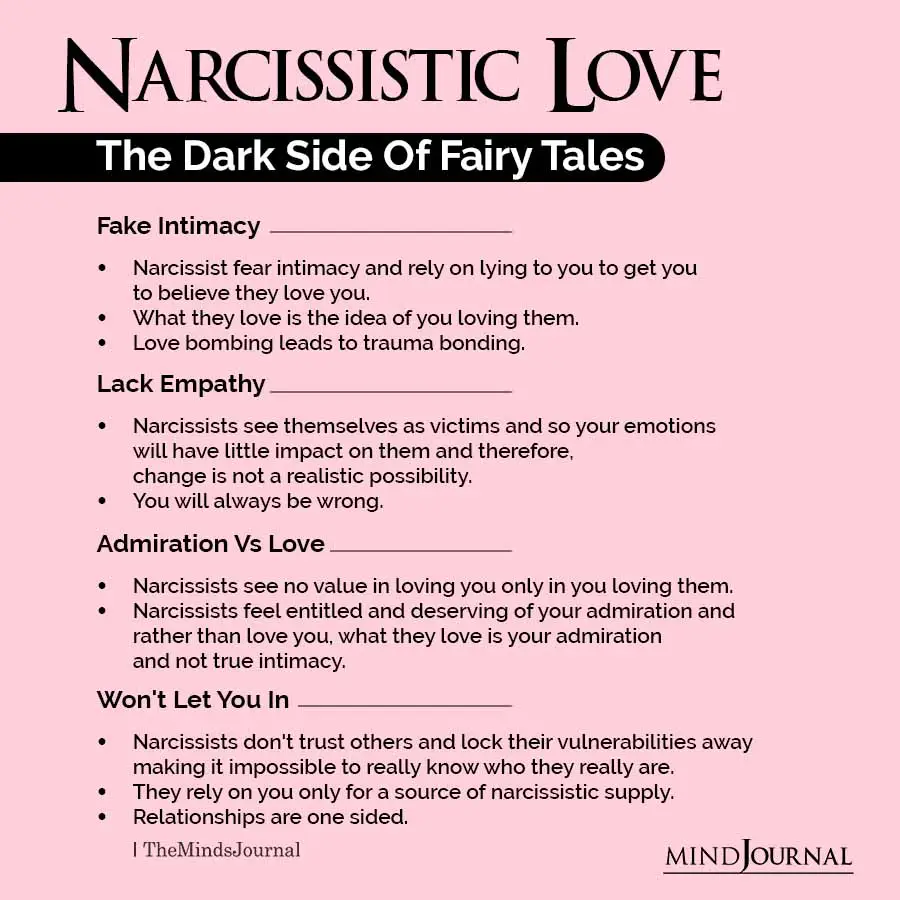


Your comment: