Remus Lupin: The Facade of Niceness
The Reveal of a Secret 3
Introduction
Getting Lupin to resign was not necessarily a bad thing. Not only was it warranted, but it seems that Dumbledore and Snape both came to this decision, which has likely saved Lupin from a more terrible fate caused by the curse of the Defense post. Merely having Lupin retire was insufficient: to fulfill the inherently evil component of the DADA curse, a price had to be paid. For Lupin, it was to see his greatest secret exposed. This scenario seems especially true as it would otherwise be too weird for Dumbledore to hire Lupin as a Defense teacher knowing that no professor could last more than a year and that Lupin’s direct predecessors got more or less killed. Not to mention that it doesn’t fit to describe Snape’s outing of Lupin as motivated by revenge only, as we know he obeys Dumbledore almost to the letter, and most importantly that he never revealed Lupin’s secret for almost two decades even though he could have done so to get his revenge early on. Something else must have pushed Snape to do it.
The first essay of Reveal of a Secret suggested that Snape might have forced Lupin to retire because he objectively failed his duties as a teacher. The second essay shows that Snape might have tried to save Lupin from a gruesome fate, either on his own or backed up by Dumbledore. However, what makes this character so unique is that he’s profoundly human, and not all of his actions are informed by a sense of heroism. This is why in this essay, I will explore the darker factors that pushed Severus Snape to reveal Lupin’s lycanthropy.
Setting the Facade of Niceness
Shenanigan Express
The narrative wants us to see Lupin as a nice teacher, sacrificing the logic of the plot in that intent. We previously saw the plothole of Lupin having to endure a painful transformation every full moon, drink Wolfsbane and/or go transform in the newly constructed Shack, and apparently needing his friends to soothe him as Animagi… even though he doesn’t have to transform if he stays hidden from moonlight, for instance in the Shrieking Shack. But that’s not all.
The first time we see Lupin is when he protects the Trio from a greedy Dementor and gives Harry some sweets to recover. But why was Lupin on the train in the first place? Why was he sharing a compartment with the students? Teachers never use the train. If he was sent to protect the students in case Sirius Black broke in, then why not send in more teachers or actual Aurors, given the threat he was representing? Why was Lupin sleeping in the compartment instead of patrolling? In fact, why only intervene when a Dementor has already started sucking out Harry’s soul, and not any sooner to ensure another student doesn’t get the same fate in another compartment?
It’s insanely lucky that Lupin was sharing a compartment with Harry of all students, and that Harry was the one and only student who could get badly affected by Dementors, AND that Dementors decided to check the train for Sirius Black, AAAANND that a Dementor decided to feast on Harry right where Lupin could shine. The plot glorifies him even if it makes little sense for things to happen this way, at least too convenient. Lupin might be on a constant dose of Felix Felicis at this point.
People have hypothesized that Lupin took the train because he was too exhausted after a night of transforming (directly debunking the idea that he was sent to protect the kids from Sirius Black since he would be too tired for that). The problem is that, as we saw, Lupin’s transformation cycles make no sense. If he transformed on the 1st of September (a full moon for us), then why did he transform between the 5th and 7th of November rather than on the 30th of October? Why take his Wolfsbane on the 31st of October (on the day of Halloween and the first Hogsmeade visit that Harry misses) when his transformation should be due the day before? If he transformed on the 7th of November 1993 (what would be the last quarter moon for us), then Lupin’s previous transformation should have occurred on the 9th of September (the second previous last quarter moon), so he can’t have taken the train on the reason that he just transformed.
If he was so tired from the upcoming transformation of the 9th of September that he needed to take the train, then I’m even more curious as to why he held a Defense class in perfect shape in the first week of school, when it was getting closer to the full moon.
It also goes against Lupin attending the next Defense class, since he teaches Defense to the third-years on Thursdays, and Thursday the 9th would be a transformation day, being a last quarter moon for us and a full moon in HP. Again, his transformation cycles make no sense, and if we actually try to put some logic in there, we know they have little to nothing to do with taking the Hogwarts Express.
Additionally, the idea that Lupin would resort to taking a train compartment to sleep in after (or before?) a night of transforming is peculiar when you consider that sleeping next to middle/high schoolers might not be the best experience. Lupin could have used the Floo network to access Hogwarts or Hogsmeade, asked a House Elf or a fellow teacher to Side-Apparate him, or Apparate to Hogsmeade by himself. The guy was able to cast a Patronus against a Dementor, it’d be surprising if he couldn’t achieve Apparition or Floo’ing right inside his office.
The last hypothesis we got is that Lupin took the train for nostalgia’s sake, and it ended up being very convenient. It’s amazing, the amount of plot luck this guy’s got. Either way you look at it, the logic is sacrificed in favor of making Lupin look good in dramatic fashion.
Fearing Fear
Lupin wants to be seen as a nice and sweet man, so much that he will lie for that purpose, in a very… grooming-like way? After the Boggart lesson, Harry decides to ask Lupin why he wouldn’t let him confront his Boggart. Lupin answers that’s because he didn’t want a Boggart Voldemort appearing among the students, which would scare everyone and ruin the lesson. Harry answers that he didn’t think of Voldemort but of Dementors when asked about his worst fear. Lupin takes that opportunity to compliment him:
“I see,” said Lupin thoughtfully. “Well, well… I’m impressed.” He smiled slightly at the look of surprise on Harry’s face. “That suggests that what you fear most of all is — fear. Very wise, Harry.”
Excuse me, what?
Dementors are not manifestations of fear, Boggarts are. Dementors were introduced as incarnations of depression (source and screenshot), there’s no sense in introducing two creatures that essentially represent the same struggle. There are lots of reasons to have a Dementor as your Boggart: their appearance is horrifying, a cold and depressing atmosphere surrounds them (and Muggles feel it), they assaulted Harry and he was so helpless against them that he fainted, and we later learn that these Grim Reaper-looking creatures can suck out your soul, making you relive your worst memories, and that every time a Dementor gets too close, Harry hears his mother being murdered!
If your worst fear was fear itself, then your Boggart would be a Boggart. To fear a Dementor is completely normal; it’s everyone’s wonder that Harry was the only one in his class whose Boggart was one of those lovecraftian monstrosities.
It seems that Professor Lupin was forcefully flattering Harry around a cup of tea. It’s lowkey creepy. So, let’s just hope he lied by force of habit: James would have loved that kind of flattery, being called wise for something trivial.
Crossdressing Boggart
The way Lupin organized the Boggart class (and later the Patronus classes) was hazardous and it’s a wonder that there wasn’t any more damage done.
It’s not enough that Lupin decides that the first class of the year will be dedicated to make his students confront their worst fears and traumas, revealing them in front of everybody in the class, without any form of warning or preparation, or any sense of privacy. As written in this commentary:
[…] Lupin gets really lucky that the lesson goes this well. He asks about Gran’s clothes because he knows Neville’s parents are in St. Mungo’s. Suppose Neville had identified his worst fear incorrectly and the boggart turned into his parents staring blankly? Forcing Neville to reveal that in front of the class would be cruel. And trying to turn it into a joke—again, in public—would be downright offensive. Not every fear can be dismissed by mockery. Or what if his boggart was the Lestranges yelling “Crucio”? That wouldn’t be any better than a Voldemort-boggart. Either Lupin was supremely confident that Snape’s insult would guarantee Neville had no other fear in his mind at that moment, or he risked putting Neville through a deeply upsetting ordeal and possibly terrifying the whole class because humiliating Snape in public with teaching as an excuse was just too good to pass up.
And what about the other students? Even minor fears like spiders and banshees could be horribly embarrassing and provide fodder for bullying. [Movie scene of Draco bullying Harry about fearing Dementors] But not everyone has only minor fears. As Lupin well knows! He may know that none of the students are werewolves, but any kid could have an equally traumatic experience. How many of them have relatives in Azkaban, or in St. Mungo’s like Neville’s parents, or were present when someone was attacked or killed like Harry was? How many have been attacked or sexually assaulted? How many are afraid of monsters that Petrify people after what happened last year? […] For that matter, could a boggart-basilisk Petrify someone?
(Side note: Fantastic Beasts: The Crimes of Grindelwald demonstrates how terrible this lesson is when Dumbledore gives it decades earlier. First we see Leta’s classmates relishing the chance to see what she fears so they can bully her about it. Then her fear is her baby brother drowning, which is difficult to turn into a joke. Also it’s horrible to ask a kid to do that in front of an audience. Which is probably why after Dumbledore looks at the drowning baby, the scene ends […].)
[Sidenote 2: to give you a concrete example, we estimate that 10-15% of the global population was a victim of incest, and ⅓ of people know someone who was a victim of it; the majority… are children. That would account 1 Gryffindor in Harry’s year, 4 students in the whole of his promotion, and 100 students in Hogwarts. That’s just accounting incest, not all the other potential crimes against children and other traumatic events.]
Lupin belatedly realizes one of the risks when he stops Harry from facing the boggart—but he could have realized that earlier by looking at the class list. “Hm, Harry’s in this group. What if his boggart is Voldemort? Oh, and there’s Neville—his might be pretty terrifying too. Also the entire school might fear dementors now thanks to the incident on the train yesterday. Maybe I should have them face the boggart individually behind a screen or something. And what if I need to step in? Someone might realize that my boggart is the moon rather than a crystal ball… [And could a full moon-boggart make me transform, considering that a Boggart Dementor can have the same effects as a true Dementor on Harry?] » Until the danger is right in his face, it doesn’t occur to him. The social humiliation aspect never does seem to sink in. Again, I think this was inexperience, not malice, but you can see where the Ever So Evil Lupin idea came from. And again, while it’s possible that he could improve with training and experience, his skill now at imagining how a lesson will affect students emotionally and reading their emotional states is poor.
User sunnyskywalker is not the only one seeing something wrong with the way Lupin managed the Boggart class. Here is Lorie Kim, author of Snape: A Definitive Reading:
In his practical lesson on overcoming boggarts through laughter, Lupin asks the students to reveal the thing they fear the most. Neville’s reply is « Professor Snape ». Lupin then instigates collective mockery of Snape using a sexist, ageist image that the students would never have come up with on their own. […]
To enormous hilarity, « all goes well » and the boggart gives the assembled class the opportunity to mock Snape in unattractive drag. Some good comes out of this: Neville gains confidence from vanquishing the boggart and the students know they have a much-needed ally against Snape’s bullying. But it comes at a painful price. Lupin has legitimized a form of hatred. […] [He] has gotten a roomful of pubescent Gryffindors to engage in collective sexual ridicule behind a Slytherin teacher’s back, including the alarming word « forced ». They would not have done so openly, in class, without his instigation, not at a school where disrespectful student references to « Snape » are always corrected with a gentle « Professor Snape. »
Unlike Lupin’s assertion that he was sure Neville would do well in class, this is not an empowering response to Snape’s bullying. This is retaliation, introducing an entirely unrelated image that implicates everybody who laughs at it, including the reader. The momentum of group laughter makes it even harder for anyone with an objection to speak out and be heard. It can, indeed, be funny to imagine the mean Snape in a vulture hat. And then, depending on your perspective and life experience… it can also not be so funny. Ask anyone who was singled out in adolescence by a crowd of 13-year-olds and mocked in a sexist, homophobic, or transphobic manner for being unattractive and sexually invalid. It can feel extraordinarily unpleasant to be subjected to the same experience in adulthood, long after one had hoped to leave such experiences in the past, especially when one of the original bullies is resuscitating the ordeal by introducing it into classroom instructions for an entire generation of 13 year-olds. It is unlikely that these 13-year-olds, having once enjoyed a laugh at this novel transgression, will fail to relive the pleasure and spread it to their peers.
So not only was Lupin’s management of the class risky and potentially very harmful, but the way he taught a student how to « ridicule » their worst fear involved imparting them a sexist, queerphobic mentality. Literally mocking a drag-queen stand-in to force it back into the closet.
I’ll add that having Neville use his grandmother as a Ridikulus could have gotten him bullied, because now his peers would remember his grandmother as ugly and clownish. Neville could also have perceived Lupin’s idea as an insult, basically admitting that he thought Neville’s grandmother was so hilarious to look at, that her clothing style is the first thing that comes to his mind if he wants to have a good laugh.
Finally, for someone who’s so glorified for « defending the underdog from big meanie Snape » [Pottermore screenshot], he never really addresses the issue of Snape being cruel against Neville; in fact, the Boggart lesson is the only class in which Lupin will pay Neville special attention. That the boy gets bullied later doesn’t matter, since he’s already served his purpose to spark Lupin’s popularity throughout the school at Snape’s expense. Or as sunnyskywalker explains:
Harry doesn’t wonder whether Lupin even cares if Snape retaliates, let alone tries to find out or stop it, so it’s easy for us to speed along without wondering that either. Or about how much of his motivation was helping Neville versus using Neville to go after Snape. […] skimming over the fallout of the lesson with a single brief aside about Snape denies us that narrative pause to go, “Hey, Neville doesn’t look like imagining Snape in a dress is helping him handle this any better than before,” or, “Wait, did Professor Lupin really just drop Neville in it and not even check up on him later?”
But I mean, Lupin was part of a popular gang who routinely bullied the underdog for being weird, so should we really be surprised?
Speaking of that, here is the part where Lupin’s facade of niceness starts to crumble apart, in the very scene we are supposed to view him as an ally. It often does when Snape is involved.
Lupin could have taught another way to defeat the Snape Boggart, which contrary to what he says in class, doesn’t necessarily involve laughter:
Then they saw a silvery-white orb hanging in the air in front of Lupin, who said, “Riddikulus!” almost lazily.
Crack!
“Forward, Neville, and finish him off!” said Lupin as the boggart landed on the floor as a cockroach.
It’s ironic that casting Ridikulus doesn’t actually involve making something ridiculous – blame that on Rowling’s faulty writing – but then it makes Lupin’s choice of teaching method stand out as potentially malicious. Let’s ask ourselves a question to illustrate that point: If Hermione had been able to confront her McGonagall Boggart in front of everyone (just like the other students), would Lupin have asked her to force the McGonagall stand-in into a diaper or something? Hm?
Don’t you find it weird that Hermione, who had every reason to (try to) defeat her McGonagall Boggart, was conveniently unable to do that? At the very least, that out of the blue, she (of all students) was prevented from confronting it, by Lupin himself? Indeed, it seems to have been the right choice if you wanted to preserve Lupin’s nice facade. To remove Hermione and her Boggart from the Boggart lesson scene and later in book 3 have Hermione fail to defeat her McGonagall Boggart, might have been a conscious, twisted and poorly justified way from Rowling to avoid the question of how to properly confront a teacher Boggart, just to avoid putting Lupin in a bad light.* Because if Lupin had taught Hermione to basically sexually assault her teacher the same way he had Neville assault the Snape stand-in, then it would have blatantly showed how his teaching was fucked up, and it would have been completely understandable of McGonagall to hate him or even try to get him sacked – making, in contrast, Snape’s reaction more obviously legitimate. On the other hand, if Lupin had told Hermione to defeat the McGonagall Boggart without humiliating her like he did for Snape, then the stark contrast of treatment would have proven that Lupin specifically targeted Snape in this lesson, using Neville as an excuse and a weapon in that purpose; that he was just finding a way to actively, publicly bully « Snivellus » yet again, in adulthood, in a professional setting, on the first occasion he got, in the very place Snape not only works in but lives in. It would have shown that Lupin was another, more vicious kind of bully in this class who resumed harassing Severus even when his old friends aren’t there, a bully who never grew up, a bully that the Potions teacher now has even more legitimacy to hate. It was not just inappropriate but harmful to sexually humiliate a colleague like that–the same colleague who brews his Wolfsbane when he doesn’t have to, the same whom Lupin ought to make efforts to for having made his school years a living hell.
*Last thing about the McGonagall Boggart: note that brushing Hermione away skips over the fact that her most pressing fear is another teacher, her own Head of House and Deputy Headmistress, a fear so severe that unlike Neville, the worst student of the class, she utterly failed to defeat it – making us focus on how horrible it is that Professor Snape is a student’s greatest fear when the same should have been stressed in the case of Professor McGonagall – and as you guess, the movies never bothered to represent it, leaving us with the judgement that Snape’s humiliation was warranted anyway.
Even if defeating the Boggart did always involve laughter, he could have taught Neville to make the Snape Boggart dance or have electric blue hair or something equally insignificant and harmless. He could have taught Neville to imagine an adult he liked in his Boggart’s stead.
Lupin can’t evade the problem of assaulting his colleague in a sexual, queerphobic way with the argument that “it wasn’t really Snape, it was just a Boggart”. Playing pretend-assault on a living dummy is not only just as psychologically harmful as doing it to the person it represents or threatening to do it to them, but in that context, it also trains the students to repeat that kind of assault – if not against their teacher, then against their peers, or anybody else really, notably Muggles. Let’s say a similar event happened but with a Boggart, dummy-you, dear readers and viewers. You might not be in the room, and it might just have been a Boggart, but it was still your body that was desecrated. And if there were people who used a dummy-you to remove the clothes and put ridiculous ones to laugh at your stand-in, you would be right to not only feel just as humiliated as if you were in the room, not only feel hurt by that “joke”, but also feel grossed out and scared for what could come next now that this line was crossed. When done publicly, it is not only a personal attack, a threat, but it’s also considered incitement to violence. No, this kind of physical assault cannot be justified, whether or not it was faulty of Snape to become a student’s Boggart. Incitement to violence especially can’t be justified into classroom instructions in a school like Hogwarts. There are ways to defeat a teacher Boggart without crossing the line of bad-taste or outright harassment, as we illustrated earlier. Lupin’s method doesn’t allow that.
Notice that Snape must suspect there are students who fear him in this castle, at the very least Neville, and he knew that the students would be confronting their Boggarts in this class, so he could reckon that a Boggart-him would come up. Not to mention, defeating Boggarts is in Hogwarts’ Defense curriculum (and Snape knows that since he’s been asking for the job for years and we know he’s competent in Defense). Was Snape upset that the inevitable happened… or was he upset because he knows it wasn’t inevitable, that Lupin’s method of defeating the Snape Boggart was unnecessarily humiliating?
(By the way, Lupin couldn’t even – I don’t know – levitate the stupid cupboard to the Defense classroom, right? He had to make sure to start the Boggart class right inside the teachers’ room where Snape was, forcing him to dismiss himself out of the room. You know, else Snape’s Boggart is outed to everybody, notably Lupin himself? Definitely isn’t reminiscent of Leta’s bullies salivating to see what her Boggart was just so they could bully her about it…)
And that, folks, is just the beginning of the year, a taste of what Lupin’s “respectful politeness” truly entails.
« Remus’ subsequent respectful politeness »
Tea and Wolfsbane
Throughout Harry Potter and the Prisoner of Azkaban, the narrator returns to the theme of Snape’s suspicions and anxieties over Remus Lupin. Let’s take for instance the scene in which Severus brings Lupin his monthly dose of Wolfsbane at the beginning of the year.
The door opened, and in came Snape. He was carrying a goblet, which was smoking faintly, and stopped at the sight of Harry, his black eyes narrowing.
Look at Snape’s body language. He did not expect Harry to be drinking tea in Lupin’s company. It’s enough to make him stop right where he is, wary.
“Ah, Severus,” said Lupin, smiling. “Thanks very much. Could you leave it here on the desk for me?”
Snape set down the smoking goblet, his eyes wandering between Harry and Lupin.
“I was just showing Harry my Grindylow,” said Lupin pleasantly, pointing at the tank.
“Fascinating,” said Snape, without looking at it.
Lupin is half-lying. He talked about the Grindylow only when Harry entered the office; the remaining 80% of the conversation were centered around Boggarts and Dementors. In Snape’s perspective, Lupin tries to make it seem as if they’re having an innocent talk, with an obviously fake pleasant tone, but the fact they’re sharing tea suggests that Harry and Lupin were having a longer, deeper conversation and that he’s hiding something. Snape’s eyes are “wandering between Harry and Lupin”, and he won’t be distracted by the Grindylow tank: he is worried that something bad is happening between the two. Some form of grooming, perhaps? And it is funny, because as the reader, we could suspect Lupin of the same thing! [Very wise, Harry]
Here is a quote of the Welcoming Feast:
Professor Snape, the Potions master, was staring along the staff table at Professor Lupin. It was common knowledge that Snape wanted the Defense Against the Dark Arts job, but even Harry, who hated Snape, was startled at the expression twisting his thin, sallow face. It was beyond anger: it was loathing. Harry knew that expression only too well; it was the look Snape wore every time he set eyes on Harry.
From the very beginning–before the start of term in fact–Snape was extremely wary of Lupin, someone who has a history of bullying Severus. It does not help that Lupin is already lying to Snape about the subject of conversation he was having with Lily’s son.
It’s fair to assume Snape was worried that Lupin was trying to brainwash and manipulate Harry, having tea with him to establish a deceptive trust bond with a vulnerable boy and–who knows–make it easier to abduct him later. That’s why Snape remains, silent, suspicious, “his eyes wandering between Harry and Lupin.” Remember that Snape was fairly quick to suspect Sirius had been using the Confundus Charm upon the Trio, and it’s later revealed that Peter did it: if Peter and Sirius can brainwash a kid, then Lupin can certainly do it.
“Black had bewitched them, I saw it immediately. A Confundus Charm, to judge by their behavior. They seemed to think there was a possibility he was innocent. They weren’t responsible for their actions.”
But that’s not all:
“You should drink that directly, Lupin.”
“Yes. Yes, I will,” said Lupin.
Yet he makes no move to drink it..
“I made an entire cauldronful,” Snape continued. “If you need more.”
“I should probably have some again tomorrow. Thanks very much, Severus.”
Snape is likely not only worried that Lupin is trying to help Sirius catch Harry, but that he might try using his werewolf form to assault students; he’s got personal experience to back it up (the Werewolf Incident). Lupin knows this. If he wanted to be honest and truly alleviate Snape’s concerns, he could have taken a sip of the Wolfsbane the moment Snape indicated he should drink that directly. Instead, Lupin transforms this into a power play against the Potions Master. Not only that, but instead of going to get Wolfsbane by himself, he has Severus bring his own medication. Let’s take a look again at this quote:
“Ah, Severus,” said Lupin, smiling. “Thanks very much. Could you leave it here on the desk for me?”
Lupin’s first onomatopoeia, his immediate smile, the fact he doesn’t ask what Snape is carrying as if he knew already, the fact he directly orders him to leave the Wolfsbane on his desk–all of these indicate he expected Snape to bring his meds. But he refuses to drink his Wolfsbane in front of the Potioneer who was anxious enough to make an entire cauldronful of it. He waits until Severus leaves the room to finally take it. That’s very dishonest, disrespectful, hostile, and only drives Snape to think he is not to be trusted. When he leaves the room, Snape has no clue whether or not Lupin’s truly taken the Wolfsbane. It is this kind of behavior that will lead Lupin to « forget » his Wolfsbane for an entire week at the end of the year; as a reminder, if he hadn’t been protected by a plothole, Lupin would have transformed in his office before he could even spot Sirius and Pettigrew on the Map (see Reveal of a Secret 1).
Another thing to note here is that throughout all the books, Lupin keeps calling Snape by his first name as if they were close acquaintances, nevermind that Snape tries to enforce some distance between them by formally calling Lupin by his surname:
“Lupin!” Snape called into the fire. “I want a word!” […]
“You called, Severus?” said Lupin mildly.
Lupin is not being respectful at all here. It is not only creepy but passive-aggressive to keep calling someone by their first name when it obviously makes them uncomfortable. This same tactic was used by Dumbledore and later Harry against Voldemort, calling him not by his impressive nickname, or the two miles long one, but “Tom” or “Riddle”. It’s the same as Voldemort calling the protagonist “Harry” instead of “Potter” (like Snape would do). Voldemort is not being nice to Harry, he is forcing a kind of intimacy between them. Lupin does just that to Snape while the latter is putting in extra effort to relieve him every month of the burden of his illness. If you had any doubt this isn’t Lupin trying to be friendly, remember that he kept calling Snape “Severus” in Deathly Hallows, despite believing him to be Dumbledore’s murderer and Voldemort’s right hand:
“No sign of Severus, then?” he asked.
It is a running theme that Lupin’s hostility lies not in direct attacks but in fake familiarity and covert jibes that everyone but the target could mistake for agreeability. In Pottermore, Rowling argues that Remus Lupin was very polite to Professor Snape:
Severus Snape’s resentment, never abated by Remus’s subsequent respectful politeness, made sure that it was widely known what the Defence Against the Dark Arts teacher was.
While Lupin does put up a facade of politeness, the “respectful” part does not check out the more you look into their interactions.
“Moony presents his compliments to Professor Snape, and begs him to keep his abnormally large nose out of other people’s business.”
Harry must have felt incredibly awkward standing in the middle of it.
“Not at all,” said Snape, but there was a look in his eye Harry didn’t like. He backed out of the room, unsmiling and watchful.
After he informs Lupin there is more of the potion brewed for later use, he “back[s] out of the room, unsmiling and watchful”. Snape is afraid and on edge; he does not want to turn his back on the scene before him, he takes the situation deadly seriously, and is wary about what is passing between Lupin and Harry. With such blatant body language, he may also want Lupin to know that he is suspicious of his intentions and is watching his every move.
Because Lupin’s behavior never abated Snape’s concerns, this occurs during the Halloween Feast, which directly follows the scene in Lupin’s office:
Harry moved his eyes along the table, to the place where Snape sat. Was he imagining it, or were Snape’s eyes flickering toward Lupin more often than was natural?
It is no coincidence that just following the Halloween feast, Sirius Black breaks into the school and Harry overhears Snape on the verge of insubordination, trying to impress on Dumbledore his convictions that it must be Lupin helping his old friend Sirius break into the school:
“It seems — almost impossible — that Black could have entered the school without inside help. I did express my concerns when you appointed [Lupin] —”
“I do not believe a single person inside this castle would have helped Black enter it,” said Dumbledore, and his tone made it so clear that the subject was closed that Snape didn’t reply.
Notice Dumbledore interrupts Snape only as he orally expresses his doubts about Lupin’s true allegiances. The Headmaster says he does not believe « a single person at this school would have helped Black enter it », but if it were the case, then he’d have interrupted Snape sooner: from the moment he suggested the idea that Black entered the school with inside help. What Dumbledore means is « I don’t believe Lupin would help Black enter the school », but naming him so openly would have alerted the surrounding students that the Defense teacher was not to be trusted–yet another one–which is why he cuts Snape off just before he pronounces Lupin’s name.
But while Dumbledore is concerned with Lupin’s reputation (and his own), Snape sees a deceitful accomplice of Sirius Black (a spy of some sort) turning the school against him, including the Headmaster, the only one Voldemort ever feared. To Snape, Lupin is as dangerous as fake Moody will be next year; perhaps more considering fake Moody never planned to become Dumbledore’s protégé nor turn the students and the Headmaster against the only one who suspected his true identity. (Well, maybe this last comparison is not fair: he killed Barty Crouch Sr before he told the truth that “Moody” was in fact his own Death Eater son Barty Crouch Jr; that leaves us wondering whether Snape feared Lupin and Sirius might attempt to kill him too, making Harry’s capture easier.)
The Map’s Manufacturers
Now, I’d like to address the scene where Snape confronts Harry and Lupin about the Marauder’s Map. There is a very insightful essay on it written by straysayake on Reddit, which I recommend giving a try: The Marauder’s Map scene in PoA: Veiled Fencing between Snape and Remus. It roughly has the same ideas as I’ll now present. Let’s get started.
Harry has again put himself in great danger by finding a way to leave the safety of the castle for Hogsmeade, despite Snape and McGonagall’s orders to stay.
- “So — er — d’you think it would be all right — I mean, will it be okay if I — if I go to Hogsmeade?” […]
“I’m afraid not, Potter,” she said. “You heard what I said. No form, no visiting the village. That’s the rule.”
- “I suggest the pair of you return to Gryffindor Tower, where you belong.”
Snape finally obtains Harry’s “spare bit of parchment”, which we know is the Marauder’s Map. He correctly guesses the function of this parchment:
“[…] A letter, perhaps, written in invisible ink? Or — instructions to get into Hogsmeade without passing the Dementors?”
Then the Map insults Snape under the names of “Moony, Wormtail, Padfoot and Prongs”. His reaction to the insults bearing the Marauders’ nicknames is almost visceral. I don’t think the insults were what shocked him the most:
“Moony presents his compliments to Professor Snape, and begs him to keep his abnormally large nose out of other people’s business.”
Snape froze.
It’s not a mere coincidence that the person Snape immediately calls is Lupin: he has recognized the cringy nicknames, among which is also Sirius Black’s–a man Snape thinks has killed Lily and now tries to kill Harry.
“So…” said Snape softly. “We’ll see about this…”
He strode across to his fire, seized a fistful of glittering powder from a jar on the fireplace, and threw it into the flames.
“Lupin!” Snape called into the fire. “I want a word!”
Utterly bewildered, Harry stared at the fire.
Snape gives Lupin another chance to show if he can be trusted. He waits for him to confirm the function of this Map–and eventually, to say whether or not he’s given it purposefully to Harry.
“I have just asked Potter to empty his pockets. He was carrying this.” Snape pointed at the parchment, on which the words of Messrs. Moony, Wormtail, Padfoot, and Prongs were still shining.
It shouldn’t be a problem for Lupin to admit he doesn’t know how the map fell into Harry’s possession:
“I don’t want to hear explanations,” said Lupin shortly. He glanced around the empty entrance hall and lowered his voice. “I happen to know that this map was confiscated by Mr. Filch many years ago. Yes, I know it’s a map,” he said as Harry and Ron looked amazed. “I don’t want to know how it fell into your possession.”
And instead of calming down Snape’s suspicions:
An odd, closed expression appeared on Lupin’s face.
“Well?” said Snape. Lupin continued to stare at the map. Harry had the impression that Lupin was doing some very quick thinking.
Lupin and Snape both know what that parchment is, and they know that the other knows. Lupin remains silent because, as Harry understands, he is obviously hiding something and is making up a lie. It almost looks as if Lupin is Occluding, but his silence speaks for itself.
“Well?” said Snape again. “This parchment is plainly full of Dark Magic. This is supposed to be your area of expertise, Lupin. Where do you imagine Potter got such a thing?”
Lupin tries to hide the truth and cover up for Harry… and himself. First, he warns the boy not to interfere:
Lupin looked up and, by the merest half-glance in Harry’s direction, warned him not to interrupt.
As if Snape the spy couldn’t spot that. And then the lie:
“It looks to me as though it is merely a piece of parchment that insults anybody who reads it. Childish, but surely not dangerous? I imagine Harry got it from a joke shop —”
And how could Harry have gotten it from a joke shop if not illegally, since he was forbidden to go to Hogsmeade? How does he know that the parchment « insults anybody who reads it », in other words, that it isn’t a simple letter written by idiots previous to Snape’s attempts to crack the Map open, if he didn’t have back-up knowledge that this parchment can come up with insults of its own if the wrong person asks it to reveal its secrets? However, Snape’s priority is not that Harry has a way to break more rules anymore. Now, Snape is worried that Professor Lupin actively played a role in endangering Harry. It doesn’t help that Lupin adopts the Deer-In-Headlights strategy, taking Snape for an idiot.
“Indeed?” said Snape. His jaw had gone rigid with anger. “You think a joke shop could supply him with such a thing? You don’t think it more likely that he got it directly from the manufacturers?”
Evidently, Snape knows–or highly suspects–that Lupin is one of the “manufacturers”, along with Sirius Black. That’s why he called Lupin in the first place. Perhaps he even suspected Lupin wrote to Harry using invisible ink–you know, as the mischievous, “well-meaning” teacher he is.
If you want to count Pottermore as canon, it is suggested that Snape tipped Filch on the Marauder’s Map; although whether he knew it was a map or merely suspected the Marauders to be using some kind of object for “mischief” (ie stalking Severus and/or Lily) is unclear:
Although the precise circumstances surrounding the makers’ loss of their map are not given in the Harry Potter novels, it is easy to conclude that they eventually over-reached themselves and were cornered by Argus Filch, probably on a tip-off from Snape, whose obsession it had become to expose his arch-rival, James Potter, in wrongdoing. The masterpiece of a map was confiscated in Sirius, James, Remus and Peter’s final year and none of them were able to steal it back from a well-prepared and suspicious Filch.
So, why would he think Lupin gave Harry the “instructions to get into Hogsmeade without passing the Dementors” through this parchment? Because, since trying to get Sirius Black into the castle to get the boy failed twice already, it would be a very convenient way to get Harry out of Hogwarts instead. The Map could lure him out of the safety of Hogwarts, unaccompanied, far from the Dementors, just so Sirius Black could get a hand on the boy. Not to mention: the first time Sirius attacked was during Halloween, on the first Hogsmeade week-end, just after Snape brought Lupin his first dose of Wolfsbane (end of Chapter 8, “The Flight of the Fat Lady”). Thus, Snape has reasons to suspect another attack is going to happen during the current Hogsmeade week-end as well, the Map being the key for a plan of abduction. Nobody would suspect Remus Lupin was in on the plan because, like Quirrell, he looks so mild and nice and full of good intentions, except to Snape, who has kept an eye on him all along.
What’s funny is that Remus completely agrees with Snape when they’re out of his office!
“Why did Snape think I’d got it from the manufacturers?”
“Because…” Lupin hesitated, “because these mapmakers would have wanted to lure you out of school. They’d think it extremely entertaining.”
As he will confirm yet again at the end of the year:
“You told me Moony, Wormtail, Padfoot, and Prongs would’ve wanted to lure me out of school… you said they’d have thought it was funny.”
“And so we would have,” said Lupin, now reaching down to close his case.
As funny as the Werewolf Incident no doubt! There’s a key parallel between Snape’s own near-death experience when Sirius Black lured him to the Shack to be mauled by werewolf Lupin, and his suspicion that Lupin gave Harry instructions to lure him out of school, out in the open where Sirius Black could attack. The first time, Snape’s life was at play. Now, it’s Harry’s. History is repeating itself, and Snape is intent to stop the worst from happening.
Mind you, the Map is dangerous. When the twins have found it in Filch’s office:
“— and we couldn’t help noticing a drawer in one of his filing cabinets marked Confiscated and Highly Dangerous.”
Severus says that the Map is “plainly full of Dark Magic”. It is possible that Snape says that to get a rise out of Lupin; the Marauders in particular seem to have some kind of hangup about how they’re good because they would never use Dark Magic. But in order for Lupin to refute this accusation, he would have to admit to knowing what the object is and how it was made, falling squarely into Snape’s trap.
But as we’ll see in my essay on the Dark Arts, the Marauders certainly used Dark Magic, and Severus being a Dark Arts expert, it’s telling when he accuses the Map of being a Dark object. Given Rowling seems to define Dark magic as magic that can hurt, Snape classifies the Map as potentially harmful and thus evil; when a boy is lured out of school to be attacked by a dangerous animal, the Marauders’ idea of a prank is not so harmless anymore. Had Sirius Black been a true murderer, as Lupin was wholly believing at this time, the Map could have gotten Harry killed.
Another clue that indicates the Map must be “plainly full of Dark magic” is that the Map’s secrets do not break under Snape’s multiple attempts to make it tell the truth, despite the mention of his title as “Professor Severus Snape, master of this school”. The lack of cooperation from the Map, its strong resistance to Snape’s commands and the following insults suggest that Dark magic is at work here.
“Let me see, let me see…” he muttered, taking out his wand and smoothing the map out on his desk. “Reveal your secret!” he said, touching the wand to the parchment. Nothing happened. […] “Show yourself!” Snape said, tapping the map sharply. It stayed blank. […] “Professor Severus Snape, master of this school, commands you to yield the information you conceal!” Snape said, hitting the map with his wand. As though an invisible hand were writing upon it, words appeared on the smooth surface of the map. [insert insults]
Given the Map was able to come up with personalized instructions and insults of its own:
Mr. Padfoot would like to register his astonishment that an idiot like that ever became a professor.
as though it contained the minds of the Marauders, it’s fair to think the Map is somehow able to think for itself. But remember what Arthur Weasley said last year:
“Never trust anything that can think for itself if you can’t see where it keeps its brain! Why didn’t you show the diary to me, or your mother? A suspicious object like that, it was clearly full of Dark Magic!”
It’s quite funny that the Marauder’s Map shares similarities with Tom’s diary, and that Harry did not learn his lesson from last year.
But even as he stood there, flooded with excitement, something Harry had once heard Mr. Weasley say came floating out of his memory. Never trust anything that can think for itself, if you can’t see where it keeps its brain. This map was one of those dangerous magical objects Mr. Weasley had been warning against… Aids for Magical Mischief Makers… but then, Harry reasoned, he only wanted to use it to get into Hogsmeade, it wasn’t as though he wanted to steal anything or attack anyone… and Fred and George had been using it for years without anything horrible happening… […] Then, quite suddenly, as though following orders, he rolled up the map, stuffed it inside his robes, and hurried to the door of the classroom. »
This excerpt [Then, quite suddenly, as though following orders] is creepy by the way.
Back into the scene: Ron intervenes, and Lupin jumps on the occasion to pretend that the Map is nothing but a Zonko product. Everybody here knows he’s lying, though. Plus it shouldn’t really help Harry’s case, because we know for a fact that:
« […] Zonko’s Joke Shop’s frankly dangerous […] »
However, Lupin leaves no time for Snape to speak before rounding up the conversation. Here’s something interesting though. For the duration of their conversation, the map is either in Snape’s hand or on Snape’s desk. Lupin never even touches it. And when Lupin goes to leave:
“Well!” said Lupin, clapping his hands together and looking around cheerfully. “That seems to clear that up! Severus, I’ll take this back, shall I?”
- I’ll take this back, shall I? [slowed]
Very subtle Freudian slip-up… one that makes it evident, in retrospect, that he just spouted a good load of bullshit. Not to mention, it hints once again in Snape’s ears that Lupin is the one who gave the Map to Harry, which is why he « takes it back » when it’s caught by Snape.
Fast-forward to the events in the Shack: as Lupin is uselessly recounting his tale to the Trio, Severus Snape hears the following:
“And that’s how we came to write the Marauder’s Map, and sign it with our nicknames. Sirius is Padfoot. Peter is Wormtail. James was Prongs.”
When Lupin admits that the “spare bit of parchment” signed under the nicknames of Wormtail, Moony, Padfoot and Prongs was a map devised by Peter, Sirius, James and Remus, Snape sees his distrust in Lupin definitely validated.
Why would Lupin need to lie about the Map to Severus, when they could work together to ensure Harry’s safety? Well, there are… two theories… but I admit they are hard to believe:
- The Map was evidence of Lupin’s long-term rule-breaking and he didn’t want to admit it either to Snape (lol) or Dumbledore (double lol)
- He antagonized Snape out of habit, for old time’s sake
The last theory is developed by tumblr user urupotter here:
For all that he may say that he’s indifferent to Snape (“I neither like nor dislike Severus”, DH), we know that he’s lying and that this isn’t true. Lupin may act like this on the surface, but his disdain slips through at key moments. He won’t ever agree with Snape publicly, and whether Snape is correct or not is irrelevant; Lupin wants to look good in front of Harry. This isn’t the only time this happens, but Lupin sows resentment covertly against Snape more than once. It’s just hard to notice at first, but on re-reads it jumps out to the reader with a keen eye.
He didn’t have to lie. But by choosing to do so, Lupin demonstrates that he’d rather refuse to cooperate with his fellow colleagues than work for the children’s safety. He never left his animosity against Snape in the past. Again, more miscommunication on Lupin’s part, and more evidence for Snape’s case that Lupin is an enemy working for Sirius Black. He really did not help matters.
Gaslighting
I’m going to skip a lot of the dialogue here because we have already discussed the subject a lot in the chapters surrounding the events at the Shrieking Shack, but it doesn’t hurt to either have another look at my previous essays from the series « Hidden Identities » or read the chapter by yourself if you want to thoroughly remember what was revealed in Snape’s presence.
Let’s focus on the part of the conversation that addresses Snape directly and which prompted him to come out of the Cloak. It begins here:
“[…]… so, in a way, Snape’s been right about me all along.”
“Snape?” said Black harshly, taking his eyes off Scabbers; for the first time in minutes and looking up at Lupin. “What’s Snape got to do with it?”
Severus has been suspecting Lupin all year long. He’s been right to mistrust him, as Lupin explains:
“All this year, I have been battling with myself, wondering whether I should tell Dumbledore that Sirius was an Animagus. But I didn’t do it. Why? Because I was too cowardly. It would have meant admitting that I’d betrayed his trust while I was at school, admitting that I’d led others along with me… and Dumbledore’s trust has meant everything to me. […] in a way, Snape’s been right about me all along.”
About this, let’s have another treat of metametatron4’s essay on Lupin:
By Lupin’s own admission, he is fine betraying Dumbledore’s trust and lying to Dumbledore (as he continues to do the entire year). This is worth thinking about because Lupin respects Dumbledore. He is fine maintaining Dumbledore’s trust on entirely false pretenses, on a total lie, and this doesn’t bother him at all. Lupin prizes Dumbledore’s trust over Dumbledore himself. It’s Dumbledore’s « trust » that means « everything » to Lupin, not having a genuine relationship with Dumbledore involving honesty, truth and hard work like owning up to his teenage faults.
This must be pretty disgusting to Snape, as the latter has been rejected by the Headmaster on the motive that his favourite ex-student’s innocence cannot be doubted:
“You remember the conversation we had, Headmaster, just before — ah — the start of term?” said Snape, who was barely opening his lips, as though trying to block Percy out of the conversation.
“I do, Severus,” said Dumbledore, and there was something like warning in his voice.
“It seems — almost impossible — that Black could have entered the school without inside help. I did express my concerns when you appointed —”
“I do not believe a single person inside this castle would have helped Black enter it,” said Dumbledore, and his tone made it so clear that the subject was closed that Snape didn’t reply.
But “Snape’s been right all along”: even if Lupin did not actively help Black, his inaction allowed a (believed) Death Eater as dangerous as Bellatrix to break into the school. Lupin has been an enabler. And as he tells us:
“[…] I haven’t changed…”
It does not help of course that Snape has heard all the ways Lupin has betrayed Dumbledore’s trust not only during his teenage years but also as a teacher, especially considering the repercussions it had on Snape’s own safety. It mustn’t have been fun for either Dumbledore or Snape to hear how dishonest and manipulative Lupin has been till this day. For Dumbledore, it means he has been putting in extra effort, protection, concern and his own reputation on the line for a boy who never grew up and took advantage of his generosity. For Snape, it confirms how unfair it was for Dumbledore to trust Lupin over the Potions Master who gave everything to him, including his utmost loyalty:
- “I shall be interested to see how Dumbledore takes this… He was quite convinced you were harmless, you know, Lupin… a tame werewolf —”
- “And what will you give me in return, Severus? »
“In — in return?” Snape gaped at Dumbledore, and Harry expected him to protest, but after a long moment he said, “Anything.”
Later into the monologue, Lupin says:
“Professor Snape was at school with us. He fought very hard against my appointment to the Defense Against the Dark Arts job. He has been telling Dumbledore all year that I am not to be trusted.”
In addition to this:
“[…] so, in a way, Snape’s been right about me all along.”
Of course Snape was right about him. This isn’t the only time a protagonist admits that as unfair Snape might seem, he is right when calling out people for being douchebags:
[…] judging from what he had just seen, his father had been every bit as arrogant as Snape had always told him.
However, Lupin explains that his current behavior is not the only thing that made Snape suspect him; we call it relentless bullying and the Werewolf Incident:
“He has his reasons… you see, Sirius here played a trick on him which nearly killed him, a trick which involved me —”
As an aside: this is a peculiar way to phrase this. Lupin makes it sound as if he had no active participation in the “trick” Sirius “played” on Snape. However, this is followed by:
“So that’s why Snape doesn’t like you,” said Harry slowly, “because he thought you were in on the joke?”
“That’s right,” sneered a cold voice from the wall behind Lupin.
Or as we saw in an earlier essay:
“[…] your saintly father and his friends played a highly amusing joke on me that would have resulted in my death if your father hadn’t got cold feet at the last moment.”
It certainly doesn’t sound as if Snape believes Lupin to be an innocent participant of the Werewolf Prank. He could have perceived Lupin’s phrasing as another attempt to deny his own guilt.
Black made a derisive noise. “It served him right,” he sneered. “Sneaking around, trying to find out what we were up to… hoping he could get us expelled…”
And then the half-lying bullshit starts again:
“Severus was very interested in where I went every month.” Lupin told Harry, Ron, and Hermione. “We were in the same year, you know, and we — er — didn’t like each other very much. He especially disliked James. Jealous, I think, of James’s talent on the Quidditch field… anyway Snape had seen me crossing the grounds with Madam Pomfrey one evening as she led me toward the Whomping Willow to transform. Sirius thought it would be — er — amusing, to tell Snape all he had to do was prod the knot on the tree trunk with a long stick, and he’d be able to get in after me. Well, of course, Snape tried it — if he’d got as far as this house, he’d have met a fully grown werewolf — but your father, who’d heard what Sirius had done, went after Snape and pulled him back, at great risk to his life… Snape glimpsed me, though, at the end of the tunnel. He was forbidden by Dumbledore to tell anybody, but from that time on he knew what I was…”
Let’s break this down.
“We were in the same year, you know, and we — er — didn’t like each other very much.”
There are easy clues to know where Lupin is hiding or twisting the truth. It starts with onomatopoeia such as “er” that translate his hesitation whenever he’s about to tell a lie. He also uses euphemisms to downplay the situation. It’s not “we didn’t like each other very much”, it’s “we loathed each other”. Or as Sirius will explain later:
“James and Snape hated each other from the moment they set eyes on each other, it was just one of those things, you can understand that, can’t you?”
Um, well, not quite accurate yet. Let’s try Lupin:
“You are determined to hate him, Harry,” said Lupin with a faint smile. “And I understand; with James as your father, with Sirius as your godfather, you have inherited an old prejudice.”
Almost?
“He was at Hogwarts with your father, didn’t you know? They loathed each other.” [Quirrell]
There we go.
“He especially disliked James. Jealous, I think, of James’s talent on the Quidditch field… anyway […]”
Another clue that Lupin is lying is his use of the terms “I think” when he obviously knows better.
Not only that, but he makes it sound as if Snape is the one who caused their mutual dislike out of jealousy. This paints Snape in a humiliating light while casting James as both superior and innocent–as though James was too cool and talented for his own good.
Casting a victim of bullying as jealous of the bully is a classic way for harassers to discredit the victim’s version of the story while making it look as though they don’t deserve anything but retaliation, patronizing attitudes or indifference. It makes the victim look absolutely pathetic, while suggesting that whenever the bully is attacking, the victim deserves it because they’re the one causing trouble. While the target of harassment is implied to be the instigator of their enmity, people will tend to empathize with the bully who’s envied and approve of their behavior, maybe even help them with it: the victim becomes the bully, the bully becomes the victim. Unless of course you have already been a target of this kind of defamation and thus are able to better see the truth.
In Snape’s case, while it is possible he was jealous of James’ Quidditch talent, of all the privileges that James benefited truly, it certainly did not cause their antagonism. We know that. [Train scene] Lupin knows that. [SWM] If what Snape felt could be described as jealousy (rather than a simple feeling of injustice), it most likely fueled his resentment, because James’ status as a Soccer-on-brooms superstar–his popularity in other words–gave him impunity at school. Consequently, nobody would hear Snape when he complained about the Marauders’ horrendous behavior; thus his “obsession” with trying to expose the Marauders in undisputable wrongdoing:
- “And he’s not… everyone thinks… big Quidditch hero – ” [lol being good at Quidditch doesn’t make you a hero]
- “I’m just trying to show you they’re not as wonderful as everyone seems to think they are.”
Of course Snape would try his hardest to show people that the Marauders are not the cool rebellious heroes they pretend to be. He is being relentlessly bullied and no one intervenes in a significant way; in fact, we know Snape is so unpopular the crowd enjoys seeing him becoming the circus animal of the notorious “bad boys”.
Not only is Lupin perpetuating a form of bullying onto Snape, but as we are repeatedly shown, he lies about their past, framing the relationship between Snape and the Marauders in a way that makes Snape look like the one at fault rather than his bullies. On first reading, you might feel tempted to think, “well, if Snape hadn’t been so jealous of innocent Quidditch hero (and future hero father) James to the point he wanted to expel him, Sirius wouldn’t have pulled up a scary prank to teach him a lesson.” You might buy into what Lupin says–after all, you haven’t had any reason to doubt him on this subject yet. This lasts until you learn… a bit more of the truth. Mainly, that the Werewolf “Prank” was a murder attempt (which Dumbledore confirms) in line of years of relentless and particularly violent gang bullying. At the very least, it could have ended up in manslaughter (consequently ruining Lupin’s life), and it traumatized Snape for the years to come:
“You haven’t forgotten that, Headmaster? You haven’t forgotten that he once tried to kill me?”
“My memory is as good as it ever was, Severus.”
Next:
“Snape had seen me crossing the grounds with Madam Pomfrey one evening as she led me toward the Whomping Willow to transform. Sirius thought it would be — er — amusing, to tell Snape all he had to do was prod the knot on the tree trunk with a long stick, and he’d be able to get in after me.”
There again, a hesitating “er” that seems to indicate “amusing” was an euphemism or a lie. As we know, Sirius did not just find this prank amusing, but at the very least deserved. It’s reasonable to think there were more to Sirius’ motives behind this “trick”.
Speaking of, you might have noticed by now the sarcasm I employ when describing the Werewolf Incident as a “joke”, a “trick” or a “prank”, which Lupin keeps referring the incident as. [“It was a prank, bro!”] This inadequate qualification serves to downplay the gravity of what occurred that night. But this isn’t the only way Lupin sugarcoats what happened between Snape and the Marauders. Oh boy, it isn’t.
Because not so long after Lupin’s tirade:
“Two more for Azkaban tonight,” said Snape, his eyes now gleaming fanatically. “I shall be interested to see how Dumbledore takes this… He was quite convinced you were harmless, you know, Lupin… a tame werewolf —”
“You fool,” said Lupin softly. “Is a schoolboy grudge worth putting an innocent man back inside Azkaban?”
Lupin insults Snape and tells him, right in his face, that Snape’s a fool for holding “a schoolboy grudge”. This gaslighting method is incredibly insulting to a victim of trauma and Lupin knows that. No wonder it drove Snape wild with anger. Also, “a schoolboy grudge?” Oh but this is very hypocritical coming from Lupin. The guy cannot even admit his teenage faults for the sake of the children in his charge. We shouldn’t be surprised of his use of gaslighting though: he’s the one who used the death of Harry’s parents and the effect the Dementors have on the orphan to guilt-trip him:
“I cannot make you take Sirius Black seriously. But I would have thought that what you have heard when the Dementors draw near you would have had more of an effect on you. Your parents gave their lives to keep you alive, Harry. A poor way to repay them — gambling their sacrifice for a bag of magic tricks.”
Then, he blames Snape for wanting an “innocent” man back in Azkaban, despite just acknowledging mere seconds ago that Sirius Black had tried to get Snape killed by using his werewolf condition, all for a laugh, has put people in mortal danger repeatedly with their monthly werewolf excursions, that he kept breaking rules, and despite the both of them knowing Sirius Black bullied Snape and others horribly, still rejoices over the memory of his murder attempt, and represents a danger to everyone, judging by Ron’s mangled leg, the slashed portrait of the Fat Lady and the fact Sirius does want to kill someone right now. Or as Dumbledore puts it:
“Sirius has not acted like an innocent man. The attack on the Fat Lady — entering Gryffindor Tower with a knife — without Pettigrew, alive or dead, we have no chance of overturning Sirius’s sentence.”
And guess what? Lupin’s constant attempts to frame the night Snape was almost murdered as a simple prank that nearly went wrong, as well as all the lies revolving the fact they bullied Snape for years… they fucking work. Harry and Hermione don’t think much of the Werewolf Incident now.
“So that’s why Snape doesn’t like you,” said Harry slowly, “because he thought you were in on the joke?”
Murder attempt—a joke.
- “YOU’RE PATHETIC!” Harry yelled. “JUST BECAUSE THEY MADE A FOOL OF YOU AT SCHOOL YOU WON’T EVEN LISTEN —”
- “He hates Sirius,” Hermione said desperately. “All because of some stupid trick Sirius played on him —”
Congratulations, I must say. Can’t wait to re-read Harry’s realization that his father was a swine in Order of the Phoenix.
The Final Straw
Now then, we can fastforward through Snape’s intervention in the Shack, Pettigrew’s escape–oh my God Lupin why didn’t you wake Snape up to show him Pettigrew and tell him the truth–the first Infirmary scene, the second Infirmary scene in which Snape utterly loses it because he knows stupid Harry helped whom he believes to be Lily’s murderer escape–until this excerpt, the one that has enraged so many fans:
“Professor Dumbledore managed to convince Fudge that I was trying to save your lives.” He sighed. “That was the final straw for Severus. I think the loss of the Order of Merlin hit him hard. So he — er — accidentally let slip that I am a werewolf this morning at breakfast.”
There are many things to unpack here, but let’s start with the matter of the Order of Merlin.
If you remember what we said earlier, you’ll know that Lupin is having his verbal tics yet again because he’s lying. He “thinks” that the loss of the Order hit Snape hard. This is the same guy who said:
“We were in the same year, you know, and we — er — didn’t like each other very much. He especially disliked James. Jealous, I think, of James’s talent on the Quidditch field…”
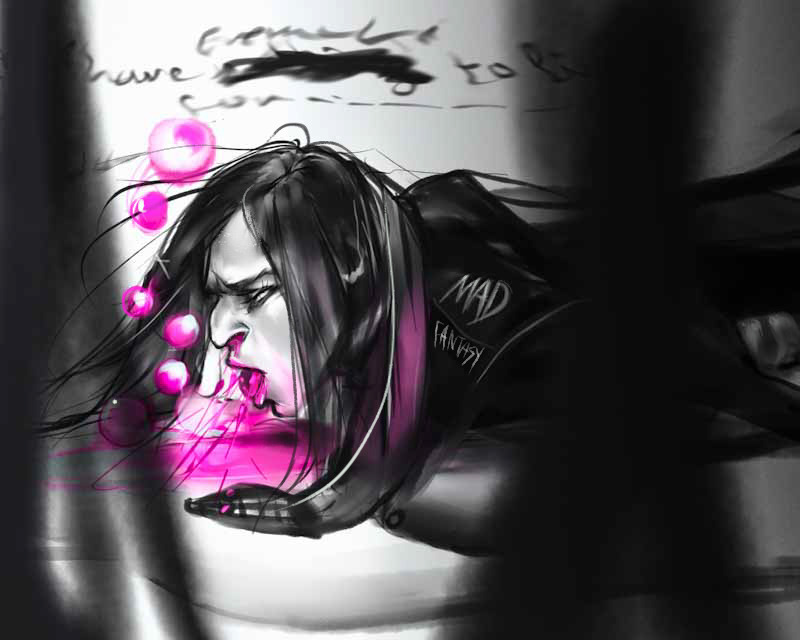
Lupin has once again spread false, harmful rumors against Professor Snape that go completely against his character. It becomes karmic that Snape spreads harmful rumors about Lupin in return. Even Snape haters know, perhaps without openly admitting it, that Lupin is lying. They certainly don’t believe Lupin when he says Snape outed him for the loss of a prize, or that he did it accidently. [Screenshot]
Here’s Snape’s reaction to the news of a possible Order of Merlin:
“Order of Merlin, Second Class, I’d say. First Class, if I can wangle it!”
“Thank you very much indeed, Minister.”
And that’s it. Snape never refers to an Order of Merlin ever again. This isn’t surprising: Snape is a spy preparing for the war. He’s already casted himself as the devil during the First War and then during Harry’s first year [first Quidditch match], fighting Voldemort and his servants [Quirrell] in secret, even if it meant no one ever thanked him for saving their lives [Harry]. In fact, he does not want anyone to know the reason he is so faithful to Dumbledore; he’d rather be believed a possible villain:
At last he said, “Very well. Very well. But never – never tell, Dumbledore! This must be between us! Swear it! I cannot bear … especially Potter’s son … I want your word!”
“My word, Severus, that I shall never reveal the best of you?”
Snape will agree to kill Albus Dumbledore and become one of the most hated people in HP just to spare Dumbledore pain and protect the children in secret, for fuck’s sake.
- “And if it does fall into his grasp,” said Dumbledore, almost, it seemed, as an aside, “I have your word that you will do all in your power to protect the students of Hogwarts?”
Snape gave a stiff nod.
- “Certainly not. You must kill me.” […]
At last Snape gave another curt nod. Dumbledore seemed satisfied. “Thank you, Severus…”
I think the Order of Merlin is not his main preoccupation. Given all the constant defamation Lupin uses where Snape is concerned, it’s easy to know he twisted the truth yet again—although by all means, Snape should have gotten his Order of Merlin.
But if it isn’t the Order of Merlin that made Snape lose it, then what was it? We have explored a plethora of reasons until now, but I believe Lupin has already told us what was Snape’s final straw:
“Professor Dumbledore managed to convince Fudge that I was trying to save your lives.”
…Do you realize what that means?
Just remember… all the ways Lupin has failed his duties, all the ways his uncooperativeness prevented putting up effective measures to protect Harry and his peers, every time Snape had to put up with Lupin’s passive-aggressive bullshit; how hard Snape has battled against not only Harry’s self-endangering idiocy, but the threat of Sirius Black and Dumbledore’s sudden hostility…
And Lupin steals all the credit for his work.
While Snape, who passes off as mentally deranged, is thoroughly humiliated in front of the Minister and Lupin himself.
…Of course he snapped.
To top it all, Lupin isn’t the only one at fault: Dumbledore is too. It’s not enough that he refused to listen to Snape’s concerns all year, that he seemingly did not really care that Snape had almost been murdered as a teen, or that he enjoyed his meltdown in the Infirmary:
- Fudge, Snape, and Dumbledore came striding into the ward. Dumbledore alone looked calm. Indeed, he looked as though he was quite enjoying himself. Fudge appeared angry. But Snape was beside himself.
“OUT WITH IT, POTTER!” he bellowed. “WHAT DID YOU DO?”
- Snape stood there, seething, staring from Fudge, who looked thoroughly shocked at his behavior, to Dumbledore, whose eyes were twinkling behind his glasses. Snape whirled about, robes swishing behind him, and stormed out of the ward.
“Fellow seems quite unbalanced,” said Fudge, staring after him. “I’d watch out for him if I were you, Dumbledore.”
“Oh, he’s not unbalanced,” said Dumbledore quietly. “He’s just suffered a severe disappointment.”
This time, Dumbledore had no excuse to pamper Lupin over Snape. He knew the truth, Sirius gave it to him. Why the fuck did he convince the Minister that Lupin had been the one trying to save their lives when his behavior throughout all the year as well as his eventual werewolf transformation contradicts this? Why give Lupin the praise that Snape deserved?
When Dumbledore switched the credits of Snape’s work to his golden boy, Snape must have felt utterly betrayed. It wouldn’t be surprising if Dumbledore’s betrayal led Snape to betray him in return by casting out Lupin, ruining Dumbledore’s efforts to protect his favourite werewolf. Because Lupin certainly deserved no such amount of praise.
What surprises me on re-reads is that the Order of Merlin is only brought up between Snape and the Minister while Lupin was running loose in the forest; and yet, Lupin knows an Order of Merlin was discussed. This might mean Lupin was present at some point when Snape was denied the Order of Merlin. But remember that Lupin has a habit of lying by omission, meaning that something else probably happened.
All of which makes me question: Did the Minister propose in front of Snape to give the Order of Merlin to Lupin instead, on the merit of “trying to save their lives”?
This amount of injustice must have felt unbearable. That’s downright evil.
Perhaps there was another motive behind Dumbledore’s… very questionable decision. Revealing Lupin’s lycanthropy might have been the counterpart to give him the merit of Snape’s hard work. Perhaps Dumbledore saw some use left in Lupin for the upcoming war and wanted to save him from Azkaban, which he could be sentenced for on the motive of having passively helped a highly dangerous criminal and almost murdered 13 year-old kids as a werewolf. It seems Dumbledore likes to surround himself with people who owe him something. To make sure Lupin owes him, he would try to ensure that even though Lupin has to be let go of, he is not thoroughly disgraced in front of the authorities.
Still, Snape may not see it the same way; it’s no surprise that he couldn’t take it anymore.
Faulty Werewolf Teacher
Lupin looks like he tries to gain some self-awareness at the end of PoA, as he explains why he resigned:
“Professor Dumbledore managed to convince Fudge that I was trying to save your lives.” He sighed. “That was the final straw for Severus. I think the loss of the Order of Merlin hit him hard. So he — er — accidentally let slip that I am a werewolf this morning at breakfast.”
[…]
“You’re not leaving just because of that!” said Harry.
Lupin smiled wryly.
“This time tomorrow, the owls will start arriving from parents… They will not want a werewolf teaching their children, Harry. And after last night, I see their point. I could have bitten any of you… That must never happen again.”
It’s very insidious, because in a few sentences, not only Lupin casted the blame on Snape for his resignation – and we just saw how problematic that part was – but when he does seem to try and take responsibility for all he’s done wrong over the year, he immediately frames his failure as a teacher over being a werewolf. Which, obviously, isn’t his fault! He seems over-empathetic towards the parents who reject him for something he cannot control; he can’t really blame the parents who forced his resignation, because who would want a werewolf running a school with a population of minors? It prompts Harry–and the reader–to become indignant on Lupin’s behalf.
It is a smokescreen to hide that his failure lies, not in being a werewolf indeed, and not just in nearly, accidently killing his students either! – but in having prioritized his reputation with Dumbledore as well as his nostalgia over his friendship with Sirius (and the bullying of Snape) over the lives of all the children and the staff at school, and even over the parting wishes of his deceased best friends. It is a pattern of behavior that coincides with Lupin keeping on the werewolf excursions despite the fact that he has nearly bitten many people over the years, and with proposing to the Trio in DH to use his untamed werewolf form in combat despite representing a danger to them too. Since when did Lupin start caring enough whether or not people nearly got bitten by him as a werewolf? Only when he starts to get karma’ed for it?
It is not for nothing that Lupin never mentions again the true reasons he failed; it would make the forced resignation feel justified, and directly contradict the idea that he’s resigning because he wants to keep Harry safe: he clearly didn’t value Harry’s welfare that much throughout the year.
Let’s say for a moment that Snape didn’t give out Lupin’s mildest secret to the parents. Is Lupin genuinely so worried about hurting children again that he’d resign anyway? OR is he using that noble-sounding motive to reinforce his impersonation of the saintly Nice Teacher, unable to withstand the possibility of leaving his post with a tainted image, losing everyone’s trust?
Considering that Lupin later proposes to help the Trio by using his untamed werewolf transformations, I rather think he never learned the lesson. Also, if Lupin had truly resigned because he was ashamed of himself, then I’d expect him to say: « No, I’m not resigning just because the parents know I’m a werewolf; I’ve decided so because last night, I could have bitten any of you, just like I nearly bit all those people in Hogsmeade during my teens; I can’t trust myself with my illness, and I cannot allow that to happen again. » Instead we got: « Yes, I have to resign because the parents won’t want me as the Defense teacher, and because of an accident ». I think it’s very telling that Lupin first puts the blame of his resignation on Snape who spilled his secret, directly implying that if Snape hadn’t, then he would have been well content to keep on teaching despite what he says only later: “I could have bitten any of you, that must never happen again”. All in all, it shows that his primary concern was never the children first, but how much he can get away with his fuckery.
Recap on Lupin’s Characterization
Remus Lupin is one of the most whitewashed characters in the movies, Pottermore and the HP fandom. The books plant the seeds, making Harry fall for his self-martyrdom, misdirecting the reader. It’s so easy to have sympathy for this character when he certainly prioritized his own person.
Let’s summarize what we have learned in the course of three essays surrounding the Reveal of Lupin’s secrets.
Snape’s motives for antagonizing Lupin are hidden for a good part of the story. When they are revealed, they are entangled with Lupin’s lies, and it’s at a point where we are firmly cemented in the idea that Lupin is a nice man. Clear all that up and you’ll see he had plenty of reasons to loathe, mistrust, and eventually force that Defense teacher out of Hogwarts.
During school days:
- Lupin’s role as a member of a group of four that bullied him relentlessly proved his cruelty [“Moony presents his compliments to Professor Snape, and begs him to keep his abnormally large nose out of other people’s business.”]
- Lupin’s inaction as a prefect showed that his responsibilities in positions of leadership meant less to him than being liked
- The Werewolf Incident (aka attempted biting/manslaughter/murder) showed Snape that Lupin was a dangerous beast when transformed and a man capable of manslaughter/murder
- Being silenced by Dumbledore showed Snape that Dumbledore could and would make unjust and unsafe decisions where Lupin was concerned.
- Lupin allowing his friends to take him out of the Shrieking Shack and roaming Hogsmeade and the Hogwarts grounds during full moons, resulting in many near misses, showed that he never understood the full danger he posed to others, even after his own near death experience, or simply didn’t value others’ lives enough to curtail his own fun.
The 1993 school year: As far as Snape was concerned, Lupin demonstrated through his own actions that he was intentionally disregarding student safety and working with Sirius Black to harm Harry.
- Lupin falling into old habits of bullying through the Boggart humiliation simply reinforced the idea that he didn’t change
- His disregard for Snape’s batches of Wolfsbane Potion is at the very least hostile and irresponsible, and as Snape starts to see Lupin getting close to Harry, he thinks it is quite possibly intentional
- Sirius’ ability to get into Hogwarts clinches it for Snape: Sirius must have an accomplice within the school, and it’s obviously his old friend
- Lupin’s canceling of the werewolf essay that Snape set confirms to him that he doesn’t want the students to know how to defend themselves from werewolves, again demonstrating either an irresponsible attitude towards the dangers of werewolves or an intentional desire to keep students–Harry in particular–vulnerable. At the very least, it makes it apparent that it’s more important to him not to be exposed by someone thinking too much about him in the same context as werewolves in general, than for students to be able to defend themselves from them (and possibly from him if something goes wrong, which indeed does).
- Harry’s being in possession of the Marauder’s Map and using it to get out of school without passing the guards is evidence of a plot of Lupin and Black’s to lure Harry out of the castle to be attacked. Lupin’s denials and his keeping the map from Snape (+ Dumbledore) show that he is not only aware that Harry has the map (and thus probably gave it to him), but is actively working against the staff trying to keep Harry safe
- Forgetting to take Wolfsbane entirely and running off to the Shrieking Shack at sundown to transform into an uncontrollable, murderous creature in the presence of Harry and his friends, at the exact place where Snape was lured for the Werewolf Incident, is more than enough evidence for Snape that Sirius was again enlisting his old friend as a murder weapon to take out an enemy.
All of those are reasons on their own to destroy the reputation that Lupin holds so dear. However, it isn’t until the credit for Snape’s hard work was attributed to the coward who admitted enabling a (believed) terrorist entry into the school that Severus truly snaps.
Forcing Lupin to resign was:
- objectively justified by the ways he failed his duties as a teacher, an employee and a colleague
- yet probably meant to spare him from full-blown karma in the form of the Defense curse.
Lupin exacerbated the mistrust and hatred Snape bore for him; the amount of self-control the Potions Master employed to give him so many chances is astounding. And they say he’s got a problem with holding grudges… when not one person has ever apologized to him, no less…
Lupin seems to hate himself and regret what he’s done, staging a dramatic 10 minutes-long self-centered monologue in the form of a confession. He presents himself as a nice man, a victim who must be understood, in order to be forgiven with minimal effort. Not only does he get the benefits of plothole protection and moral luck throughout all of his life [full moon excursions, sleeping in same compartment at Harry and getting the occasion to shine, Boggart mini-plothole, Wolfsbane plothole, Sirius Black as a potential DE, final transformation], the character that serves as our viewpoint sympathizes with Lupin, easily swayed from key truths about his Defense professor; it helps that Lupin often seems to side with Harry, flattering him out of nowhere and everything. As Rick from Rick & Morty would say: He acts like prey but he’s a predator, using pity to lure in his victims.
The entire narrative is constructed so that in spite of Lupin’s objective share of darkness, the idea we’ll be left with is that of « the best Defense teacher Hogwarts ever had », forced to leave because he suffered a hate crime. It prompts the fans to look at his faults with a lot of indulgence in a way they wouldn’t with other characters, to miss out on what awful things he’s done, or to forget about them. Lupin goes almost unpunished for his wrongdoings. Worse, he gets praised and is unfairly given the merits of the true hero of this year.
Although his darkness is not overt like Sirius’ or Severus’, you’ll see it is just as destructive, if you are on the receiving end, or if you pay close attention. It’s not enough that he consciously let countless children be traumatized, tormented by Dementors, and in danger of being killed by an alleged fascist mass murdering terrorist on the loose who broke out of the highest-security prison in the world and repeatedly broke into the school trying to murder James and Lily’s child and almost butchering another. He also harassed Professor Snape for no valuable reason, refusing to cooperate with him, Dumbledore or any teacher in the school in order to protect the students, particularly Harry (but then he has the gall to patronize him). Because Lupin never changed. He takes positions of responsibility, then avoids his duties like the plague. We’re led to believe that he was a mature teacher who grew out of his antagonism with a « grudge-holding » Snape, but each of his action proves that he’s actively (though covertly) fueling their enmity; and while Snape has valid reasons to antagonize Lupin, both professional and personal, Lupin sacrifices his duties as a teacher so he can continue his feud against Snape out of habit, fun and tribal hatred; like a true Marauder. Later he has the gall to claim: « I neither like nor dislike Severus », even though his actions, including in the following books, prove the contrary [minimizing of SWM].
Conclusion
Lupin’s series of self-serving and outright stupid decisions played a key role in the circumstances that led to Pettigrew’s escape and Lord Voldemort’s return. Yet, his character feels so nice and sweet, we as a fandom tend to overlook his moral weakness and selfishness. It takes a lot of re-readings to fully assess the gravity of his decisions. Only then can you realize how dark this character truly is.
He doesn’t deserve hatred for being a werewolf, but he mustn’t get a pass for everything just because he is a werewolf either.
The Defense teacher of Harry’s 3rd year is a coward, who lets his cowardice dictate his life, and even worse, who acts in the knowledge of his cowardice, chooses to remain in that path, and uses the fact he’s a coward in a way that makes us forget precisely that fact and forgive him. It will take more years for Harry to slam the truth in his face at last, to Lupin’s absolute fury:
“The man who taught me how to fight Dementors. A coward.”
art by Levi Pinfold
 The Sneep Project

Your comment: