Love, not desire!

Alongside the argument that Snape was such a terrible teacher that he cannot be redeemed, there’s the argument that his motive for redemption was not love but obsession, and that he was a creepy incel towards Lily.
I’m here to show you the opposite.
Number 1 – The Playground
The idea is that because 9 yo Severus was “spying” on Lily with a “greedy look on his face”, he already was a stalker. There is a creepy component here: the fact some readers think of a 9 year-old boy as a sexual being with an agenda. And not, as every normal person thinks in real life, as a shy child struggling to befriend another, doing things that would be creepy from an adult but is quite common before that age. Especially if the kid likes to play-pretend the role of a spy, among those who pretend to be a hero, a knight, Spiderman, Anna from Frozen, etc.
At that time, Severus was just being a kid of his age. He’s hiding behind the bushes because he’s impressed, and likely overwhelmed regarding that one impressive girl, not to mention she’s with her sister: two girls, one a witch, one a Muggle who’s bigger than him.
Lily is a witch like him, and he wants to become her friend starting with making a good first impression of himself. He attempts a dramatic entrance like the Drama Queen he will come to be as an adult, but completely fails because he didn’t think the word “witch” is an insult in the Muggle world. He blushes, sweating from the shame and discomfort of standing under the summer sun [“dirty-haired in the bright sunlight”], wearing mismatched clothes of his parents that don’t even fit. Meanwhile Petunia insults him on his poverty and bad reputation.
He comes from a dysfunctional household, having been abused and neglected by parents who are fighting with each other:
- Snape staggered; his wand flew upward, away from Harry — and suddenly Harry’s mind was teeming with memories that were not his — a hook-nosed man was shouting at a cowering woman, while a small dark-haired boy cried in a corner… A greasy-haired teenager sat alone in a dark bedroom, pointing his wand at the ceiling, shooting down flies…
- “Doesn’t your dad like magic?”
“He doesn’t like anything, much,” said Snape.
From Pottermore, though off-canon:
[The name Severus] was also an accurate description of the desperately lonely and unhappy childhood he had with a harsh father who didn’t hold back when it came to the whip.
This is a 9 year old boy who probably has never even seen, let alone experienced love in his life:
- His black hair was overlong and his clothes were so mismatched that it looked deliberate: too short jeans, a shabby, overlarge coat that might have belonged to a grown man, an odd smocklike shirt.
- and Harry, whose attention had been focused entirely on the two beside the window, saw his father: slight, black-haired like Snape, but with that indefinable air of having been well cared for, even adored, that Snape so conspicuously lacked.
His demeanor is awkward, he lacks social skills and he’s visibly friendless. Probably autistic too, without having pre-learned how to mask yet (he will learn the hard way).
Lily isn’t screaming bloody murder, she doesn’t blame Severus. In fact she becomes friends with him. She calls him “Severus”, he smiles, and he keeps blushing; And that’s it.
I wouldn’t try to sexualize a 9 yo boy for trying to befriend a girl of his age. Following this logic, there is no excuse not to call Colin Crevey a creepy stalker because he memorized Harry’s schedule by heart, so he could follow Harry round Hogwarts as much as possible and literally take photos of him at any time, including when Harry’s having Quidditch training or when he’s trying to flee from him.
Following this logic, we have to call Ginny Weasley sexually obsessed because she keeps trying to talk to Harry, writes about him in a diary all day even though they’re hardly friends and first only took interest when she learned he was the Boy-Who-Lived, sends him a Valentine card that says “I wished he were mine (…)”, and she goes to Hagrid’s hut not because she wanted to have tea time, but because she desired to meet Harry there.
Colin and Ginny were older than 9 years-old Severus, they were 11 years-old, and this kind of attention made Harry uncomfortable. Why do you think we don’t call it an “agenda”? Because they were still kids, showing their love and admiration in awkward, childish ways.
As for the peculiar word, “greed”, I have two examples for context:
The Potters smiled and waved at Harry and he stared hungrily back at them.
This is when Harry watches his family in the Mirror of Desire. Another one:
His eyes feasted on her, and he thought that he would like to stand and look at her forever, and that would be enough.
This is Harry watching his mother.
If the use of words such as “greed” or “hungrily” or “feasting” on the sight of a girl indicates for sure sexual obsession, then you’d think Harry is the new Oedipus. However, and for obvious reasons, we don’t interpret this as Harry lusting over his mom… not the other way around either.
Nine years-old Severus is not a sexual predator, Lily never was in danger with him.
Number 2 – The Corridor
Leave alone Severus as a child; another scene could be brought out as evidence of his nature as a “controlling stalker” with Lily when they are teens:
“. . . thought we were supposed to be friends?” Snape was saying. “Best friends?”
Now this could be valuable information indeed, if it wasn’t taken out of context. The full scene now:
“. . . thought we were supposed to be friends?” Snape was saying. “Best friends?”
“We are, Sev, but I don’t like some of the people you’re hanging round with! I’m sorry, but I detest Avery and Mulciber! Mulciber! What do you see in him, Sev, he’s creepy! D’you know what he tried to do to Mary Macdonald the other day?”
Lily had reached a pillar and leaned against it, looking up into the thin, sallow face.
“That was nothing,” said Snape. “It was a laugh, that’s all —”
“It was Dark Magic, and if you think that’s funny —”
“What about the stuff Potter and his mates get up to?” demanded Snape. His color rose again as he said it, unable, it seemed, to hold in his resentment.
“What’s Potter got to do with anything?” said Lily.
“They sneak out at night. There’s something weird about that Lupin. Where does he keep going?”
“He’s ill,” said Lily. “They say he’s ill —”
“Every month at the full moon?” said Snape.
“I know your theory,” said Lily, and she sounded cold. “Why are you so obsessed with them anyway? Why do you care what they’re doing at night?”
“I’m just trying to show you they’re not as wonderful as everyone seems to think they are.”
The intensity of his gaze made her blush.
“They don’t use Dark Magic, though.” She dropped her voice. “And you’re being really ungrateful. I heard what happened the other night. You went sneaking down that tunnel by the Whomping Willow, and James Potter saved you from whatever’s down there —”
Snape’s whole face contorted and he spluttered, “Saved? Saved? You think he was playing the hero? He was saving his neck and his friends’ too! You’re not going to — I won’t let you —”
“Let me? Let me?”
Lily’s bright green eyes were slits. Snape backtracked at once.
“I didn’t mean — I just don’t want to see you made a fool of — He fancies you, James Potter fancies you!” The words seemed wrenched from him against his will. “And he’s not… everyone thinks… big Quidditch hero —” Snape’s bitterness and dislike were rendering him incoherent, and Lily’s eyebrows were traveling farther and farther up her forehead.
“I know James Potter’s an arrogant toerag,” she said, cutting across Snape. “I don’t need you to tell me that. But Mulciber’s and Avery’s idea of humor is just evil. Evil, Sev. I don’t understand how you can be friends with them.”
Harry doubted that Snape had even heard her strictures on Mulciber and Avery. The moment she had insulted James Potter, his whole body had relaxed, and as they walked away there was a new spring in Snape’s step…
At the beginning of the scene, it is Lily who is controlling. She allows herself to criticize Severus’ choices of “friends” – though it’s likely they aren’t true friends in fact – and she even goes as far as to tell him to let them off. Though of course, it’s easier asked than done in Severus’s case.
The moment Severus tries to criticize her own choices of acquaintances, she jumps to their defense, using an empty excuse to justify their actions: the Marauders “at least don’t use Dark Magic” compared to the future Death Eaters. Muggles don’t need magic to do evil things and you don’t need Dark Magic to do crimes, so this argument is fucked and only serves to invalidate the violence Severus experiences at their hands. A form of violence in itself.
It’s apparently the first time Lily mentions the werewolf event to Severus. She has just learned that Severus was recently put in danger, and instead of asking how he’s faring, she weaponizes this painful event to tell Severus that he must feel grateful to his bully. Even though she hardly knows the whole truth nor asks for his own version of events. She doesn’t even care to ask Severus why it is that apparently, James was just saving his and his friends’ skin rather than Severus’. She doesn’t value Severus’ feelings, wellbeing or his opinion, and would rather start an argument with him by bringing up a recent traumatic event to defend the very people who’d prefer him dead:
- “And you’re being really ungrateful. I heard what happened the other night. You went sneaking down that tunnel by the Whomping Willow, and James Potter saved you from whatever’s down there —” […]
- “Leave him alone,” Lily repeated. She was looking at James with every sign of great dislike. “What’s he done to you?”
“Well,” said James, appearing to deliberate the point, “it’s more the fact that he exists, if you know what I mean . . .”
Word has spread that James Potter has saved Severus Snape’s life and Lily Evans is visibly moved knowing that. James Potter has finally done something vaguely heroic that allows the people he impresses with his excellent socio-economic status – Lily in particular – to sweep his sadism under the rug and pretend he’s an all-around nice guy.
Snape, in Prisoner of Azkaban:
“Have you been imagining some act of glorious heroism? Then let me correct you — your saintly father and his friends played a highly amusing joke on me that would have resulted in my death if your father hadn’t got cold feet at the last moment. There was nothing brave about what he did. He was saving his own skin as much as mine. Had their joke succeeded, he would have been expelled from Hogwarts.”
Severus thinks that all the Marauders have tried to kill him. He knows that James Potter wasn’t saving him; he was saving Lupin from expulsion or execution, Sirius from expulsion or imprisonment, Dumbledore’s position as a Headmaster, and his own position as leader of a gang of bullies supposed to be praised by the school population no matter what happens. He’s saving his reputation, his chance to attract Lily. James was “saving his and his friends’ own necks” and for Severus he has “gotten cold feet” when trying to kill him, considering what it could mean.
Now, we know “only” Sirius Black planned this, but it still doesn’t change the fact James Potter’s actions weren’t as heroic as they pretend to be, nor the fact that James Potter will say – in front of Lily and everyone else – that Severus’ very existence is a crime.
Now comes the horrible part: Severus Snape has been silenced as a victim; he’s forbidden by Dumbledore from ever talking about this event: that James Potter has saved Snape from their own murder attempt. James Potter and his gang got a slap on the wrist from Dumbledore and were allowed to walk away scot-free. Because of this, they used that opportunity to spread around their own version, a twisted tale of pure heroism on James Potter’s part, while Severus Snape is forced not to tell the truth.
And Lily falls for it.
This is why this happens:
« Saved? Saved? You think he was playing the hero? He was saving his neck and his friends’ too! You’re not going to – I won’t let you – »
« Let me? Let me?«
“You’re not going to believe what they said about me.”
“I won’t let you fall for it.”
“I won’t let you tell me that I should be grateful for the guy who’s ruining my life in the first place.”
Indeed:
“I didn’t mean — I just don’t want to see you made a fool of —
Yet Lily won’t listen. So Severus warns her:
“He fancies you! James Potter fancies you!”
Which probably means: “James Potter fancies you and he’s ready to do everything to get you; including twisting the truth and using manipulation. You can’t trust him because of that. Everybody thinks he’s wonderful just because he’s a Gryffindor good on a broom, that doesn’t change the fact he bullies the hell out of me, tried to kill me, and now uses the situation to stray you away from your male friend whom they just tried to get rid of for existing in your vicinity.”
Severus’ lips are shut though. It couldn’t be any clearer by the words used, that he’s extremely upset, until Lily acknowledges James Potter as a bad person and a menace:
“I know James Potter’s an arrogant toerag”
It’s not a case of someone who’s trying to control his friend at any time. This is the case of a freshly traumatized boy trying to warn his best friend that those she defends are would-be murderers and manipulators, and keep her away from danger. Because while people like Mulciber or Avery are messing around with Dark Magic, it is the Marauders who’ve tried to get Snape killed with a Dark Creature. If Snape had been a controlling creep…
« […] I won’t let you— »
« Let me? Let me? »
[…] Snape backtracked at once.
…this wouldn’t have happened.
Lily is able to cut through Severus’ sentence without any problem, and Severus backtracks. Lily is in total control of the conversation and Severus is making a fool of himself – literally.
Honestly, considering the standards in Hogwarts (mostly exemplified by James Potter himself), this is little to hold him against.
In the Prince’s Tale, it’s obvious Lily is always in control. She always blames Severus at least once in every scene we witness between the two of them; Severus ridiculizes himself, fails to argue in his own defense, and then puts the blame on himself, visibly regretting whatever wrong he’s done. If that were a controlling man, well damn he was shit at this.
Number 3 – The Gryffindor Tower
“I’m sorry.”
“I’m not interested.”
“I’m sorry!”
“Save your breath.”
It was nighttime. Lily, who was wearing a dressing gown, stood with her arms folded in front of the portrait of the Fat Lady, at the entrance to Gryffindor Tower.
“I only came out because Mary told me you were threatening to sleep here.”
“I was. I would have done. I never meant to call you Mudblood, it just —”
“Slipped out?” There was no pity in Lily’s voice.
In fandom, this scene represents a no-win situation, or double-bind: either Snape apologizes and he’s a stalking creep, or he doesn’t apologize and he’s a remorseless racist. What matters is that Snape apologized several times for what he did, was so genuinely remorseful that he was ready to sleep on the floor in front of the Gryffindor Tower where his bullies slept so he could apologize, and later, as an adult, shouted at Phineas Nigellus not to say the word Mudblood, and when Lily cut their friendship, Severus didn’t even insist, frozen on the spot as he was by her words.
This scene doesn’t constitute stalking. We ought to make that clear: Severus never stalked Lily. I dare you to take the books and cite me a single quote asserting that Snape has stalked her in the true sense of the term. The only stalking Lily got was from James Potter:
“And,” said Harry doggedly, determined to say everything that was on his mind now he was here, “he kept looking over at the girls by the lake, hoping they were watching him!”
“Oh, well, he always made a fool of himself whenever Lily was around,” said Sirius, shrugging. “He couldn’t stop himself showing off whenever he got near her.”
That Snape stalked Lily for years, particularly after they parted ways, is a lie created by fans to fill in the gaps of the fanon Marauder era – taking away James’ creepiness and putting it on Severus because it’s more comfortable for those fans. So from now on, I’ll consider everybody who says that he’s a “creepy stalker” ignorant, or a liar who tries feel better with libel.
One more thing.
If Snape had been as obsessed with Lily as fans would tell, then we would have seen “Lily Evans” and “Lily Snape” written in his Advanced Potions book. This trope can be found in Wuthering Heights: dozens of books where “Catherine Earnshaw” and “Catherine Heathcliff” compete with “Catherine Linton”. But there’s not a single mention of Lily in Snape’s book. Instead, the only person who writes Lily’s name, or rather initials, is James Potter during the Defense OWLs. He writes it on the drawing of a snitch. He sees Lily Evans as a snitch to chase down and catch:
Harry stared at Wormtail for a moment, then back at James, who was now doodling on a bit of scrap parchment. He had drawn a Snitch and was now tracing the letters L. E. What did they stand for? [Lily Evans]
It turns out he stole a snitch just before and he will play with it, as Harry describes:
James was still playing with the Snitch, letting it zoom farther and farther away, almost escaping but always grabbed at the last second.
A stunt he practices as he continuously glances at Lily at the Lake and before attacking Snape, her friend, to attract her attention and obnoxiously flirt with her:
“All right, Evans?” said James, and the tone of his voice was suddenly pleasant, deeper, more mature.
But sure, tell me how Snape’s supposed to be the Heathcliff of HP and James the mild Linton…
Number 4 – Snape & the Dark Lord
« Snape became a DE because Lily rejected him. »
Severus joined Voldemort for a lot of reasons. Among these are that he was interested in the Dark Arts, he was a disenfranchised individual who became a target of radicalisation by the Death Eaters, such as Lucius Malfoy. Him, a half-blood, was bullied by pureblood key figures of the “Light”, and the Death Eaters were seemingly reaching a hand for him. Rejected by the Light as he was, he had nobody to defend him if he ever thought of refusing Voldemort’s proposal to become a Death Eater.
Just like any radicalized cult with knowledge of how to manipulate the oppressed to their cause by seeking their fears and weaknesses, teen Severus fell for it. Later he spends his remaining years working as a spy in atonement.
It’s very likely that, like many insecure, vulnerable people, he simply craved membership from something big and powerful, something impressive. That he craved love and acceptance, so much he tried to find it among the wrong crowds.
It’s a little too easy by the way to forget the Marauders’ relentless and utterly unjustified bullying of Snape; with reported cases of attempted murder, sexual assault and corruption of power (James as Head Boy bullying Severus with his gang behind Lily’s back); as well as, on Dumbledore’s part, protecting the pureblood bullies over the halfblood’s life, with a sickening display of victim-silencing and probably gaslighting.
Consider for a moment that Severus may have wanted to join the Death Eaters because he thought Lily would find him impressive if he was a real one, so blinded by the Dark Side he was. Why would he think Lily Evans would be impressed if he became a Death Eater? Well, Lily seems to be turned on by “bad boys” who thrive on violence and privilege. It is disturbing, but on Lily’s part, not Severus’.
Perhaps in the end, he simply joined the Death Eaters because he thought they were about to win the war and he could work from the inside to manage to get a place for Lily so she would be protected the day Voldemort finally won everything. Or maybe Severus was blackmailed into joining the Death Eaters, threatening to hurt Lily, for instance, if he did not comply? So many possibilities.
I’ll explore this question further in the essay « A Textbook Case of Radicalization ». For now, just remember: it wasn’t a case of Snape joining the Death Eaters out of frustration from Lily’s “rejection”, but of a boy who was aparently already flirting with the Death Eaters before Lily ended their friendship. It was the case of a boy groomed to follow Voldemort despite his friendship with Lily and against common sense. Lily isn’t Snape’s sole driver in life. If that were the case, Snape may not have joined the Death Eaters in the first place, since she didn’t want him to and since she was condemned to be in mortal danger from them one day.
Number 5 – The Hilltop
So first, there’s this argument that Snape knew that delivering the prophecy would kill a baby and I would like to discuss real quick about something that should be obvious.
Actually, a whole essay is dedicated to it: The Self-Fulfilling Prophecy. I’m copy-pasting the important parts below.
So the Prophecy goes like this:
The one with the power to vanquish the Dark Lord approaches… born to those who have thrice defied him, born as the seventh month dies… and the Dark Lord will mark him as his equal, but he will have power the Dark Lord knows not… and either must die at the hand of the other, for neither can live while the other survives… the one with the power to vanquish the Dark Lord will be born as the seventh month dies…
However, Snape only heard the first part of the prophecy, so we have this:
The one with the power to vanquish the Dark Lord approaches… born to those who have thrice defied him, born as the seventh month dies…
That’s the only part he knows of, as confirmed by Dumbledore after the Battle of the Ministry when Voldemort had tried to get the rest of the Prophecy. The main problem is: where is it said that it should be a baby?
Only here:
The one with the power to vanquish the Dark Lord will be born as the seventh month dies…
Which Snape never heard. It is at the very end of the Prophecy, and we know Snape hasn’t told it to Voldemort. This is the only time we could guess it speaks of a baby. Meaning that Snape either didn’t know a baby would be Chosen, or knew it but only gave the first half of the Prophecy so that Voldemort would rather be tempted to Choose an adult rather than a baby.
So this passage is supposed to prove that “Snape didn’t care about James and Harry, and he didn’t mind them being killed by Voldemort, because all he wanted was to have Lily for himself”:
‘If she means so much to you,’ said Dumbledore, ‘surely Lord Voldemort will spare her? Could you not ask for mercy for the mother, in exchange for the son?’
Wait, what?
How could Snape have asked ‘for mercy for the mother, in exchange for the son’…
When the son was doomed anyway?
Harry was the Chosen One—there isn’t a single scenario where asking Voldemort not to kill the baby he chose would not result in total failure. When Voldemort truly wants to kill someone, especially someone he sees as his doom, you cannot convince him otherwise. The 6th book confirms that, when Narcissa asks Severus to help Draco:
“If you are imagining I can persuade the Dark Lord to change his mind, I am afraid there is no hope, none at all.” […] “The Dark Lord will not be persuaded, and I am not stupid enough to attempt it,” said Snape flatly.
This isn’t a scenario where Lily was targeted and Snape managed to “redirect” Voldemort’s anger on her baby instead. And on the other hand, this isn’t a scenario where Snape can ask him to kill Lily and spare the baby. All he could do was manage to have at least one innocent survive. Asking this to a murdering maniac who had every reason, and every intent, to “kill them all”. And Dumbledore knows this.
This is when you have to realize Dumbledore is an unreliable narrator. He is at the time, the general of the losing side of the war. Voldemort’s power is spreading everywhere—the Order is facing the Death Eaters in a 20-to-1 scenario and they are all desperate.
Suddenly, a Death Eater comes with a request: he delivers information on the attack that is planned to befall on a family belonging to the Order. He is visibly mad with worry, and Dumbledore, as a headmaster, knows about his past friendship with the woman who’s on a hitlist.
At this moment, he sees in the Death Eater an opportunity he simply cannot allow to pass: gaining a double-agent working for the Order, with solid proof he will stay loyal to the woman’s cause—that is, Dumbledore’s side.
And so he strikes.
The moment Snape tries to explain:
‘I have – I have asked him –’*
‘You disgust me,’ said Dumbledore, and Harry had never heard so much contempt in his voice. Snape seemed to shrink a little. ‘You do not care, then, about the deaths of her husband and child? They can die, as long as you have what you want?’
Dumbledore cuts him off, and puts words in his mouth. Snape, stammering in his terror, doesn’t dare argue, doesn’t dare explain exactly what he asked—or what he could not ask.
Dumbledore assumes the worst of him—like everybody’s always done in Snape’s regard—but it doesn’t matter. What’s important for Snape is to keep Lily safe, and maybe, if it comes down to that, work for the cause that, yes, has been harmful to Lily and Severus, yes, is visibly losing, but at least might ensure she lives. He has little choice but to submit and take all the unfair blame if he wants his wishes to be heard as soon as possible.
Snape said nothing, but merely looked up at Dumbledore.
“Hide them all, then! Keep her—them—safe. Please!”
There was never any question of « trading”. Snape asked Voldemort to spare Lily, preventing collateral damage — which was already extremely risky and brave, because Snape was still asking Voldemort to spare:
- a Muggle-born
- member of the Order,
- mother of the Chosen One,
- having challenged Voldemort three times.
Snape asked him to spare an enemy… which could have cast doubt on his loyalty and convinced Voldemort to torture and kill him on the spot for betrayal. It relies on a miracle that he was successful at making such demand and leaving unscathed.
As for James and Harry, would you find it realistic that Snape asks that they be spared?
James is:
- the person who bullied Snape for years with his friends, who Snape thinks tried to kill him and who seems to have pushed him into Voldemort’s arms;
- besides being a known member of the Order protected by Dumbledore,
- having challenged Voldemort three times,
- despising of Slytherins and Death Eaters,
- and the father of the Chosen One.
You certainly cannot blame Severus for not caring if the person who ruined his life for his own sick pleasure dies by Voldemort’s hand. Loving someone does not automatically mean loving those they like. Besides, Snape had no valid reason to ask for James’ life to be spared, especially along with Lily’s.
The only explanation for Severus to ask for James to be spared would be that Snape was more loyal to Lily’s happiness than to Voldemort’s success. In the end, Voldemort would have understood that Snape doesn’t just ‘desire’ Lily (by wanting to kill the husband) but actually loves her enough to try and save her whole family. Yet love, unlike mere desire, is a threat to Voldemort, and it could cause Severus to betray him.
And that’s exactly what happens, the very night Severus lies to Voldemort’s face and comes to see Dumbledore.
Of course, needless to say that asking Voldemort to spare the Chosen One would be worthy of a clown. In any case, Voldemort seemed unstoppable, and the baby had seemingly no chance to survive, so it’s pointless to make this demand.
Asking Voldemort to spare Lily, and contacting Dumbledore as first acts of betrayal, is actually evidence that he didn’t particularly want Harry and James killed.
If that had been the case, he’d have, for instance, asked Voldemort to tell him when he goes to terminate the Potters (who wouldn’t have been hiding yet), so that as Voldemort kills James and Harry, Snape could go and snatch Lily out of the way.
Instead, Severus has given the information to Dumbledore, the leader of the Order, that Lily was in danger. Of course Dumbledore, knowing that, would tell the whole family to go into hiding. Snape could predict it.
Considering all this, you cannot blame Severus for not having asked for James and Harry’s lives to be spared, and this can’t be held as proof that he wanted Lily for himself.
He just wanted Lily to have a chance to live.
Maybe Snape’s intentions were selfish in a sense, though I don’t see selfishness in risking your life and sanity hoping that someone you love lives even if she may not love you back, which you respect by keeping distance with her. Maybe Snape would have traded James and Harry’s lives for Lily’s if what happened in HP had been a true question of sparing one life at the expense of another. But there’s no evidence that it was motivated by possessiveness rather than plain disregard for the lives of his personal enemies — something that’s condemnable in itself, something he will correct later in his life, becoming a key component of his heroism.
If he did feel possessiveness for Lily — and assuming, here again, that it was a creepy kind of possessiveness and not one that resembles the phenomenon of the « favorite person » found, for instance, in borderline personality disorder — it was easily crushed when Dumbledore seemingly gave him a reality check. Whatever toxic component his love for Lily might have gotten was easily crushed because his love, at the core, was genuine and pure.
If Snape had been an incel, he wouldn’t have asked for the whole family to be spared in the end, he wouldn’t have informed Dumbledore of the incoming attack, in fact, he would have found relish in his vengeance against Lily, who dared choose another man over him. An incel would have tried to kill the husband and the baby himself, not been so desperate as to crawl on his knees to another man and become his pet spy just so that the « traitor » woman lives.
If Snape was meant to be an obsessed and possessive incel, he wouldn’t have sobbed his heart out when Lily was killed, and he certainly would not have kept fighting in her name after that.
Number 6 – The Parting Hug
As Snape went to hug Lily’s body, he left baby Harry alone in his crib. Which is supposed to be a crime.
The heartbreaking scene during which Severus cradles Lily in his arms and rocks her back and forth, howling his grief… only happened in the movies. Unless you wish the scenes of Snape protecting the children from werewolf Lupin, of Snape stunning the Carrows, and the absence of the Mudblood scene, to be considered canon since they happened in the movies as well, you cannot hold the hugging-Lily scene against him. In the books, just after Lily’s death, Severus is having his mental breakdown in Dumbledore’s office. As far as we know, he never went to Godric’s Hollow.
The movies and the books must be treated as different universes. In the movies, Severus and Lily were friends at a young age. We don’t know why they seem to stray away from each other, though it’s implied James had a role in it. Severus learns she’s about to get killed, promises to do everything for Dumbledore to keep her alive, and she dies.
He comes into the house in ruins so he can know whether Lily survived or not. Since Avada Kedavra leaves no mark, he couldn’t know Lily was dead until he had examined her, and if she had been alive but unconscious, her medical condition would probably have been much more urgent than Harry’s. But then Snape gets the confirmation that Lily is dead, and is overwhelmed with shock and grief.
The danger is away. Voldemort is gone. Harry is secure in his crib. If Severus wants to give Lily a last, parting hug before she’s brought to the tomb – which is very human and perfectly understandable! – then why would he take Harry in his arms?
It’s not practical to hold a baby in one arm and a heavy dead corpse in another. So he gives Lily a hug and leaves Harry “in peace” in his crib.
Later, we don’t know what happened. For all we know, in the movies, Snape is the one who took Harry and gave him to Hagrid before coming back to Hogwarts to keep on grieving Lily.
It’s not that he doesn’t care about baby Harry. It’s that it’s not his first concern right away. Harry is not in immediate danger anymore, and what’s on Snape’s mind is to hold his best friend for the last time.
(That’s if he could even see Harry. The Fidelius protected the knowledge of where the Potters lived, and we’re told that you could look through the window of theirh ouse and not see them (« […] As long as the Secret-Keeper refused to speak, You-Know-Who could search the village where Lily and James were staying for years and never find them, not even if he had his nose pressed against their sitting-room window!”), so the charm concealed the Potters but not the house. We know Snape hadn’t been let inside the Secret, because if he had been then he would have known Peter was the traitor. Whether the Fidelius was still in place or not, it wouldn’t stop him seeing Lily, because she no longer lived at that house (since she was very well dead); but if the Fidelius was still active, he wouldn’t be able to see Harry living in the ruins. Which could be the reason he didn’t seem to notice Harry crying in the crib. But then that begs the question of how Harry could be seen by anyone else afterwards…)
For anyone wondering: hugging your deceased friend for one last time…
…is just human.
Number 7 – The Letter and Photo
It’s the scene where Severus tears apart a picture of Lily with her family, and takes the part of the letter bearing her signature, which is used to argue that Snape wanted to “possess” Lily. Think about Creepy Harry who cuts and keeps an obituary of Dumbledore to himself in Deathly Hallows.
Following the events of the last two books (and as Rowling confirmed in an interview), this scene happened immediately after Snape killed Dumbledore.
Earlier in Deathly Hallows, we know that traps have been set to “scare” Severus. Upon entering Grimmauld Place, the voice of Mad-Eye Moody calls his name and a Tongue-Tying Spell is cast against him. Then, worst of all, the horrific ghost figure of a decaying Albus Dumbledore appears, flying his way. The one sentence we know that works to make the Dumbledore ghost disappear, is “I did not kill you”.
It would be a lie for Severus to say that, if he ever got rid of the Tongue Tying Spell. Because, as much as he loathed the idea of doing it, Albus Dumbledore fell at his wand mere hours ago.
That’s a fine way to mess with Snape’s emotional state.
He is heart-broken and reeling from having killed the only person who knew the truth of his loyalties, and his soul may have been torn apart from killing Dumbledore on his request. He knows that for the next year, he will be completely on his own, hated by his allies in the Order, while trying to protect the students from the Carrows and helping Harry’s team in secret — he knows that he probably won’t make it out alive. In a moment of intense vulnerability, Severus took this picture of Lily to give him strength to cope with the pain of what he had just done, and to help him endure the last stages of his incredibly difficult mission.
He’s staring at the photo of the friend he led to assassination just after killing his only mentor; he’s crushing under the guilt of being the reason the two persons who helped him step into the path of redemption are now dead. I don’t know how you can say Snape was lusting over Lily when you know he’s sobbing over her photo.
So then, why tear apart the photo to take the image of Lily and throw away that of her husband and child?
Maybe because he doesn’t want to look at the face of the person who ruined his life and who failed to protect Lily when trying to find comfort and strength.
As for Harry, it’s possible that he wouldn’t be able to take his image without getting that of the father, or that it was another painful reminder that the reason he once had to keep on living—protecting Harry—meant nothing anymore, considering Harry had to die by Voldemort’s hand after all, rendering Lily’s sacrifice pretty much meaningless. I reckon Severus doesn’t want to remember that he’ll have to tell Harry to go for a sacrifice after all these years.
Besides, if he really wanted to possess everything Lily owned to possess her symbolically, then you’d wonder why he didn’t take the first page of the letter and only contented himself with her signature and some last words.
We know Severus has acknowledged her marriage in any case:
« Everything was supposed to be to keep Lily Potter’s son safe. »
Taking Wuthering Heights as an example again, from what I understood, Heathcliff couldn’t bear that Catherine married Edgar and became “Catherine Linton”. He devised a plan so that Catherine and Edgar’s daughter, Catherine Linton (let’s call her Cathy), marries Heathcliff and Isabella’s son, Linton Heathcliff. Why? Because then Cathy becomes “Catherine Heathcliff”. This, ladies and gentlemen, is obsession.
If Snape were HP’S Heathcliff, he would have adopted Harry purely so that Lily’s son becomes “Harry Snape”, as though it was the son between Severus and Lily. Alternatively, he would have gotten a son and gotten him to marry Harry’s daughter Lily Luna, giving “Lily Snape”. Worst case scenario, if he actually survived Nagini, he could have groomed Lily Luna into marrying him. But there’s absolutely none of that. Instead, he acknowledges her new name, Lily Potter. Snape is no Heathcliff.
Really, it’s difficult to think that Snape would want to “possess” Lily considering she’s already dead and Severus very well knows that. Unless you’re implying that Severus had a mental disease, thought that Lily was still accessible, and in this case it’s ableist to accuse him for some case of psychosis, because he can’t help it unless he receives treatment.
As a last remark… it’s also possible we are making a mistake in focusing on Lily only.
This letter talks about Dumbledore as well, the mentor Snape has just killed. The mentor who seemed all perfect, though his image certainly took a hit after Rita Skeeter’s character-assassinating book on the Life and Lies of Albus Dumbledore.
This letter is likely the first time Snape learned that Dumbledore, whose soul seemed surely purer than Snape’s ugly, Dark-Marked soul, had once been Grindelwald’s friend.
Who knows. Maybe Snape pocketed the second half of the letter so he could carry around the reminder that not even Albus Dumbledore was good all along, and that he once was just as sinful — if not more — than Severus Snape has been.
Number 8 – The Doe Patronus
Aaaahh, this one is famous. Severus Snape’s most beautiful magical prowess, casting the Silver Doe as he says “Always” to show that his love for Lily is true and pure. All of this, crushed by the revelation that the Doe Patronus is an anomaly!
This will be fun.
The idea is that Snape’s Patronus would be indicative of a sexual obsession because his Patronus is female, which does not correspond to his apparent gender, and because it’s the same as Lily’s, instead of being the ‘complementary’ version of it — meaning, a stag.
I would… really be careful… with this logic.
Because to say that what is same-sex proves sexual obsession while two different sexes are indicators of ‘true’ love… This is exactly the same logic used to prove that homosexuality is nothing but deviance based not on true love but an impure and carnal desire.
This is a wholly homophobic logic.
Plus I think we can agree that in terms of love, a woman’s “complementary” partner is not a man by default.
So I guess the problem is that, apparently, Snape’s Patronus should be male instead of female.
And I really want to know why.
There is literally no problem with a Patronus being of another gender.
I find it really sexist to demand that all men have male Patronuses, and all women, female Patronuses. That apparently, anything that deviates from the common Patronus is indicative of a mental disease. In fact, it’s quite transphobic as well. If Snape had been trans, then his female Patronus would make even more sense.
Thank heavens that Rowling never installed such a rule in the books!
In fact, the logical conclusion to the previous premises leads to a queerphobic situation. Imagine a homosexual couple in Harry Potter where the Patronuses are supposed to be produced to indicate true love.
Either the Patronuses are of the same sex, and it’s obsession (since they’re not sexually complementary); or one of them is of the other sex and the homosexual caster of that particular Patronus is deemed a disgusting freak and a sexual predator.
By this logic homosexual couples in Harry Potter simply cannot exist.
This is stupid.
But that’s not all.
Imagine if someone’s Patronus is a “non-binary” animal, so to say? An animal whose sex changes over the course of its life? Yes, it exists!
And so what do we do ? Are people called obsessed because their Patronuses take those forms?
Or maybe the problem is that Snape saw his Patronus change for Lily’s… Yet the book gives us more clues as to why a Patronus would change:
“Lupin took his time chewing his turkey and swallowing before saying slowly, “Sometimes… a great shock… an emotional upheaval…”
Loving and caring for someone a lot is not an obsession.
In any case, Snape’s Patronus is never said to have changed — he met Lily very young, it would be logical to think that his Patronus has Always been a doe.
But you know what? Let’s dive into the idea that a Patronus might indicate an obsession.
If Snape had been made to show that his love was unhealthy, then first no one would have considered his Patronus a sign of true love, and his Patronus wouldn’t have been a doe…
But a stag.
In a saga that glorifies possessive heterosexual love between a dom-male and a secretly-sub-female who pretends to be dom (i.e. James/Lily), romantic love is represented by two Patronuses of different genders. In a heteronormative logic, a doe for another doe is a “pure” sign because it does not include any sexual component. In nature, does form an independent hierarchy to protect themselves and their kids during the rest of the year, without the help of the males. The stag on the other hand is the progenitor, the animal who fights for reproduction, literally chasing the females, only meeting them during mating seasons.
Snape’s Patronus is a doe; it doesn’t fit with the obsession argument.
There are plenty of other interpretations for Snape’s Patronus symbolism:
- platonic love
- unrequited romantic love
- family love
- spiritual guide
- core of what is the purest in someone (« My word, Severus, that I shall never reveal the best of you? »)
- a sign that Snape could have become a person as sweet and beautiful as a doe if only he had the proper environment during his childhood
- Snape’s own essence, more or less shaped by Lily’s love for him
- the proof that Lily lives in him in some way and thus became his guardian
- or simply a sign that Lily is the source of his happiest memories and gives him the strength to fight against despair (i.e. Dementors)
Let’s remember that a Patronus is the direct result not of love, but first of all happy memories.
“And how do you conjure it?”
“With an incantation, which will work only if you are concentrating, with all your might, on a single, very happy memory.”
Also, remember that Snape’s Patronus was a doe, Harry’s was a stag, and yet it does not mean they’ll love each other. Likewise, Harry’s Patronus being a stag does not mean he’s in love with his mother, or is sexually obsessed with his dad. Umbridge had a cat Patronus and McGonagall was a cat Animagus, yet it doesn’t mean they… ew, I hate this mental image.
It could not be any clearer that in Harry Potter, true love is not always romantic when embodied by Patronuses, and that Snape’s Patronus served to materialize true, pure and eternal love, whatever form it took.
Finally, do you want to know a rather ironic anecdote?
I’ve learned that stags and does are in reality two different species that are not supposed to mate with each other.
Stags mate with hinds, whereas does mate with bucks.
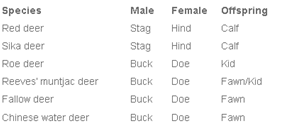
I imagine the general idea remains but it’s fun to know that Rowling messed up if she wanted to show that James’ stag and Lily’s doe were perfectly complementary — she rather sucks at science. Instead of showing that James and Lily were made for each other, we get the idea that they seemed to be perfect together, but really it’s just superficial.
In the end, a Patronus never was evidence in and of itself to show that the caster was obsessed with another; worse yet, this idea goes against everything the saga says, and holds very… questionable principles.
Number 9 – Love Beyond Death
Loving someone beyond death is apparently obsessive. Here are some examples for more context:
Aberforth forever regrets the death of his sister and this is perhaps why his Patronus is a goat, in remembrance of the time he fed the goats with Ariana, feeling guilty to have been unable to shield her from death. Albus also regrets having led to his sister’s death. Harry still loves Sirius and regrets having led to his death. Severus still loves Lily and forever regrets having led to her death.
And so evidently, on top of Severus obsessing over Lily for loving her over a decade after her death, Harry had unfulfilled sexual desires for his godfather and both Ariana’s brothers had incestous intentions.
Loving someone beyond death is not an obsession. It is a sign that you deeply love them. It’s incredibly disturbing and inhuman to request someone stops loving a close one just because they died. Anybody who has lost a loved one — a partner, a pet, a child, a friend, a sibling, a parent, or a comrade — will understand. Especially if they died because of you.
The nature of Snape’s love for Lily was unclear. His love certainly was platonic at some point. Ironically, for someone who’s supposed to be “friendzoned”, it is Severus who asks if they are “best friends?” and Lily confirms it. If anything, it is Lily who is being friendzoned by Severus and his question! He never asked Lily out, he never made romantic or sexual advances in her regards, and every interaction he has with her can be taken as friendly or brotherly.
Would you look at that! A man and a woman can love each other as best friends and not necessarily in a romantic way. Friendship between a man and a woman can exist without second thoughts!
Even if Snape’s love was romantic, it’s not creepy by default. Desiring someone, or loving them romantically, doesn’t make you “creepy” even if it’s unrequited. This happens every day, to anybody. Toxicity comes when you try to force the other to love you back, and Snape never did that. Sirius and Lupin seem unaware of the strength of his feelings for Lily, which is strong evidence that he left her alone and didn’t try to get her back once she’d taken up with James. Whether Severus loved Lily as a friend or romantically ultimately shouldn’t matter, because the result is the same: he respected her choices. Truly, Severus could be asexual that it would still be canon-compliant.
In the books, there is a clear parallel between Sirius and James’ friendship, and Severus and Lily’s friendship. The fact that one is between two men and another between a man and a woman doesn’t make a difference. If it can be argued that Severus loved Lily in an unrequited romantic way, then the same could be said for Sirius, who actually was the one person who had this disturbing tendency to confuse Harry for the person he loved the most. Sirius is still so devoted to James fifteen years after his death that he tries to make Harry be James redux.
- “He’s not James, Sirius!”
“I’m perfectly clear who he is, thanks, Molly,” said Sirius coldly.
“I’m not sure you are!” said Mrs. Weasley. “Sometimes, the way you talk about him, it’s as though you think you’ve got your best friend back!”
“What’s wrong with that?” said Harry.
“What’s wrong, Harry, is that you are not your father, however much you might look like him!” said Mrs. Weasley, her eyes still boring into Sirius.
- “Suit yourselves. But I sometimes think Ron’s mum’s right, and Sirius gets confused about whether you’re you or your father, Harry.” “So you think he’s touched in the head?” said Harry heatedly. “No, I just think he’s been very lonely for a long time,” said Hermione simply.
- “You’re less like your father than I thought,” he said finally, a definite coolness in his voice.
“The risk would’ve been what made it fun for James.”
“Look —” “Well, I’d better get going, I can hear Kreacher coming down the stairs,” said Sirius, but Harry was sure he was lying. “I’ll write to tell you a time I can make it back into the fire, then, shall I? If you can stand to risk it?”
- “How touching,” Snape sneered. “But surely you have noticed that Potter is very like his father?”
“Yes, I have,” said Sirius proudly.
If you think that Sirius missing James 15 years after his death doesn’t mean he lusted over him, but that when Severus does for Lily it means that he wanted to fuck her, then you should check out for some internalized cishet amatonormativity right there.
Now, I’m not saying Rowling had this in mind when writing Lily and Severus. She absolutely falls into amatonormativity, however much she tries to camouflage it with gay Dumbledore. In fact she falls into amatonormativity of the 70ies, because she makes Lily fall in love and marry the incel – who’s glorified for his incel attitude, quite literally romanticized for being violent and sadistic against anyone he wants, and when the question of his potential evilness is brought up, it’s shot down as quickly as possible.
Rowling never disputed the reading of Snape having held romantic love for Lily, and she falls in that tendency when commenting him:
Jaclyn: Did lily ever have feelings back for snape
J.K. Rowling: Yes. She might even have grown to love him romantically (she certainly loved him as a friend) if he had not loved Dark Magic so much, and been drawn to such loathesome people and acts.
http://www.accio-quote.org/articles/2007/0730-bloomsbury-chat.html
I am not saying either that the HP series is a good representation of actually strong and independent women, or healthy and significant male-female relationships that don’t fall into romantic tropes, or something that actually breaks from what’s softly called « traditionalism ». What I can say is that, while she might have wanted to write Snape’s « failure » as Lily choosing James over him, it transcribed poorly in the books.
Sure, James’ primary goals are to fuck around in school, quench his power trip kinks, and when puberty fully hits, get Snape’s female friend into a date with him at all costs. Lily’s role is reduced to choosing a romantic partner to signify who Rowling considers the best man in the Lily’s Era, give birth to the protagonist right out of highschool before giving her life for him as well, write the « woman who’s saintly because she’s a mother » trope (also called the Virgin Mary trope), and give an origin backstory to the other male character, the one who « failed » the – uhh – « romantic competition over who gets to fuck her », or whatever Rowling intended. See: Rowling’s Failed Romance.
But all we get from Severus, for sure, is that he views Lily as a very dear best friend.
It turns out that platonic love can easily be more powerful and impactful than romantic love, in fiction but also in real-life. Including between a woman and a man – since male-female friendship does exist, in case you didn’t notice. So Snape’s arc originating from his love (and guilt) towards his childhood best friend definitely holds up – without any need, for the reader, to add in that Snape loved Lily romantically. And if he did, that’s not a crime in itself.
Number 10 – Severus, the Flaw in the Plan
This is when another take on Snape’s character appears: “He never loved Lily, he only desired her”.
Congratulations to all those who think that, because they think exactly like Voldemort! The “magical Hitler” who literally cannot understand love! And we know that Voldemort has been in the wrong about Snape all this time, so that’s telling.
I‘ll explain the Joute Verbale.
‘Severus Snape wasn’t yours,’ said Harry. ‘Snape was Dumbledore’s, Dumbledore’s from the moment you started hunting down my mother. And you never realised it, because of the thing you can’t understand. You never saw Snape cast a Patronus, did you, Riddle?’
Voldemort did not answer. They continued to circle each other like wolves about to tear each other apart.
‘Snape’s Patronus was a doe,’ said Harry, ‘the same as my mother’s, because he loved her for nearly all of his life, from the time when they were children. You should have realised,’ he said, as he saw Voldemort’s nostrils flare, ‘he asked you to spare her life, didn’t he?’
‘He desired her, that was all,’ sneered Voldemort, ‘but when she had gone, he agreed that there were other women, and of purer blood, worthier of him –’
‘Of course he told you that,’ said Harry, ‘but he was Dumbledore’s spy from the moment you threatened her, and he’s been working against you ever since! Dumbledore was already dying when Snape finished him!’
Voldemort’s argument is that Snape never truly loved Lily and that she only represented an object of sexual gratification. But because she only represented that, when she died, Snape wouldn’t have felt guilty, and wouldn’t have betrayed Voldemort, because after all, if he really just wanted a good shag with a beautiful woman, he had a cohort of women waiting for him. There’s no sense in changing your whole life for someone you didn’t care for in truth. Let alone from the moment she was threatened to be killed.
Harry’s argument is that Severus Snape truly loved Lily, since they were children, and because of that, he turned spy against Voldemort, betrayed him for 18 years, carried out crucial missions to defeat the Dark Lord; and his loyalty for Albus, Lily and Harry remained unyielding ever since.
It’s a small but crucial mistake in Voldemort’s judgment, and that ended up costing him his very life!
We know Severus truly betrayed Voldemort, all the books prove that, so the “desire” argument falls apart. Harry knows the truth:
‘Snape’s Patronus was a doe,’ said Harry, ‘the same as my mother’s, because he loved her for nearly all of his life, from the time when they were children.”
Voldemort can only understand desire at its most animalistic form. He cannot understand true love like Harry knows, and like Severus experienced for his childhood friend. This is what leads to his downfall.
If Severus hadn’t truly loved Lily, he’d never have howled his grief over her death. He’d never have the face of a man “who had lived a hundred years of misery”, he’d never have sobbed “like a wounded animal”, and he wouldn’t have wished to be dead since she was gone:
The hilltop faded, and Harry stood in Dumbledore’s office, and something was making a terrible sound, like a wounded animal. Snape was slumped forwards in a chair and Dumbledore was standing over him, looking grim. After a moment or two, Snape raised his face, and he looked like a man who had lived a hundred years of misery since leaving the wild hilltop. […]
“I wish… I wish I were dead…”
He’d never have carried on Lily’s sacrifice:
‘If you loved Lily Evans, if you truly loved her, then your way forward is clear.’
Snape seemed to peer through a haze of pain, and Dumbledore’s words appeared to take a long time to reach him.
‘What – what do you mean?’
‘You know how and why she died. Make sure it was not in vain. Help me protect Lily’s son.’
And he certainly wouldn’t have lived and died for the cause in which she believed, coming as far as to save everyone he could:
Snape looked horrified. ‘You have kept him alive so that he can die at the right moment?’
‘Don’t be shocked, Severus. How many men and women have you watched die?’
‘Lately, only those whom I could not save,’ said Snape.
Number 11 – What if…
Let’s play with what ifs for a moment, since lots of people love to do it.
What if Snape had truly been in love with Lily and had been friendzoned before completely rejected? What would that change?
Nothing, because there’s nothing wrong with that. It shouldn’t be a shameful thing. You had the bravery to ask someone out, they refused, too bad, plenty of fish in the sea. Haters are acting like bullies you see in school that attack you because, wow! you didn’t have your date. It’s immature and harmful. It also reinforces incel mentality: because haters shame you if you ever end up alone, they incite you to do everything you can to get your date… even by force. Obviously, that’s not what we want here.
Of course, some of you may see something unhealthy in Severus’ love for Lily, the way he clutched to the feelings of guilt and constant remorse for the one person who deigned to give him love during his youth. To be honest, their friendship seemed unable to sustain the pressure at Hogwarts, between the Slytherins and the Marauders, coveted by the Hogwarts staff – all of which poisoned their relationship. However, if it ever was unhealthy, it was mostly for Severus, not Lily; because she’s the one who was left at peace by Severus and cherished by all, whereas Severus, who already suffered constant assaults on his person and the resulting trauma, had to bear the knowledge that he was partly responsible for the death of someone he cared deeply about, the one person who seemed to have loved him and yet… was heavily flawed herself. This is, in a sense, the tragedy of the lonely and the unpopular, to give their whole person to another one’s memory, whether it is worth it or not.
It’s not because you are single (and for Severus it became a choice) that you are a pathetic villain. You don’t need to be involved in a sexual or romantic relationship to be a good person, even in fiction.
What if Snape had been truly obsessed, ie mentally ill… Should we then consider Snape as someone mentally disabled? Isn’t that ableist to take someone obviously not feeling good in his skin and having issues but mostly okay, and turning him into a caricature of personality disorders? What if Snape had, for instance, an abandonment issue due to trauma? or childhood neglect? or, as we evoked earlier, borderline personality disorder? What if he just did not know social rules because of poor education and/or autism?
Perhaps we shouldn’t stigmatize people who don’t act accordingly, and avoid creating content that condemns them as evil, creepy, and far off the psychopathic scale, because just like many neurodivergents and/or mentally disabled out there, it’s not representative, it’s stigmatizing and harmful. As long as the person doesn’t become dangerous because of their weird behavior – and Severus was caring, loving and respectful of Lily – there’s no need to make this a big deal.
You cannot, however, blame Severus Snape for not ever healing from his trauma regarding Lily. If Severus really had some sort of mental illness or psychological problem, like psychosis or whatever… then maybe we should just acknowledge it as an illness he has little control over. An illness that thankfully, didn’t hurt Lily and rather hurt Severus himself. I do not think calling someone evil or creepy – not because of what they did in canon, but for their illness itself – is very woke, so to say. Let’s take care not to cross the line.
Because it’s one thing to see someone as “obsessed”, it’s another to reinforce stigma against the psychologically wounded.
Conclusion :
Snape’s Silver Doe truly was a beautiful Patronus, both in the form it takes and in what it represents.

 The Sneep Project
Your comment: